Ball's Bluff
The StaircaseBall's Bluff is the Virginia battlefield where Robert Lacey died in the fall of 1861. The novel presents it not through a description of terrain or combat, but through the long afterlife of the loss: Robert’s body is recovered and carried west, his mother makes his death the focus of years of remorse, and the memory of the war continues to govern the living.
Robert’s death at Ball’s Bluff
Robert had joined the army without his mother, Violate Lacey, initially knowing. He was too young to serve and feared that Colonel John Lacey would use his influence to have him dismissed, so he did not want his family to discover where he was. By the time they located him, he had been killed at Ball's Bluff. His death is thus bound to a concealed decision as well as to the battlefield itself: his family learned of his enlistment only after they could no longer intervene or reach him alive.
The location enters the story through Violate’s account to Lizzy Enders, years after the battle. Nothing in that account describes the battlefield’s appearance. Instead, its importance is carried by the news that reached the family and by the effort that followed to bring Robert home. Ball's Bluff becomes the distant point from which his loss travels into the family’s life in New Mexico.
From battlefield to grave
Colonel John Lacey used his military standing to have Robert’s body exhumed and sent west. The process took months. Violate and her husband were then at Fort Craig on the Rio Grande; John rode with Canby’s men to meet Sibley’s brigade at Valverde in February 1862. After the Confederates won and marched toward Santa Fe, Robert’s body arrived by wagon on the Santa Fe Trail. His family buried him there.
The military situation continued to shape the family’s movements. They were preparing to flee when they heard that the Confederates had been defeated at Glorieta Pass in New Mexico. John was assigned to remain, and they stayed. Robert’s burial therefore follows a route marked by war: from Ball's Bluff in Virginia, through a months-long recovery and shipment, to a grave in Santa Fe amid the changing fortunes of the New Mexico campaign.
Grief, guilt, and the staircase
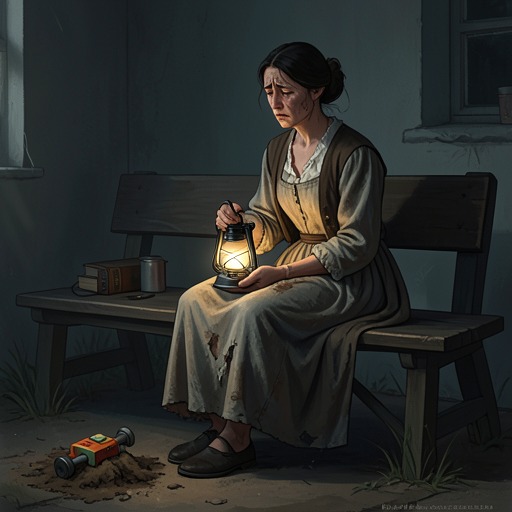
For Violate, Robert’s grave is not simply a place of mourning. She believes her own sins contributed to what happened, and she gives money to the church in the hope of redeeming her son’s soul. She also invests hope in the completion of the chapel staircase: once it is finished, she believes Robert will be forgiven for killing his father and allowed into heaven. At the cemetery, she tells Lizzy that the staircase matters to Robert’s rest, and asks Lizzy to stay until the work is complete, even if Violate herself dies first.
This belief turns the distant battlefield into a continuing moral presence. Robert died at Ball's Bluff, but Violate’s understanding of his death is shaped by the grave where he was reburied and by the religious work she hopes will secure his peace. Lizzy does not claim that the staircase will change what happened; she listens, comforts Violate, and promises to remain. The promise gives Violate’s grief a practical purpose while revealing how completely memory has become entangled with her sense of responsibility.
Memory and the novel’s wider war
Violate’s account culminates in the conviction that neither side truly wins a war: memory leaves both sides held hostage. Ball's Bluff is therefore more than a past military location in the novel. It is the origin point of a private loss that remains active long after the battle, carried through a body transported across the country, a grave visited by the bereaved, and a mother’s enduring hope for forgiveness.
The story places Robert’s death within a broader landscape of wartime loss without making the family histories identical. Lizzy Enders remembers that the war took her father’s arm at the Battle of Buzzard Roost Gap, and that Mama later died of fever on the westward journey. When Lizzy visits Robert’s grave at Violate’s request, the visit also offers a respite from the convent and from the Sunday anguish she associates with family and home. She remains wary of Delvina’s husband, who had tried to kill her. In this scene, the grave gathers several kinds of pain without resolving them: Violate’s grief for Robert, Lizzy’s bereavement and homesickness, and the continuing threat of violence among the living.