Fort Marcy
The StaircaseFort Marcy is a ruined hilltop fort and cemetery above Santa Fe, a place where the remnants of military defenses frame the novel’s most intimate scenes of mourning. Lizzy first reaches it uncertain of what she is seeking; she returns to tend the lantern at Robert’s grave, and later follows Mrs. Lacey’s coffin there for burial beside him. The fort’s exposed, deteriorating landscape becomes both a setting for danger and a ground where private grief is recognized by a community.
The Hilltop Ruins
Lizzy and Ben climb the hill at the end of town into strengthening wind and low mist. The ascent leads through crumbling walls that appear to belong to an old army post, past one or two abandoned, rusty cannons, and through a tumbledown wooden archway. Its weatherworn sign identifies the place as Fort Marcy. Above it stand the ruins of an old two-story building and fortifications pierced with openings through which someone could shoot. The uneven, cold ground makes Ben pick his way carefully.
The site is not presented as an intact monument or a secure refuge. Its broken buildings and defenses remain, but their practical purpose has given way to exposure and decay. Lizzy thinks of Fort Bent and Uncle William, yet Elinora has never spoken of a fort in Santa Fe, focusing instead on churches and religion. That contrast places Fort Marcy outside the account of the town Lizzy has received: the hill holds a history and a physical landscape that the convent’s religious world does not explain.
Lizzy’s first approach is shaped by uncertainty. She wonders whether someone lost or injured might be up there, whether people come to pray, or whether the place might one day be where her mother is buried. She also considers whether the nuns told Mrs. Lacey that her mother died on the Trail. These are Lizzy’s questions rather than answers supplied by the site. The ascent therefore carries her through a landscape whose meanings are unsettled before she reaches its cemetery.
The Cemetery and Robert’s Grave
Among the ruins, Lizzy finds a cemetery marked by broken headstones whose inscriptions have become unreadable, with loose rocks scattered across the ground. The loss of legible names gives the burial place a stark anonymity, but Robert’s grave is tended and remembered. On her first encounter with it, Lizzy hears a woman crying there, wrapped in a Navajo blanket and kneeling before a leaning headstone. It is Mrs. Lacey, speaking to her dead son Robert and saying that she must leave because the nuns will be looking for her. She has fallen asleep at the grave, and recognizes that she was not alone there that night.
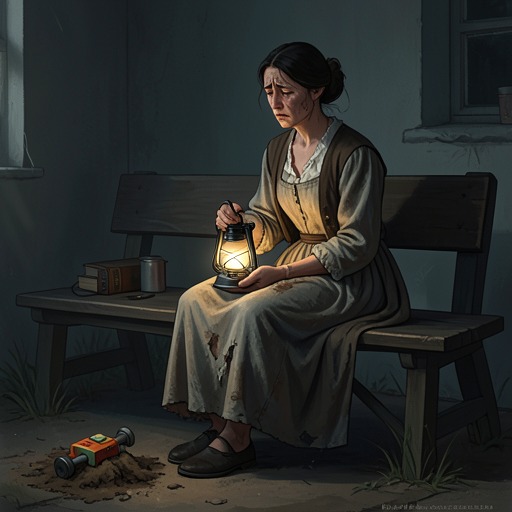
At the side of Robert’s grave stands a small, cave-like structure made of stones, with a lantern inside. Mrs. Lacey reaches for it and holds it up when she sees Lizzy. The lantern is a practical object at the graveside, but its sheltered place among stones also distinguishes Robert’s grave from the broken, unreadable markers around it. The scene reveals Fort Marcy as a place Mrs. Lacey returns to in order to remain close to her son, even when her confusion and the nuns’ search draw her back from the hill.
Later, Mrs. Lacey asks Lizzy to bring a new candle and matches to light the lantern beside Robert’s grave. Lizzy regards the errand as a small mission, but it gives her a ride on Ben and an hour away from school. On a cold visit, she rides up past the crumbled buildings, gets down beside the grave, and sets a note for Jesse James under a rock so the wind will not carry it away. She then kneels to replace the candle. The act joins ordinary care of the grave with the improvised details of the landscape: a rock holds the note in place, while the lantern receives a fresh light.
A Place of Grief and Exposure
Fort Marcy offers Lizzy a brief escape from the convent, but it does not remove the grief she carries. On a Sunday afternoon visit for Mrs. Lacey, she is glad to be away from girls who make her life miserable. Since Mama died, Sunday afternoons and evenings have brought an unnamed anguish associated in Lizzy’s mind with family. She misses everyone and feels that home is no longer something she can find. The visit serves Mrs. Lacey, but also gives Lizzy a reason to leave the convent during a part of the week that intensifies her own bereavement.
The hill is not safe simply because it is quiet. While going to Robert’s grave, Lizzy remains watchful for Delvina’s husband, who has tried to kill her before. On an earlier return to light the lantern, a figure comes toward her like a sudden dark wind and grabs her by the shoulders, demanding to know where his wife is. The encounter turns the exposed route to a graveside errand into a place of immediate danger. Fort Marcy gathers people seeking the dead and people driven by violence; its isolation gives neither group protection from the other.
Mrs. Lacey’s Burial
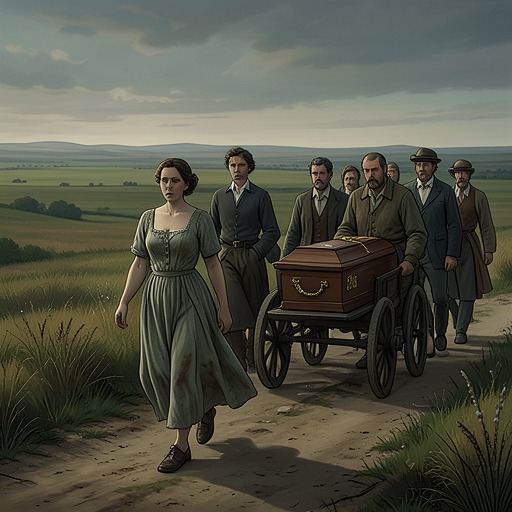
When Mrs. Lacey dies, she is buried at Fort Marcy beside Robert, in accordance with her insistence that she be laid to rest there. After Mass, her coffin is carried on a wagon through Santa Fe’s main street and the noisy marketplace. The procession then winds up the frozen hill along the path she and Lizzy had taken together, gathering people who knew Mrs. Lacey and wished to be present. The burial thus connects the private routine of their visits with a public act of remembrance.
At the grave, Robert’s candle burns in the lantern. Bishop Jean-Baptiste Lamy says the final prayers as wind moves across the hill. The schoolgirls look nervously at the remains of the fort, which had menaced Lizzy when she first saw it. Lizzy, however, senses that mourners will return after the procession has gone: people hidden from view will come to smooth the dirt and grieve for Mrs. Lacey. The scene makes the cemetery more than the destination of a formal funeral. Its continuing significance lies in the care that the ceremony cannot finish and the grief that will outlast the crowd.
The Changed Landscape
Later, Fort Marcy appears altered. Bishop Lamy has had the cemetery repaired, and the day is warming as Lizzy passes the hills. Snow still caps the Sangre de Cristo Mountains, while white cottonwood seeds drift through the fields. Against this gentler landscape, Lizzy hears Mrs. Lacey’s laugh as they pass the old fort. The moment does not explain whether the sound is a memory, an impression, or something supernatural; it preserves Mrs. Lacey’s presence without resolving it.
Across these visits, Fort Marcy shifts from an unfamiliar ruin to a place bound to particular acts of care and loss. Its damaged defenses recall a harsher history, while the lantern, the repaired cemetery, and the burials beside Robert mark the human attachments that endure there. The contrast is central to the location’s meaning: the fort’s stones and headstones are broken, but the dead are not simply abandoned. Lizzy’s return, the funeral procession, and her sense of future mourners all make remembrance an ongoing practice on the hill.