Mr. Enders
The StaircaseMr. Enders is Lizzy Enders’s one-armed father, a westward traveler whose grief for Mama and difficult choices shape Lizzy’s earliest experience of loss and abandonment. Seen chiefly through Lizzy’s watchful, often angry perspective, he is at once a bereaved husband, a man marked by war, and a parent trying to decide what will become of his daughter. His care is real, but it does not prevent the separation that changes their relationship.
Identity and Background
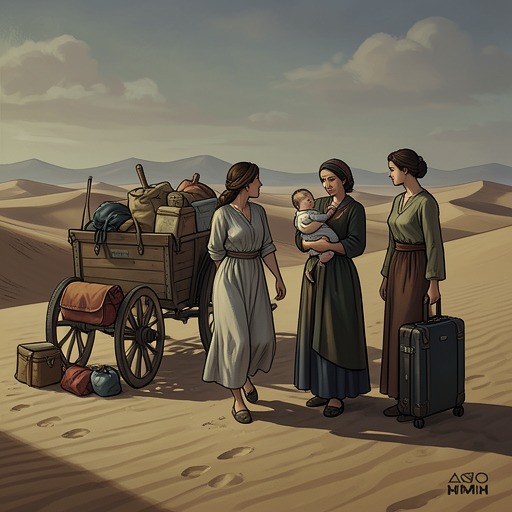
Mr. Enders travels west with his wife, Mama, and their daughter, Lizzy, leaving Independence behind. The journey takes the family toward Santa Fe, and at one point Lizzy fears that he intends to leave her there and continue alone to Colorado. His travel party includes Mr. French and Mr. French’s family, who have their own wagon, as well as the Wades in a third wagon. The other families’ presence becomes especially concrete at Mama’s burial, when Mr. French steps in to help with the grave.
Mr. Enders has lost an arm; his empty shirtsleeve is pinned up. His appearance also carries the trace of a past Lizzy knows only through what Mama told her: his eyes had seen hell in the war and still seemed to remember it. The narration does not identify the war or describe how he lost his arm. Instead, it presents those facts as part of the daughter’s way of looking at him—his body and expression suggest a history that she cannot fully enter. The visible injury is not a cure-seeking subplot in the supplied scenes; it is a circumstance of his life and of how Lizzy recognizes him.
Grief on the Santa Fe Trail
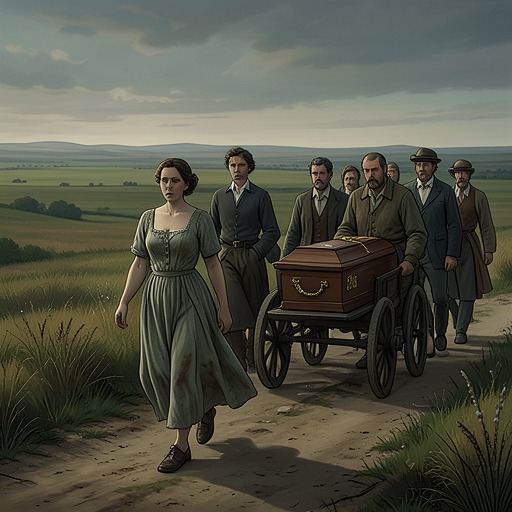
Less than an hour after Mama’s burial ceremony, Mr. Enders is still digging. Lizzy sees him stop to wipe his face with a dirty handkerchief and wonders whether he is wiping away tears, but cannot tell. The uncertainty matters: his grief is not explained for her or translated into a clear confession. It appears through exertion, pauses, and the work of trying to make a grave in ground that keeps slipping back into the hole.
Mr. French offers help, and Mr. Enders hands him the shovel. He knows Spanish and says little by little; the phrase meets the burial’s slow, laborious pace. He also complains about the ground, describing its dust as full of old bones. Mr. French continues digging, while Lizzy perceives the earth as resisting the burial and the sound of the shovel as small against the surrounding vastness. Mr. Enders’s effort cannot make the task easy or undo the loss. His role in this scene is practical and exposed: he is responsible for burying his wife, but must accept another man’s help to finish.
Afterward, grief enters the family’s ordinary needs. Lizzy cannot eat supper because Mama lies buried nearby. Mr. Enders is bent over the fire, staring into it and not eating either. Mrs. French advises Lizzy that eating and drinking on the Trail are necessary for survival, whether or not a traveler feels like it. Lizzy’s thought turns toward her father: she decides that she must stay alive for him because Mama would have wanted that, and because he sometimes forgets to eat. When he tells the others to leave Lizzy be, she feels some of her old love for him return. His silence and inattention are therefore not presented as indifference alone; within Lizzy’s understanding, they are signs of a bereaved parent who also needs looking after.
Father and Daughter
Before Mama’s death, Lizzy’s attachment to her father has already been strained by the family’s departure from Independence. She recognizes that love for him is rising again after the burial, but says she had covered it with anger over his taking her and Mama away. On the westward journey, she has tried to keep that anger because it seemed safer than feeling anything else. Uncle William had advised her to hold on to anger if she could keep nothing else, and she has been trying to follow that counsel. Her feelings toward Mr. Enders thus move between resentment, concern, and returning affection rather than settling into a single judgment.
The war-marked expression and pinned sleeve that Lizzy observes do not erase her anger, but they sit beside it. At the grave, Mr. Enders grips her shoulder, believing she is overcome with grief. Lizzy tells him she is all right, and he lets go. The brief exchange shows how little each can know of the other’s interior state: he misreads her, while she herself says she does not yet know what grief is. Her later grief, she explains, will come in time. The scene leaves their care for one another present but incomplete, shaped by what neither can say or recognize at that moment.
The Decision to Leave Lizzy
As the family’s route brings them to Santa Fe, Lizzy asks whether her father will leave her there and go to Colorado alone. At the time, he is using a rock as a hammer on the cross at Mama’s grave. He strikes it violently and complains about the soil, but the excerpt does not give his answer to Lizzy’s question in that scene. The cross and the question place the family’s immediate bereavement beside the approaching possibility of another separation.
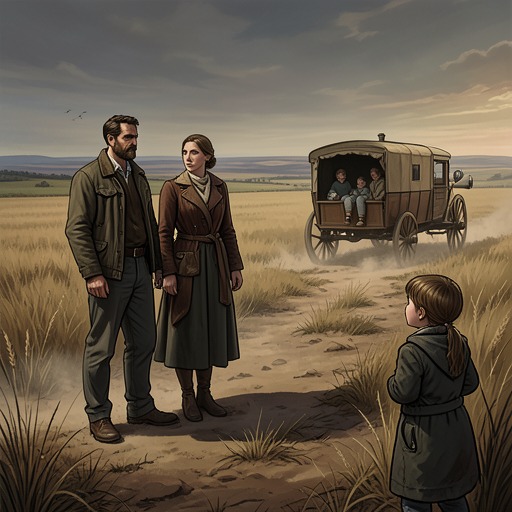
The separation is eventually confirmed by someone else. When Lizzy insists that her father has forgotten her and asks that he be told she is coming, she is told that he has decided to leave her with them. He could not tell her himself and believed this was best. Lizzy already suspects the truth: she describes that knowledge as having cut into her for days, though she has refused to acknowledge it. She pleads to go to Colorado, saying that her father needs her and that she cannot stay. The decision is therefore not narrated as a calm conversation between parent and child. Its circumstances—his failure to tell her directly, her prolonged dread, and her desperate request—make the act of leaving her a rupture even if he understands it as the best choice.
Narrative Role
Mr. Enders is presented through the limits and revisions of Lizzy’s understanding. At first, anger protects her from the feelings stirred by her parents’ journey; at the grave, she notices affection returning, and at supper she assumes responsibility for keeping her father alive. Those moments complicate the later fact that he leaves her in Santa Fe. The narrative does not resolve the contradiction by declaring him either uncaring or wholly protective. It shows his grief, dependence on others’ help, and inability to tell Lizzy himself, while also registering the lasting hurt of his decision. His significance lies in that unresolved bond: Lizzy can love and worry for him, yet experience his choice as abandonment.