Uncle William
The StaircaseUncle William, Lizzy Enders’s maternal uncle, is an adventurer whose affection and counsel remain important to her after her mother’s death and her father’s decision to leave her at school in Santa Fe. He connects Lizzy to her family’s life in Independence, Missouri, and offers her a possible refuge there or, later, in Kansas. Yet his independence also means that the home she imagines with him cannot be immediately restored.
Identity and Background
Uncle William is one of Lizzy’s grandfather’s half-Indian sons and Mama’s brother. Mama was his favorite sibling. Their family had standing in Independence, Missouri: her father had been a fur trapper who became wealthy and had three Indian wives. Lizzy recalls meeting her grandmother Adalina, a Blackfoot, when her grandfather William died, and knows that she has Cheyenne and Blackfoot cousins she has never met. Uncle William thus belongs to a large family history that Lizzy knows only in fragments, but that helps explain why she thinks of him as a link to both kinship and a home beyond the convent.
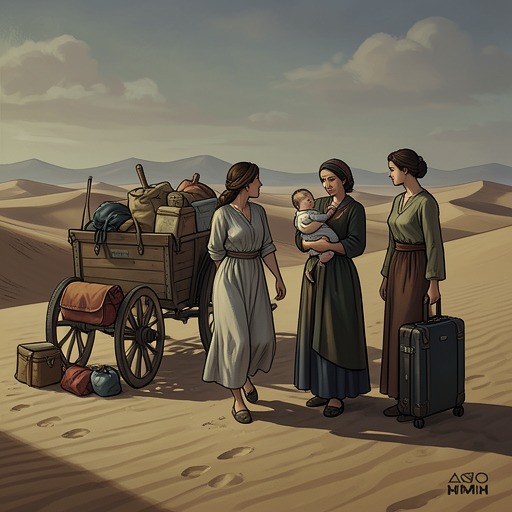
He is associated with travel and frontier life. For the most part, he ran Bent’s New Fort on the Mountain Branch of the Santa Fe Trail. His house in Independence had been the family home while Mama ran it for him; when he returned, he sometimes brought friends from Fort Bent and gifts. One of those gifts was Lizzy’s pony, Ben. The pony later travels with Lizzy on the westward journey, making Uncle William’s generosity part of the material world she carries with her.
Counsel and Lizzy’s Memory
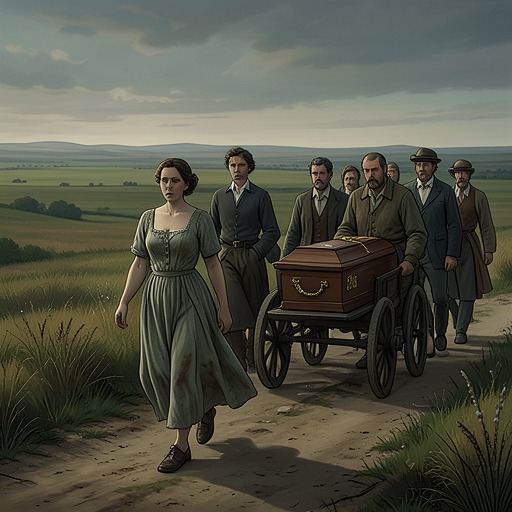
When Lizzy’s mother dies during the journey west, Lizzy looks at her father and feels some of her old love returning. She recognizes that she had used anger to cover her feelings about being taken away from Independence, and remembers Uncle William’s instruction: “Keep your anger if you can keep nothing else, Lizzy,” he had said. “People will respect you more for anger than for tears.” Lizzy has tried to preserve that anger because it feels safer than grief or uncertainty. His advice gives her a way to understand her own defenses, even as her changing feelings toward her father make it harder to keep those defenses intact.
The counsel also expresses the toughness Lizzy associates with life in the West. She recalls Uncle William insisting that a person could not remain halfway in their feelings in such a country. In Lizzy’s account, his words sit alongside the harsh landscape—dust storms, wind, rock, and sudden flowers—and become a family lesson in how to endure. The lesson does not make her feelings simple: she continues to struggle with loving and resenting her father at once. Instead, it gives her a remembered language for surviving feelings she cannot yet resolve.
The Home Lizzy Wants to Recover
After her father leaves her at the convent school, Lizzy considers writing to Uncle William and asking to return to Independence. In a letter sent to Fort Bent, she tells him that her father will have informed him of Mama’s death and says how much she wishes she were at home in Independence rather than at the school. She describes mourning as something that has not relieved her suffering: she cries at night in the chapel and still feels the miseries afterward. Her appeal makes Uncle William more than a relative receiving family news. In Lizzy’s imagination, he is a possible destination, and Independence is the home she hopes he can help her regain.
That hope recurs in the practical details of her plans. During Sunday handwork at school, Lizzy embroiders a sampler in green and red for him, marked “HOME SWEET HOME,” intending to take it when she returns to Independence. Later, she tells her father that she has written to Uncle William about going back and imagines that she could attend school and keep house for him there. The sampler and the proposed work of keeping house turn the idea of home into something she hopes to make and contribute to, not merely a place where she can be sheltered.
Letters, Offers, and Limits
Uncle William’s reply arrives the week before Christmas. He is closing his house in Independence for a time and going to Kansas with his friend Jim Bridger. He welcomes Lizzy to come there if she does not wish to live with her father, but explains that he needs at least six months to establish a proper home for himself, let alone for her. His answer offers a real future possibility while withholding the immediate return Lizzy wants. She understands that he means the invitation, yet recognizes that the independence she loves in him is also what leaves him unavailable now.
His care is evident in what accompanies the letter. For Christmas, he sends Lizzy books, writing paper, a silver frame containing a photograph of her parents taken in Independence, and an Indian blanket. These gifts give her practical supplies and objects of family memory while she waits. The photograph recalls the home and parents she has lost; the letter and invitation keep open the prospect of joining him later. His affection is therefore expressed both through the promise of a place with him and through tangible things sent across the distance.
Narrative Role
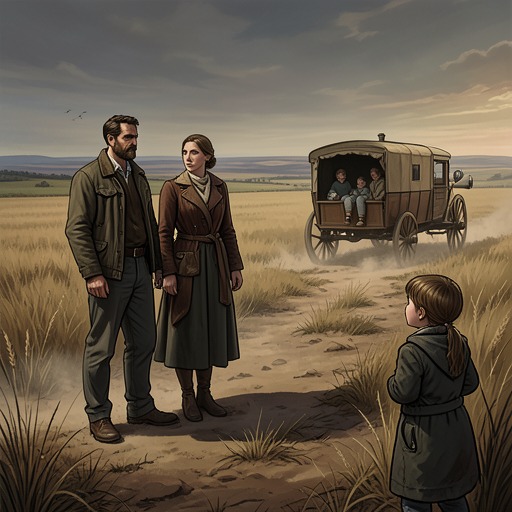
Uncle William is mostly present through Lizzy’s recollections, plans, and correspondence rather than through scenes alongside her. That distance lets the novel give him two related meanings without making them identical: he is a remembered source of guidance and generosity, and he is a possible guardian whose own travels prevent him from being immediately available. Lizzy turns to the idea of him when the convent feels intolerable, but the delayed Kansas offer forces her to reckon with a future that cannot simply restore the past.
His influence also helps shape how Lizzy narrates herself. She remembers his advice when trying to hold on to anger, writes to him about grief, and imagines a shared household in Independence. At Christmas, his response answers that longing with affection but not an instant rescue. Uncle William’s independence is both a quality Lizzy admires and the condition that complicates her hope of belonging with him.