Midges
The Summer BookMidges are tiny insects whose synchronized midsummer dance becomes both a striking natural spectacle and the trigger for a sequence of superstitious warnings. Their appearance gives the chapter its first sign of danger, while their disappearance at dusk coincides with the growing unease surrounding Sophia’s fear for her father.
Appearance and Behavior
On a very hot day around noon, Midges rise above the island’s tallest spruce in vertical clouds. The narration distinguishes them from mosquitoes and magnifies their scale: millions and billions of microscopic insects move upward and downward in perfect tempo, making a strident sound. Their display is collective and exact, an outdoor spectacle whose regularity invites the name Grandmother gives it: a wedding dance.
Folklore and Warning
Grandmother connects the dance to a warning inherited from her own grandmother: people must be careful when Midges dance and the moon is full. She describes it as a great mating day on which nothing is safe and tempting fate should be avoided. Her examples turn ordinary mishaps into possible signs of danger: spilling salt, breaking a mirror, or seeing swallows leave the house, in which case the household should move before sunset. The warning makes the insects part of a larger system of omens, rather than treating their dance as a threat in itself.
Place in the Evening’s Omens
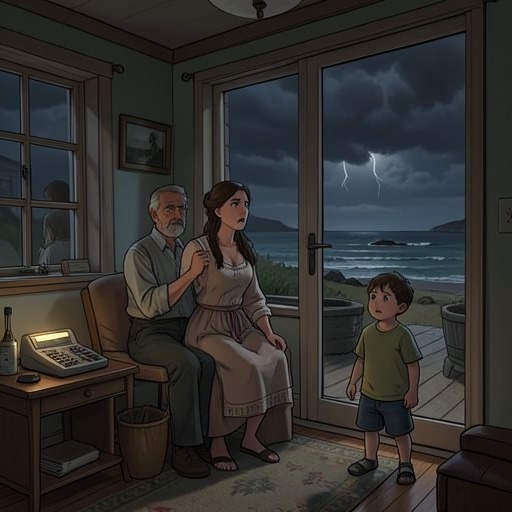
As the evening cool arrives, the dancing Midges disappear. Frogs begin singing, while Dragonflies seem dead; the moon rises, and the surrounding forest appears to Sophia as a landscape crowded with signs. By then, milk has gone sour, a stickleback has been caught, a black butterfly has landed on a mirror, and Sophia has found the knife and pen crossed on her father’s desk. She moves the objects apart but believes the damage is already done. Grandmother later dismisses the inherited lore as superstition, yet the Midges’ vivid, rhythmic dance has already helped frame the chapter’s shift from summer observation to anxious reading of the natural world.