Moss and eider-nest protection rule
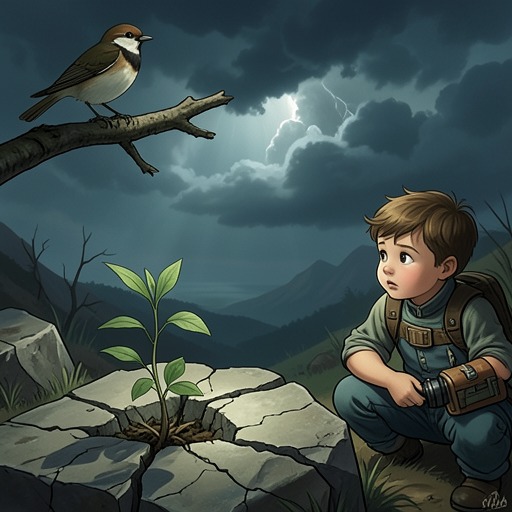
The Summer BookThe Moss and eider-nest protection rule is Grandmother’s practical warning about the cumulative effects of disturbance: moss may recover after one step, but repeated trampling kills it, while repeatedly flushing nesting eider ducks drives them away for good. The rule turns care for the island into a matter of restraint, making the cost of seemingly small human actions visible.
The Rule and Its Two Thresholds
Grandmother explains that moss can rise again after rain if it is stepped on once. The second time, it does not rise back up; the third time, it dies. The corresponding warning for eider ducks concerns disturbance at their nests: after being frightened up for a third time, they never return. The rule is not an abstract prohibition against entering nature, but a warning that damage accumulates and can cross a point from which recovery is no longer expected.
The two examples describe different forms of vulnerability. Moss is damaged underfoot, while the ducks’ continued presence depends on leaving their nesting places undisturbed. By joining them in one admonition, Grandmother asks people to attend not only to visible damage but also to the consequences of repeatedly interrupting animal life.
Paths, Habits, and Care
On The island, the family tidies the ground in spring and then keeps to narrow paths across the moss, between granite outcrops and down to the sand beach. Grandmother’s instruction that “Only farmers and summer guests walk on the moss” gives the custom a dry, pointed edge: visitors may be especially likely to treat the moss as open ground, though its resilience is limited. The rule asks those moving through the landscape to recognize that access does not mean that every surface can be used without consequence.
Grandmother’s care also appears in small acts of repair. In her daily walk around The island, she uses her stick to poke uprooted pieces of moss back where they belong. That gesture gives the warning a practical counterpart: protection means noticing disturbance and tending to what can still be set right, not simply admiring the landscape from a distance.
Breach and Consequence
The rule’s fragility stands in sharp contrast to the bulldozer’s passage through the woods. As Sophia watches it uproot trees and tear through ground that had long held its moss, she is herself trampling the moss, shaking with dread and rapture. The scene does not present her as deliberately rejecting Grandmother’s instruction; it places her bodily inside the upheaval, where the spectacle of destruction draws her away from the careful habits that ordinarily protect the island.
The contrast clarifies the different scales at which disturbance can occur. The rule counts repeated steps and repeated interruptions at nests; the bulldozer makes destruction sudden and extensive, wrenching up boulders and trees in its path. Against that force, the ordinary discipline of staying on a path can seem slight, but the rule insists that small actions matter precisely because vulnerable places do not withstand unlimited pressure.
Ecological and Narrative Significance
The moss is part of a landscape whose balance is easily altered. The island’s magic forest, shaped by wind and the slow collapse of trees, cannot be cleared or rearranged without risking its survival; elsewhere, moss and eider nests likewise depend on leaving them undisturbed. The rule gives this environmental delicacy a memorable measure—once, twice, a third time—and makes care legible as attention to thresholds rather than as a vague affection for nature.
Its recurrence in Grandmother’s warning and in a visitor’s later effort to walk carefully shows how the instruction can outlast the moment in which it is given. The island’s beauty is not separate from the restraint needed to preserve it. The rule therefore describes both a local practice and a way of understanding shared space: inhabitants and visitors alike must account for how their repeated presence changes the place they have come to enjoy.