North Grey-skerry
The Summer BookNorth Grey-skerry is an isolated, melancholy skerry whose abandoned pilots’ cottage becomes the refuge of Sophia, Grandmother, and Sophia’s Papa when a sudden great storm traps them there. Its barren shore and deteriorating building make the island more than a destination: they shape the family’s exposure to the weather and provide the only shelter when the sea turns dangerous.
Setting and Landscape
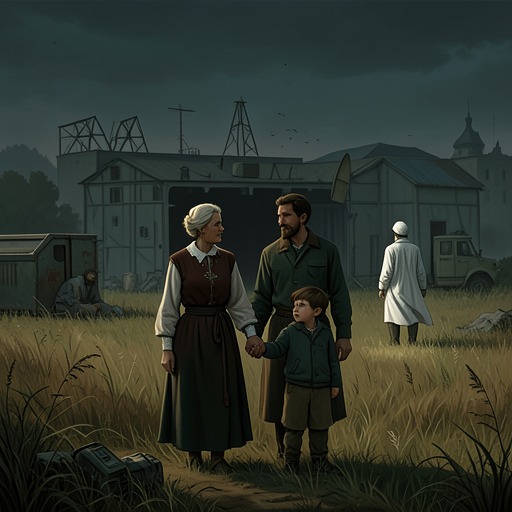
North Grey-skerry is described as forlorn and melancholy, yet the family cannot resist going there. The island is largely rock, juniper, smooth rounded stones, sand, and tufts of dry grass. During the family’s visit, a yellow haze veils sky and sea, and a heavy swell rolls toward the shore in breakers. The open, spare landscape leaves little between the visitors and the changing weather.
The conditions are unusually unsettling even before the storm breaks. The day begins warm, with a yellowish haze, long swells, unusually shiny water, and a sea level lower than normal. These details acquire significance as the weather changes: the island’s exposed position makes the swell and wind immediate features of the family’s experience, not distant scenery.
The Abandoned Pilots’ Cottage
The cottage is long and low, with a roof fallen in on one side but a small square tower still intact. Its stone foundation was built by the Russians and secured to the rock with iron cramps. Swallows dart around the building, while a large rusty padlock bars its door and nettles crowd the steps. The ruined structure preserves signs of its former use while making clear that it has been left unattended.
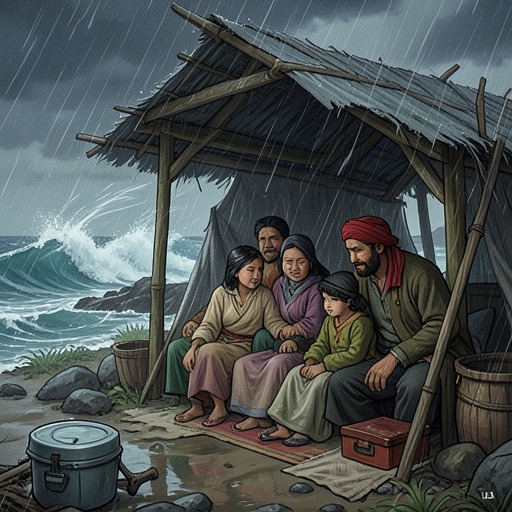
When the storm becomes threatening, Sophia’s Papa breaks the padlock with a large stone to save his family. Inside, a narrow, dark corridor divides the cottage into two rooms. Dead birds lie on the floor; rubbish and salt fish give off a smell, and the storm’s roar seems closer within the building. The family takes shelter in the west room, the one whose roof remains. Its two iron beds, white stove, table, and chairs offer a basic interior refuge, though the walls tremble and spume runs across the floor. Sophia’s Papa repeatedly goes out to check the boat.
The Visit and the Storm
The family reaches North Grey-skerry around noon with fruit juice and sandwiches. Sophia’s Papa sets two nets west of the island, and Grandmother rows for him. Later, Sophia walks around the shoreline while the others rest. Finding the day hot, quiet, and lonely, she prays for something to happen. The stillness then gives way: the swallows fall silent, the horizon turns black, and the wind reaches the island before the great storm sweeps in. Sophia runs into it, exhilarated by the wind and the sudden force of the weather.
The storm changes the purpose of the visit. What had begun as an outing for fishing and time on the island becomes a matter of finding shelter and protecting the boat. The cottage’s decayed condition does not make it safe in any complete sense, but its intact west-room roof gives the family somewhere to wait while waves strike the shore and spray forces its way inside.
Narrative Significance
North Grey-skerry brings together the story’s quiet attention to place and its recognition of nature’s force. The island is introduced through specific features—the ruined pilots’ cottage, the rusty lock, the nettles, the swallows, and the heavy swell—before those features become part of the family’s response to danger. The cottage is at once a remnant of human occupation and an improvised refuge, while the surrounding sea remains beyond the family’s control. The visit’s movement from boredom to storm-driven shelter gives the island a sharply defined role as the setting where an ordinary family excursion is overtaken by weather.