Verner
The Summer BookVerner is Grandmother’s old friend, and his visit late in the summer becomes a rare exchange in which both speak plainly about aging, loneliness, and the memories that bind them. His return with sherry and his unauthorized departure in someone else’s boat reveal a man still intent on choosing for himself, though he knows that other people’s care can also make him feel like a burden.
Identity and Introduction
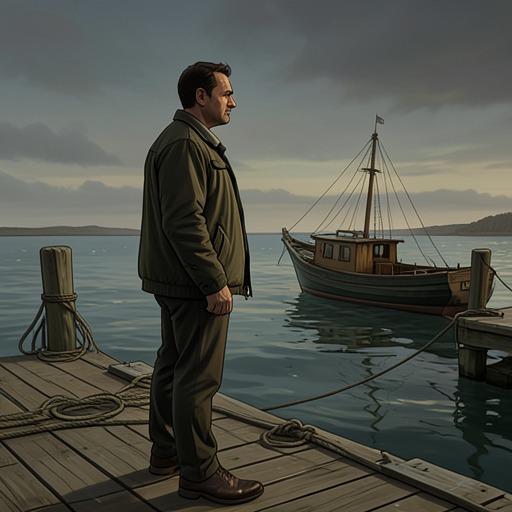
Verner arrives on a calm day in a little white motorboat, dressed in a linen hat. The boat, from the inner islands, has a hogged keel and an attempt at sportiness; Grandmother recognizes its awkwardness before she knows whose it is. She identifies him as the visitor who has come back with another bottle of sherry. For a moment she considers pretending to be ill, then changes her mind and goes down to meet him.
He approaches with his arms spread wide and greets her with, “Dear old friend, are you still alive?” Grandmother lets him embrace her and answers dryly, “As you can see.” Their teasing establishes familiarity without disguising the fact that both are old. Verner says the sherry is the same kind he brought in nineteen-ten, giving the visit a long shared history as well as its immediate occasion.
A Meeting Framed by Age and Memory
Before they eat, Verner raises a glass to what he calls the final landscape of their old age, as summer fades. In his toast, silence settles around them, each person wanders separately, and yet they meet by the sea in the peaceful sunset. His words make solitude and companionship coexist: old age is a time of separate inward paths, but the two friends still share a place and a moment. Grandmother accepts the sentiment only partly, turning at once to the prospect of a breeze and the horsepower of his motor.
They eat perch taken from the live box, earlier than usual, and sip their sherry in tiny amounts. When Grandmother asks after his legs, he answers that they are bad, though sometimes they seem to work all right. The conversation shifts from bodily condition to what he is doing these days. He says he does a little of everything, but then bursts out that Backmansson is gone. When Grandmother asks where he went, Verner angrily clarifies that he is no longer among them. The exchange brings death into an otherwise companionable visit, but the account supplies no further details about Backmansson or Verner’s connection to him.
Independence and the Feeling of Being in the Way
As Verner and Grandmother walk toward the point, he notices how their conversation has changed: years earlier, she never talked about horsepower and fertilizer. Grandmother replies that commonplace things can be fascinating. Verner counters that she still does not talk about personal matters. Their exchange suggests both the intimacy and the limits of their friendship: he can name what she withholds, but he has difficulty speaking about himself too.
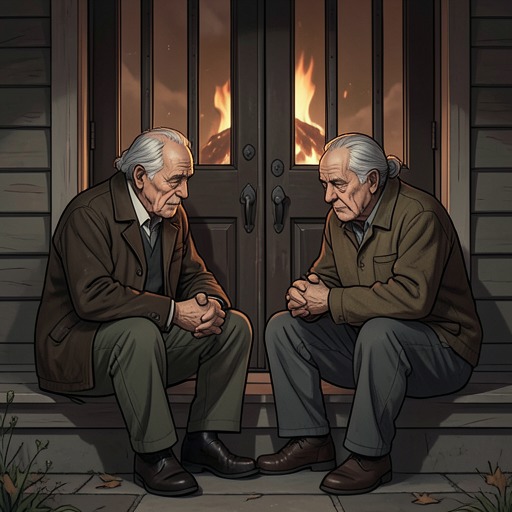
The boat’s ownership becomes part of that more personal conversation. Verner admits it is not his; he took it and drove off because it is unpleasant to have people worrying about him all the time. Grandmother is astonished that, at seventy-five, he does not simply do as he likes. Verner explains that it is not so simple: a person must be considerate because others have some responsibility for him, and, in the end, he feels mostly in the way. His account complicates the appearance of carefree escape. Taking the boat is an act of self-direction, but it does not erase the social obligations and sense of dependence that weigh on him.
He then says that he sometimes gets very depressed. He had said that people should not talk about what matters most, yet finds himself doing so, and feels that nowadays he always says the wrong thing. The admission follows his defensive explanation rather than replacing it: pride, frustration, and a need to speak remain present together. Grandmother listens without turning the exchange into consolation or advice.
Making, Gardening, and Their Shared History
Verner complains that people are always talking about hobbies and collecting things, which he finds stupid. What he would like, he says, is to make things with his hands, although he does not consider himself good at it. Grandmother suggests making things grow. He agrees that this is exactly the possibility, but adds that people keep telling him to have a garden and watch things grow. He might have thought of it himself if they had not said it first. Grandmother recognizes the principle: a person has to come to such a thing by himself.
When it is time to leave, they fetch Verner’s basket and sweater, and everyone says goodbye. Grandmother offers him a glass of sherry. He then confesses that he never really liked the drink; its value for him came from the memories they shared. Grandmother tells him honestly that those memories are dear to her, too. The sherry, first presented as an old habit and a recurring gift, turns out to matter not for its taste but as a vessel for their shared past. Verner promises to try to outwit the people who worry about him, starts the motor, and heads home. His departure offers no solution to the constraints he describes, but it ends with a promise to keep seeking room for his own choices.