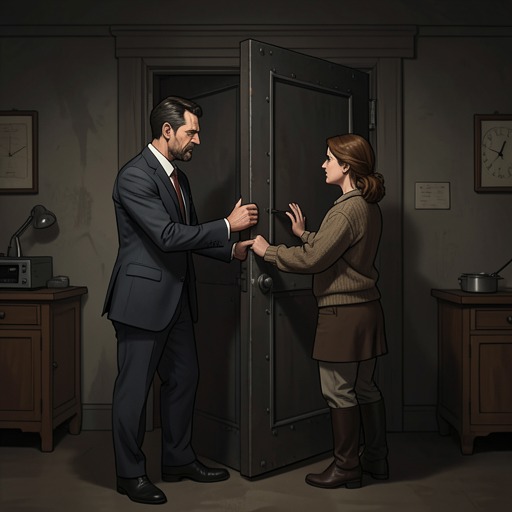
Natasha seeks legal help to stop her deportation
The Sun is Also a StarNatasha Kingsley’s search for legal help is an attempt to interrupt a removal already set in motion: the Kingsley family is undocumented, and Natasha is due to leave the United States that night. She first turns to an agency that cannot decide her case, then entrusts her remaining hope to attorney Jeremy Fitzgerald. His proposed intervention briefly makes a last-minute reprieve seem possible, but it cannot undo the order. The episode brings legal procedure, family responsibility, and Natasha’s sense of home into direct collision.
Background and Stakes
The crisis follows a chain of events set off by her father Samuel Kingsley’s arrest for driving under the influence. A few weeks after the arrest, the family receives a Notice to Appear from the Department of Homeland Security. At the Master Calendar Hearing, Samuel declines voluntary removal; he and Patricia Kingsley instead pursue cancellation of removal, believing that their younger son Peter’s United States citizenship might help them remain.
The family’s lawyer advises them that Samuel must have lived in the United States for at least ten years, shown good moral character, and proved that removal would cause extreme hardship to a citizen spouse, parent, or child. The family hires the least expensive lawyer they can find and argues its case at a merits hearing. The judge denies the application: returning to Jamaica would not put Peter’s life in danger, and the psychological harm of uprooting him from the only home he knows does not meet the standard. Samuel then accepts voluntary removal. Their lawyer advises against appealing, says the family has no case and is out of options, and recommends leaving voluntarily so that they will not have a deportation on their records and may have some hope of returning one day.
For Natasha, that legal conclusion is not an abstraction. She has lived in the United States since she was eight, does not know her relatives in Jamaica well, and says she does not have an accent. Her senior year, friends, prom, and graduation are all at risk of being cut short. She has just begun preparing an application to Brooklyn College, while SUNY Binghamton and other in-state schools remain possibilities if she can secure financial aid and a scholarship. Patricia has spent two years saving for a trip to Florida to buy a “good” Social Security card, one with stolen numbers rather than fabricated ones, so Natasha can apply for aid. The effort to stay is bound up with a future the family has been trying, precariously, to make available to her.
Searching for Someone Who Can Help
Natasha leaves home for United States Citizenship and Immigration Services in downtown Manhattan, hoping that someone there can help her stay. She knows that the day is her last chance to persuade someone—or fate—to intervene, although she does not believe in fate. Her desperation makes the contradiction plain: she cannot trust in a miracle, but she cannot stop hoping for one. Her mother’s attempt to reassure her in Jamaican-inflected phrasing, that she is not the one her mother is upset with, is another reminder that the crisis presses on the whole family, not only on Natasha.
At the Fitzgerald law office, Natasha initially learns that Jeremy Fitzgerald has been hit by a car and cannot meet her then. The paralegal gives her forms instead. They take at least fifteen minutes to complete. One asks whether she is a communist, a criminal, or a terrorist, and whether she would take up arms to defend the United States; although she would not, she checks yes. Another requests details of the removal process. A final client questionnaire demands a full account of her time in the country, a history she is unsure how to tell: how the family entered and hid, what it means to write a false Social Security number on a school form, and how those forms call to mind Patricia’s journey to Florida.
When the paralegal says the questionnaire needs more, she directs Natasha to explain what America means to her, why she wants to stay, and how she would contribute to making the country greater. The purpose is practical as well as personal: anything Jeremy can use to humanize Natasha may help. The request makes her life story part of the legal case. The paperwork asks for more than a procedural chronology; it asks her to translate a lived attachment to the country into evidence a lawyer might use.
Natasha’s Account and Fitzgerald’s Proposal
When Natasha finally speaks with Jeremy Fitzgerald, she recounts the case and the choices that brought the family to this point. He asks why she went to United States Citizenship and Immigration Services, which does not have jurisdiction over the matter. She can answer only that she did not know what else to do. After a long silence, she tells him she knows she is out of options and does not know why she came. She begins to get up, but he waves her back into her seat.
Fitzgerald’s office is still being assembled: unpacked boxes line the wall, a folding ladder leans against an empty bookshelf, and the only item he has unpacked is a photograph of his wife and two children. He touches the bandage on his forehead as he mentions the unfinished construction. Against this improvised setting, he tells Natasha, “You’re never out of options, Ms. Kingsley.” He then says he is one of the best immigration lawyers in the city and proposes to visit a judge friend who, he says, can get the voluntary removal reversed so she will not have to leave that night. Afterward, he plans to file an appeal with the Board of Immigration Appeals. He asks her to give him a couple of hours.
The offer is not yet a ruling or a guarantee. Natasha wants facts and specifics because they reassure her, but she stops herself from asking for more. Remembering the poem “Hope” is the thing with feathers, she lets Fitzgerald take on the burden for a while. The shift is small but consequential: after navigating forms, legal requirements, and the failure of the first lawyer, she allows herself to rely on someone else’s confidence rather than demand certainty she cannot obtain.
Outcome and Significance
The reprieve Fitzgerald imagines does not arrive. Later, he tells Daniel Bae that Natasha is still being deported that night because the judge would not overturn the voluntary removal. The proposed appeal therefore cannot prevent the immediate departure. The contrast between Fitzgerald’s confident promise and the judge’s refusal marks how little control Natasha has over the process, even after finding an experienced lawyer willing to act.
The episode also distinguishes Samuel’s responsibility for the event that exposed the family from Natasha’s own position. When Lester Barnes points to her father’s driving-under-the-influence arrest, Natasha protests, “Is his problem. Why do I have to pay for his mistake?” In her understanding, a single night of her father’s fame led to the arrest, the family’s discovery, and her loss of the only place she calls home. The legal proceedings treat the family as a case; Natasha’s account insists on the unequal personal consequences hidden inside that shared status.
Her effort to stay is thus at once procedural and intimate. She fills out forms, recounts a failed hardship claim, and waits on a lawyer’s attempt to reverse an order; she also names the school year, college applications, friends, and ordinary milestones that deportation will take from her. The episode’s brief return of hope does not change the eventual decision, but it clarifies what the legal outcome means to Natasha: leaving is not simply returning to a country on a map, but being separated from the home and future she has built in the United States.