Rob
The Sun is Also a StarRob is Natasha Kingsley’s ex-boyfriend, remembered for a relationship that began with ordinary school-year courtship and ended when he cheated on her with Kelly. His betrayal is more than a past heartbreak: encountering him again forces Natasha to ask why he chose deception over a breakup, while his answer sharpens the story’s questions about desire, responsibility, and the uncertainty of love.
Identity and the Beginning of the Relationship
Rob and Natasha sat beside one another in AP Physics the previous year. He first drew her attention by asking for help with isotopes and half-lives, a unit in which Natasha was an overachiever. After passing the next week’s quiz, he asked her to the movies. The sequence gives their relationship a modest, recognizable beginning: academic help, a successful test, and an invitation.
Natasha was new to being part of a couple and liked the rituals that followed. She and Rob met at his locker between classes and made weekend plans; they also double-dated with Bev and Derrick. Natasha admits that she liked him, even after the relationship became a source of humiliation. Her recollection preserves both sides of the past: the pleasure of being together and the hurt that later altered its meaning.
The Affair and Its Discovery
The betrayal comes back into view on a day already overshadowed by Natasha’s family’s deportation crisis. At Second Coming Records, she sees Rob kissing Kelly in the pop-diva section, beside a poster for Madonna’s Like a Virgin. The store is familiar to Natasha, but the sight turns it into the setting for an unwanted confrontation with her former relationship. She recognizes Rob’s profile and identifies Kelly as the girl with whom he cheated.
Kelly’s hand slips a record between their bodies and into her bulky jacket. Later, Natasha rebukes Rob over the phone for shoplifting, while the store scene specifically shows Kelly taking the record. The episode links the couple not only through their affair but through the theft Natasha witnesses. Rob’s presence there is also striking because, as Natasha observes, he does not even like music.
When a stranger notices the pair, Natasha calls Kelly her boyfriend’s girlfriend, then corrects herself: Rob is her ex-boyfriend. She is more flustered than she realizes, and the encounter draws out the fact of the cheating before she has chosen to discuss it. Outside, she sees Rob and Kelly again; Kelly is crying while Rob appears to be explaining himself. Natasha expects him to persuade Kelly, since he is persuasive and Kelly wants to be persuaded. The scene echoes Natasha’s own experience without establishing what Rob says to Kelly or what happens between them afterward.
Natasha’s Question and Rob’s Answer
Rob’s betrayal had left Natasha with a specific puzzle. She remembers feeling hurt, betrayed, and strangely ashamed, as though his cheating were her fault. What she could not understand was why he had pretended rather than simply ended their relationship and pursued Kelly. Her difficulty moving on becomes part of the question: if feelings can disappear so quickly, she wonders, how can love be trusted?
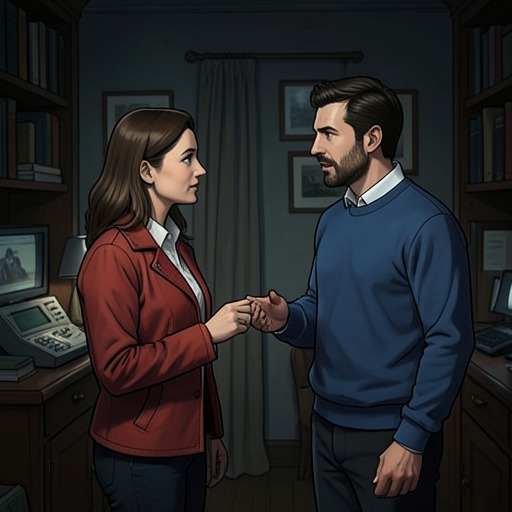
Later, after leaving a building where she has been confronting the upheaval in her life, Natasha looks up Rob’s number, remembers that she deleted it, and dials from memory. Rob answers with an elongated greeting using the nickname Nat; Natasha corrects him, saying that her name is not Nat. She is not sure she wants him on the phone, but asks directly why he cheated. When he stammers, she clarifies that she is not calling to fight or to get back together; she wants to know why he did not break up with her first.
Rob says he does not really know. He tells Natasha that she and Kelly were both great, that he did not want to hurt either of them, and that he wanted both. Natasha hears sincerity in his explanation, but sincerity does not resolve the contradiction: his wish to avoid hurting them led him to deceive Natasha. When she asks whether he must have liked Kelly better, Rob says that was not the reason. His answer supplies a motive in his own words, while leaving the responsibility and the hurt intact.
Aftermath and Narrative Significance
Rob’s place in Natasha’s story is shaped by recurrence. She had not cried when she learned he was cheating the previous winter, just as she had not cried over other painful departures and losses. Her composure does not mean the betrayal was insignificant: she remembers its shame and hurt, and later calls the encounter at the record store embarrassing. On a train, she tells Daniel about that embarrassment and reports Rob’s answer in four blunt words: he wanted both. Daniel responds angrily and threatens to kick Rob if he sees him, turning Natasha’s past into part of their present conversation.
The relationship also gives concrete form to Natasha’s reflections on love’s half-life. She compares the apparent brevity of her own feelings for Rob with the poems, songs, and novels devoted to love, and questions how something that ends so suddenly can be trusted. Rob’s explanation does not settle that broader doubt. Instead, the story distinguishes the end of Natasha’s attachment from the unresolved consequences of his conduct: she no longer wants to reunite with him, yet still wants to understand why he chose to keep both relationships rather than end one honestly. The available scenes leave Rob’s later life and his relationship with Kelly unspecified.