
Minor’s Work for the Dictionary
The Surgeon of CrowthorneThis thread follows how William Chester Minor turned a book collection and an unusual indexing method into a steady contribution to the Oxford English Dictionary.
increasing Bearing strength in each event
 decreasing
Bearing strength in each eventdecreasingThe Appeal Reaches Broadmoor
An Invitation to Contribute
A chance to participate
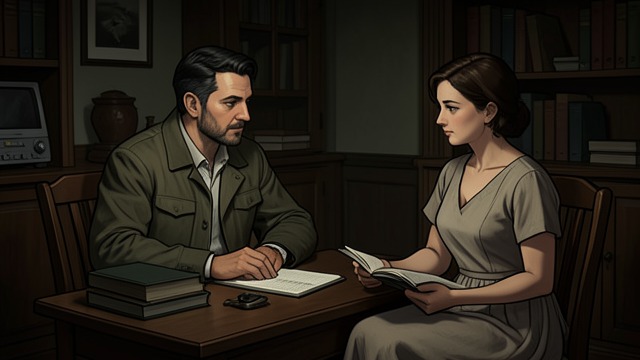
Murray’s public appeal sought readers willing to collect quotations for the New English Dictionary. A copy reached William Chester Minor in Broadmoor, where books already offered an escape from the restrictions of institutional life.
Purpose restored
Minor volunteered his services and received directions explaining how to record words and their contexts. The invitation gave him a defined intellectual task and a connection to a world outside the asylum, without requiring him to leave it.
A Private Indexing System
Reading Before Sending
Building the lists
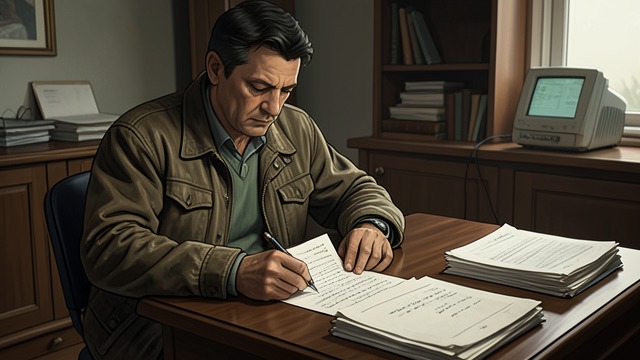
Rather than immediately mailing every interesting quotation, Minor read books closely and made extensive word-lists on folded quires of paper. He arranged entries alphabetically and recorded where each word appeared, creating a personal index across his collection.
A different kind of readiness
The method required patience and meticulous attention, but it let Minor respond when the editors requested particular words. His library became more than a refuge: it was a working archive designed to supply evidence at the moment it was needed.
Art as the First Test

A Useful Answer
A difficult word
As editors worked through the word “art,” they sought additional quotations that could clarify its meanings and history. Minor answered with a substantial group of examples, drawing on the books he had indexed.
Trust established
His contributions proved useful enough to reveal the value of his system to the Oxford team. A request for evidence had become the start of a durable working relationship, with Minor able to help the editors solve problems from his distant room at Broadmoor.
Work in Step with Oxford
A Contributor on Call
Timely evidence
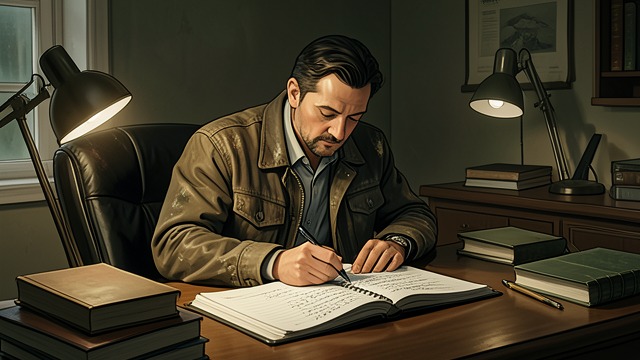
Minor often asked which words the editors were preparing and then searched his indexes for relevant examples. Unlike many readers who sent general batches of material, he concentrated on words actively under editorial consideration and supplied carefully chosen quotations.
Recognition through usefulness
His work reached Oxford in a steady stream, and the editors praised its value and precision. The process gave Minor a practical sense of participation: although confined, he could align his efforts with the dictionary’s daily progress.
Contribution as Sustenance
The Work Falls Away
Diminishing energy
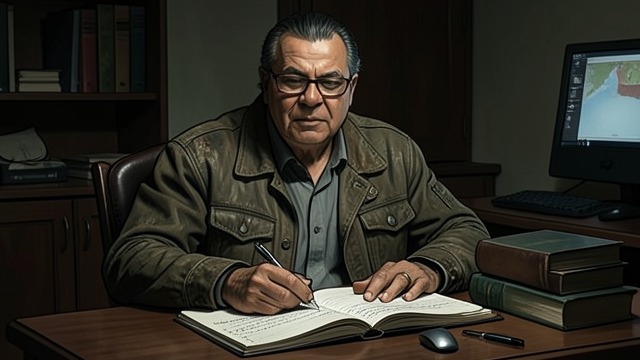
As Minor aged and his condition worsened, his contribution became less consistent. The loss of his earlier energy coincided with isolation and a stricter asylum regime, making the work that had once organized his days increasingly difficult to sustain.
A lasting record
After Minor returned to the United States, his books were passed to the Oxford collection through Lady Murray. The dictionary preserved his name and quotations, but the record also shows how a scholarly task had given a confined man a lasting role in a public intellectual achievement.
Early 1880s, in Minor’s Broadmoor cell
Early-to-mid 1880s, as Minor organized his library
1884–1885, during preparation of an early fascicle
Late 1880s–1890s, as the dictionary advanced
Early 1900s–1915, as Minor’s health declined
