
Murray and Furnivall’s Shared Dictionary Cause
The Surgeon of CrowthorneThis thread traces the stimulating, sometimes exasperating partnership through which Frederick Furnivall encouraged James Murray’s scholarship and helped bring him into leadership of the great dictionary project.
increasing Bearing strength in each event
 decreasing
Bearing strength in each eventdecreasingA Scholar’s Circle
Finding Intellectual Companions
Murray Enters the Society
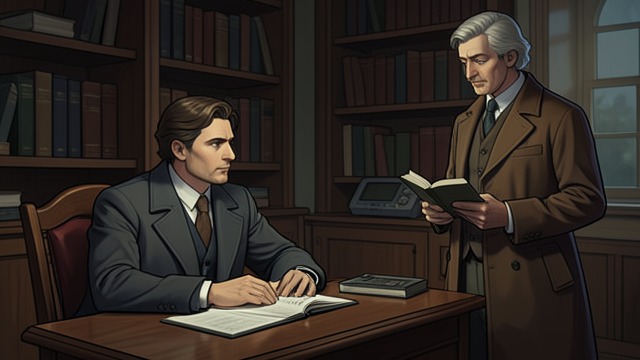
James Murray’s friendship with Alexander John Ellis and Henry Sweet helped turn his self-directed studies into recognized philological scholarship. Through the Philological Society he encountered a wider community devoted to the study of language, and his papers and publications gave him a place among people who could understand the scale of his interests.
Frederick Furnivall became a particularly consequential presence in that circle. Both men were intensely committed to learning, though Furnivall’s forceful and unconventional manner differed sharply from Murray’s more measured habits. The relationship offered Murray not simply professional notice but the company of a fellow scholar willing to recognize and encourage his abilities.
Furnivall’s Encouragement

An Advocate for Murray
Scholarship Recognized
After Murray published work on Scottish dialect and established himself as a serious scholar, his connection with Furnivall brought him closer to the central debates about English language and lexicography. Furnivall’s advocacy helped create opportunities that Murray’s modest background and lack of a university education might otherwise have made harder to reach.
Their intellectual connection was not based on similarity of temperament. Furnivall could be meddlesome and exasperating, while Murray was reserved and painstaking. Yet Furnivall’s enthusiasm and influence gave Murray access to a scholarly world in which his unusual range of knowledge could be put to ambitious use.
A Candidate for the Dictionary
A Project Finds Its Editor
Persuasion and Specimen Pages
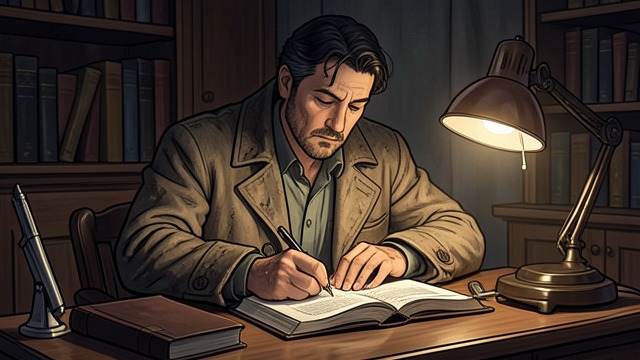
As the dictionary project struggled to find a viable future, Furnivall judged Murray the right person to take it forward. Murray prepared specimen pages to show how he would handle the work, and Furnivall continued to keep publishers and scholars focused on the possibility of a comprehensive historical dictionary.
Murray’s appointment was not simply the result of a private friendship; it depended on scholarly proof and institutional agreement. But Furnivall’s confidence in him helped carry the proposal toward the Oxford delegates. The friendship became consequential at the moment when personal encouragement could be translated into a position of lasting responsibility.
The Long Partnership in Work
Different Temperaments, Shared Purpose
The Dictionary Takes Shape
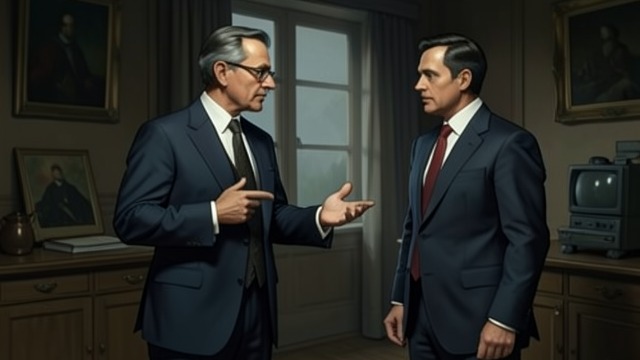
Once Murray became editor, Furnivall remained an energetic presence in the wider dictionary enterprise. He had helped sustain the project before it had a secure publisher, and he continued to contribute knowledge and enthusiasm as the work developed. Murray’s disciplined editorial leadership and Furnivall’s restless advocacy served different functions, but both were directed toward the same historical record of English.
Their connection also had its strains. Furnivall’s impulsive conduct and abrasive reputation could make collaboration difficult, while Murray bore the daily weight of production and institutional negotiation. The relationship mattered because it endured these differences: each man’s commitment to the project gave the other’s work a context larger than individual scholarly ambition.
The Last Words on Take

A Final Scholarly Exchange
Recognition Near the End
When Furnivall knew that he was dying, he continued to send Murray observations and comments on dictionary work. Murray offered him the chance to see the great entry for take in final form before it was too late. Furnivall’s response remained characteristic: his interest in the word and the project persisted even as he acknowledged that he would not live to see the dictionary completed.
Furnivall died in July 1910, still wishing he could have witnessed the finished work. Murray’s gesture showed how their bond had matured beyond the original act of advocacy. He was not merely a former sponsor or a difficult colleague but one of the men whose shared exertion had made the dictionary possible, and whose approaching absence Murray could not treat as a routine loss.
Late 1860s
Early 1870s
1877 and 1878
From 1879 through the 1890s
1910
