
A Missionary Childhood Across the Indian Ocean
The Surgeon of CrowthorneThis thread follows William Chester Minor’s early family life in Ceylon, the losses and separations that shaped his upbringing, and the lasting pull of the places he left behind.
increasing Bearing strength in each event
 decreasing
Bearing strength in each eventdecreasingBorn at the Mission
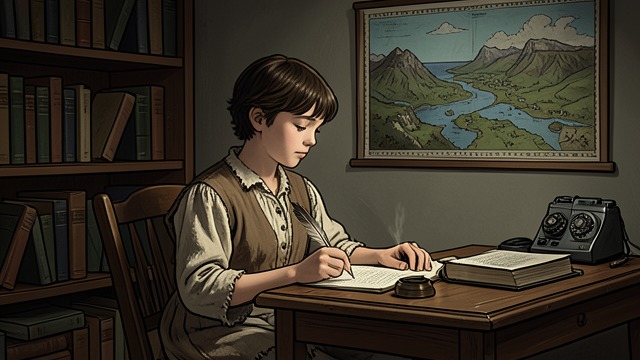
A Childhood in Ceylon
The missionary household
William Chester Minor was born in Ceylon to Eastman Strong Minor and Lucy Minor, American Congregationalist missionaries. His father had learned printing and used his work and religious commitments to support a life far from New England.
The family lived at a mission station near Trincomalee. The surroundings offered William early exposure to multiple languages and cultures, but his household was also shaped by missionary discipline and religious expectations.
An unusual education
The mission had a library and school, and William’s parents encouraged him to learn languages used around them. He later recalled speaking Sinhalese and having some knowledge of other Asian languages, a background that set his childhood apart from that of many children in Connecticut.
His early world combined intellectual opportunity with instability. Family loss and repeated changes in care would soon separate him from the place where he was born.
A Mother’s Early Death
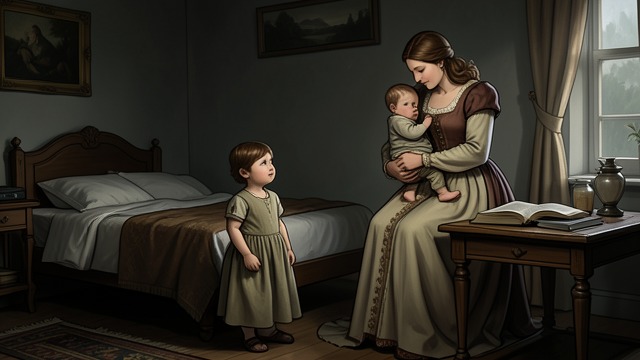
Loss in Early Childhood
The first bereavement
William’s mother died of consumption when he was three. Her death removed a central figure from his earliest years, leaving his father responsible for young William and his sister in a household already far from extended family support.
The loss was followed by further disruption rather than a settled return to America. His father remained committed to missionary work and continued to organize the family’s future across distant communities.
A changing family
Two years later, Eastman Strong Minor traveled through the Malay Peninsula with William while the child’s sister stayed behind with missionaries. The journey introduced William to another abrupt separation at an age when family continuity was especially important.
His father eventually married Judith Manchester Taylor, who became an energetic presence in the household, running a school and teaching languages. William’s childhood therefore included both bereavement and the formation of a new family under a stepmother’s care.
Life with Judith
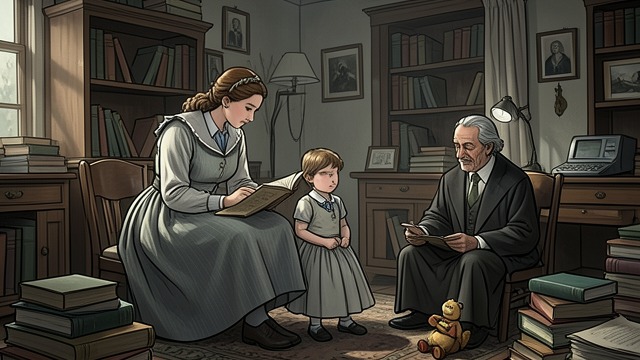
A Reorganized Household
A new guardian
Eastman Strong Minor married Judith Manchester Taylor in 1839. Judith helped run the local school, learned Sinhalese, and taught it to William, while raising children of her own alongside him.
The household grew, but it also endured repeated deaths among the children. Several of William’s half-siblings died young, and his sister Lucy later died of consumption, deepening the family’s experience of bereavement.
Education amid instability
William had access to books, schooling, and the languages around the mission. His parents’ work and travels gave him an unusually broad early education, while illness and death made family life far less secure than that intellectual promise might suggest.
The contrast between learning and loss became a defining feature of his early circumstances. Education gave him habits and abilities that would later matter in the United States and in his dictionary work, but it could not insulate him from separation or grief.
Sent Back to America
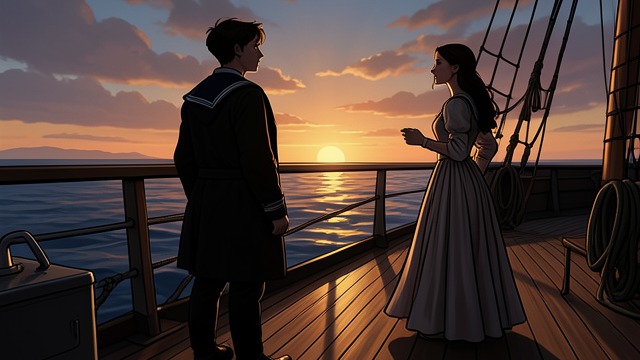
Departure from the Island
The crossing
At fourteen, William was sent from Ceylon to live with his uncle Alfred in New Haven. He traveled from Colombo by sea, taking a long route around the Cape of Good Hope because the Suez Canal had not yet been completed.
The move removed him from the languages, landscapes, and family setting of his childhood. The voyage also left him with vivid memories, including a strong attraction to a young English passenger, which he later described through a language of desire and guilt.
A divided inheritance
In New Haven, William began studying medicine at Yale. His years of serious academic work gave him a route into professional life, while the earlier world of Ceylon remained an important part of his personal history.
That distance carried emotional weight: the island was both the site of his earliest education and a place he had been sent away from. Later, in the asylum, his books about travel and Asia offered routes of the imagination back toward a childhood he could no longer revisit.
Ceylon in the Cell
Memory Through Reading
A distant homeland in books
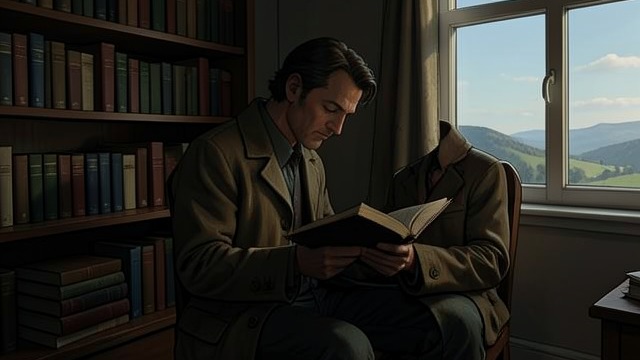
During his years at Broadmoor, Minor built a large library and read works of travel and history. Books describing Africa and Asia offered material for his dictionary work, but they also opened a mental passage toward places far beyond the asylum walls.
His reading included an account of travel to the East Indies, a subject especially resonant for someone raised in Ceylon. The book presents his work on these volumes as one way his intellectual life remained connected to his early geography.
Memory under confinement
Minor’s childhood cannot explain his later illness by itself, and the narrative does not reduce his life to a single cause. It does, however, reveal how a complicated family history and a distant upbringing formed part of the life he carried into confinement.
His early exposure to languages and books later helped make him an unusually effective contributor to the Oxford English Dictionary. The same habit of reading that linked him to Ceylon also gave structure to the long years in which travel was impossible.
June 1834
1837
1839–1848
1848
1880s–1890s
