
Frederick Furnivall’s Unruly Stewardship
The Surgeon of CrowthorneThis thread follows Frederick Furnivall’s energetic but difficult role in sustaining the dictionary project and bringing James Murray into its leadership.
increasing Bearing strength in each event
 decreasing
Bearing strength in each eventdecreasingA Volatile Scholar

Learning in Motion
A difficult public character
Frederick Furnivall was a scholar of formidable energy whose interests included mathematics, medieval literature, and philology. He was also known for bluntness and behavior that alienated collaborators, making it difficult for institutions and publishers to work with him.
His personal reputation did not prevent him from drawing notable writers and scholars into his circle. His combination of intellectual seriousness and social unruliness made him both an effective instigator and a problematic administrator.
A cause to carry
Furnivall became one of the central organizers of the Philological Society’s plans for a new dictionary. The project suited his appetite for large-scale scholarly work, but it also demanded patient coordination and sustained attention to volunteers.
That mismatch would become increasingly consequential. His energy helped launch and publicize the enterprise; his limitations as a steady manager made its progress vulnerable when enthusiasm began to fade.
The Volunteer System
Building a Network of Readers
Instructions and infrastructure
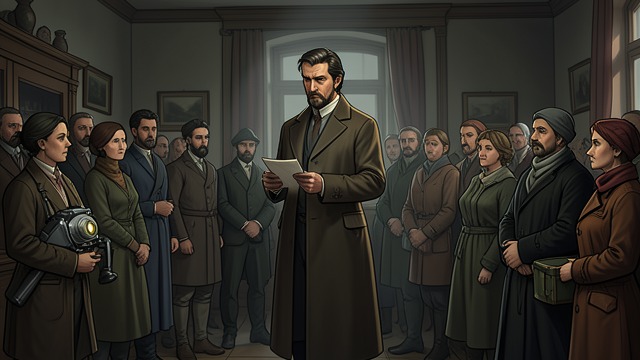
Furnivall circulated appeals inviting readers to choose books and historical periods, then record words and their contexts on slips. The system depended on many people performing a small task in a consistent format, so editors could sort the material by word and use it to trace changes in meaning.
The idea made a project of extraordinary scale conceivable without relying on one scholar to read everything. It also created a logistical challenge: incoming contributions needed to be checked, organized, stored, and connected to editorial decisions.
The limits of enthusiasm
The early organizers underestimated both the quantity of material and the time needed to process it. As the burdens became apparent, contributors lost momentum, and some returned books without completing their work.
Furnivall’s volunteer system offered the dictionary a democratic source of evidence, but it could not sustain itself through aspiration alone. Its difficulties became a warning to the editors who later had to design a more reliable rhythm of requests, responses, and storage.
A Project Nears Collapse
The Work Loses Momentum
Returns and retreat
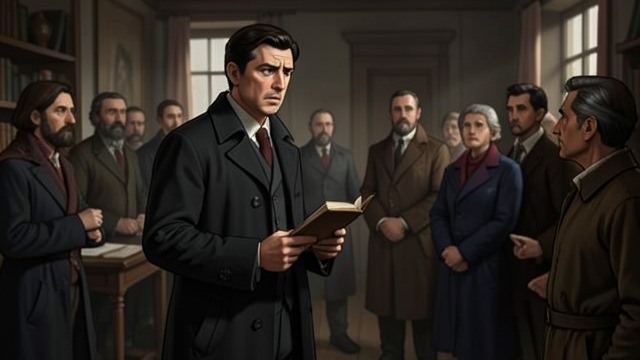
Under Furnivall’s stewardship, volunteers gradually stopped reading and sending in their slips. Books and materials came back in large quantities, and the effort appeared to outsiders to be faltering under the weight of its own ambitions.
Reports grew shorter, while the work itself advanced too slowly to reassure the Society. Contemporary observers began to believe that the dictionary might never be carried through.
A leadership problem
The difficulty was not a lack of scholarly purpose but the absence of consistent coordination capable of keeping contributors engaged. Furnivall remained committed, yet commitment alone could not replace the administrative stamina the project required.
This near-collapse created the conditions for a change in leadership. The dictionary needed someone who could combine philological range with a system strong enough to withstand years of work.
Murray’s Recruitment

Finding a Working Editor
The candidate emerges
James Murray had earned a scholarly reputation through work on Scottish dialect and other linguistic subjects. Furnivall, who knew him through the Philological Society, judged that Murray could give the dictionary the careful leadership it lacked.
Murray prepared sample pages, demonstrating how he might organize words, pronunciation, etymology, and usage evidence. The proposal faced doubts at Oxford, but Furnivall continued to press the case for both Murray and a publisher capable of supporting the project.
A new alliance
The Oxford delegates eventually met Murray and agreed to proceed. His appointment did not erase the years of delay, but it shifted the work from an unstable society project toward a sustained editorial undertaking.
Furnivall’s decisive contribution was to recognize that the enterprise needed a leader whose habits differed from his own. Their collaboration turned his restless advocacy into an institutional decision that could outlast its first organizers.
A Final Measure of Success
The Elder Organizer
Recognition at Oxford
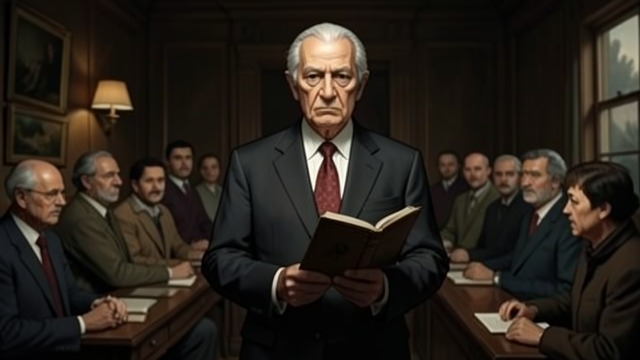
At the 1897 dictionary dinner, Furnivall spoke among the people who had helped turn the project into a public achievement. His presence linked the celebratory Oxford occasion to the earlier years when the dictionary had seemed stalled and uncertain.
He remained involved in the work even as age and illness overtook him. In 1910, shortly before his death, he was still corresponding about a dictionary definition and wanted to see the great project completed.
Work outlasting its founders
Furnivall died before the dictionary was finished, as did James Murray. The work continued under later editors, carrying forward the volunteer evidence and editorial machinery that Furnivall had helped set in motion.
His legacy is therefore neither that of a flawless administrator nor merely a colorful eccentric. He was a catalytic figure whose advocacy, recruitment, and persistence mattered even when his management proved insufficient to carry the enterprise alone.
By the 1860s
1858 onward
Late 1860s
1873–1878
1897–1910
