
Fitzedward Hall’s Distant Collaboration
The Surgeon of CrowthorneThis thread follows Fitzedward Hall’s withdrawal from public life and his sustained, largely unseen scholarly partnership with James Murray.
increasing Bearing strength in each event
 decreasing
Bearing strength in each eventdecreasingAn Unplanned Scholar

A Journey to India
A disrupted beginning
Fitzedward Hall was preparing to enter Harvard when his family sent him to India to look for an errant brother. His ship was wrecked in the Bay of Bengal, but he survived and became deeply interested in Sanskrit.
The unexpected journey redirected his life toward language study. He developed enough expertise to be offered a professorship at Government College in Benares, making scholarship the center of a career that had begun with a family emergency.
A new academic life
Hall later fought for the British side as a rifleman during the 1857 Mutiny, then left India and returned to England. His combination of military experience, linguistic learning, and work in academic institutions made him an unusual figure in the scholarly world.
The promise of his early career did not protect him from later isolation. A fierce dispute with a fellow scholar would help sever his connection to the institutions that had once defined his life.
A Scholarly Rupture
Exile from Institutions
The dispute
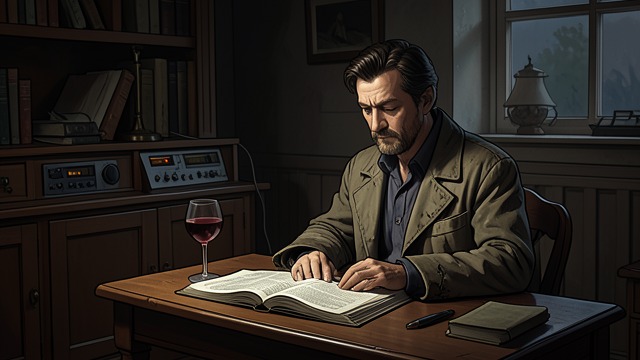
After returning from India, Hall held academic and library positions in London. A bitter quarrel with the Sanskrit scholar Theodor Goldstücker preceded Hall’s departure from the India Office and his suspension from the Philological Society.
The book presents the dispute as a turning point, although it does not establish every cause behind the collapse of Hall’s public career. He left London and settled in a small Suffolk village, far from the institutions where he had once worked.
A life of retreat
People around Hall described him as a drunkard, spy, and fraud, while Hall believed that Britons had conspired against him and displayed hatred toward Americans. The competing accounts reveal how his isolation became entangled with suspicion and grievance.
Rather than returning to academic society, Hall withdrew into a largely solitary life. That withdrawal would not end his scholarly productivity; it redirected it into a long correspondence with James Murray.
Letters from Suffolk
Collaboration by Correspondence
A steady exchange
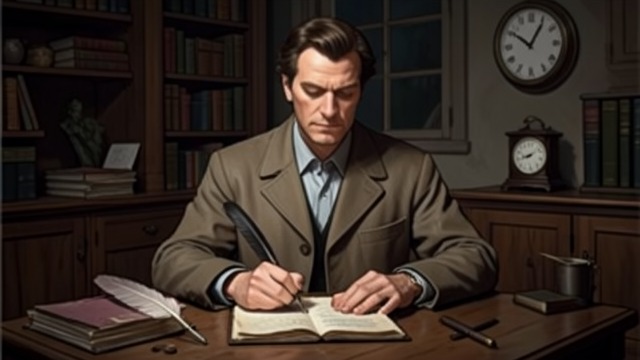
Hall wrote to James Murray regularly, offering advice, answering questions, and supplying material for the New English Dictionary. The two men did not meet, but their letters created a working relationship that endured for roughly two decades.
Hall’s isolation from the wider academic world did not prevent him from becoming one of the dictionary’s most valuable collaborators. His daily scholarship reached Oxford through the postal system rather than through a university office or public scholarly gathering.
Service without spectacle
His work included researching words and their documentary histories, tasks that required a wide command of language and printed sources. He contributed without the visibility of an editor and without demanding a return to public professional life.
The correspondence made scholarly usefulness possible alongside social retreat. Hall’s contribution also echoed the dictionary’s founding premise: the work could be made through many readers, including contributors whose circumstances kept them far from its editorial center.
A Hidden Reputation
The Absent Contributor
Praise at the dinner
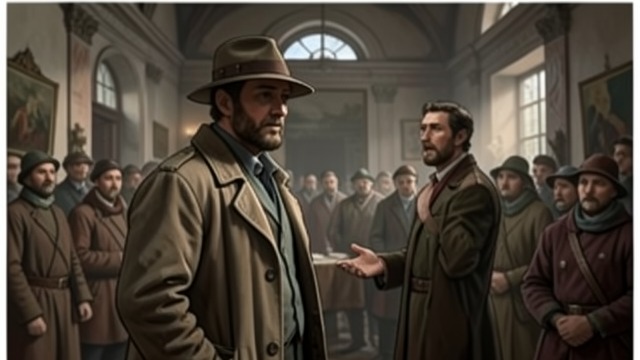
At the 1897 Great Dictionary Dinner, the assembled company heard Hall praised for the extraordinary contribution he had made to the dictionary’s documentary history. The account noted that he had supplied work across numerous words, senses, and idioms.
Hall did not attend. His absence was understood in relation to his reputation as a recluse, unlike the mystery surrounding William Chester Minor’s absence, which the people at the dinner could not explain.
The value of unseen labor
The contrast between Hall’s public praise and private withdrawal shows that recognition did not necessarily bring a collaborator back into society. His scholarship became visible in the dictionary even as Hall himself remained absent from the Oxford scene.
That combination of influence and disappearance makes his story a parallel to the less understood contributor at Crowthorne. Hall demonstrates that the dictionary’s human network included distant, isolated scholars whose labor was extensive even when their lives stayed outside the public celebration.
The Colleague Remembered
A Loss Within the Project
Hall’s death
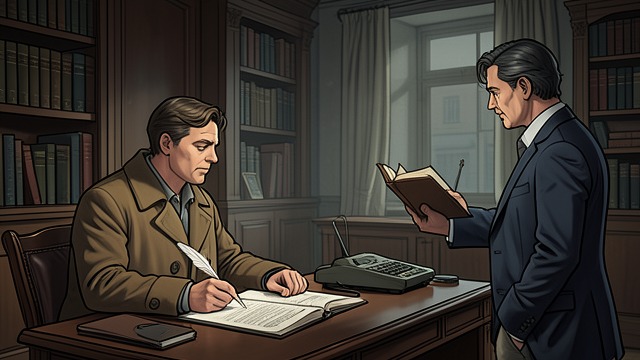
Fitzedward Hall died in 1901. His death prompted William Chester Minor to write to James Murray with an expression of sorrow, while also asking for additional work on particular letters of the dictionary.
That small detail joins a private loss to the project’s ongoing routine. The work continued to offer a means of connection between distant contributors, even when death was removing the people who had helped build it.
An enduring contribution
Murray later described Hall’s work in exceptionally generous terms, emphasizing its importance to the dictionary’s record of words and their histories. The praise gave formal recognition to a contribution that had been made far from Oxford and largely through correspondence.
The dictionary’s completion came years after Hall’s death. Its pages preserved the results of his labor, converting a private scholarly exchange into a lasting part of the reference work he had helped create.
1848
After 1860
From the late 1870s onward
1897
1901–1928
