
Murray and Minor’s Meeting of Minds
The Surgeon of CrowthorneThis thread traces how correspondence about dictionary evidence developed into a sustained personal bond that offered Minor companionship and Murray a trusted collaborator.
increasing Bearing strength in each event
 decreasing
Bearing strength in each eventdecreasingLetters from Crowthorne
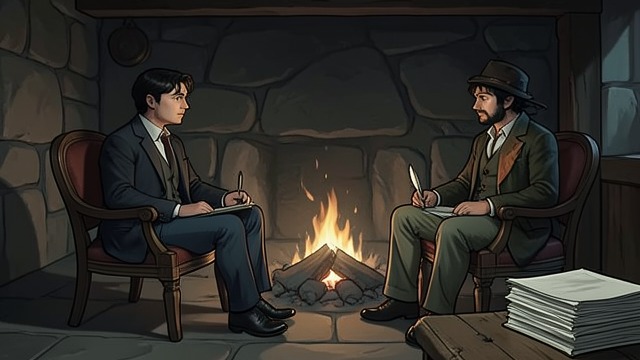
A Relationship Begins on Paper
A professional introduction
William Chester Minor first approached James Murray as a volunteer reader, signing his letters with his address at Broadmoor, Crowthorne. Murray initially assumed that his correspondent was a retired or practising medical man with literary interests and leisure.
A shared subject
Their correspondence stayed focused on words, books, and the dictionary’s needs. This narrow professional frame allowed trust to form without either man needing to explain the complicated circumstances that shaped his own life.
The Asylum Address Revealed
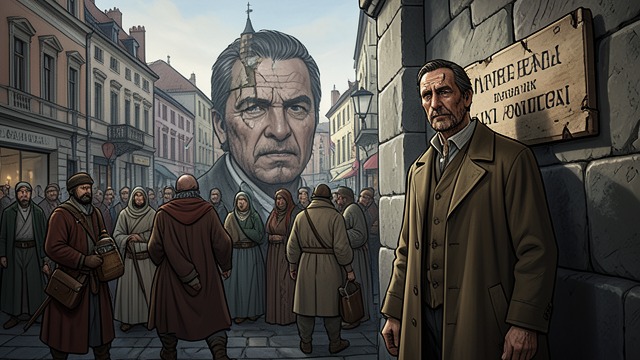
The Hidden Circumstance
A colleague’s disclosure
A visiting scholar told Murray that he had shown kindness to “poor Dr Minor,” revealing that the address belonged to an asylum. Murray learned that the man whose work he relied on was not simply a secluded medical reader but a patient with a grave and painful history.
Respectful restraint
Murray did not confront Minor with what he had learned. He continued to write with greater care, fearing that disclosure might damage their working relationship, and allowed the correspondence to proceed on the terms Minor had chosen.
The First Visit
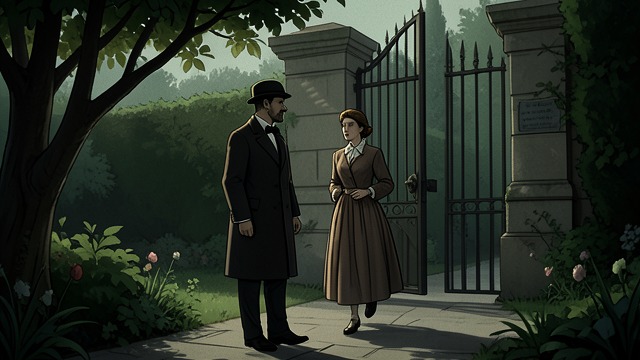
Correspondents Become Acquainted
Permission to meet
After an American visitor assured Murray that Minor knew the truth and would welcome a visit, Murray wrote to arrange one. He travelled to Broadmoor and met Minor there, rather than discovering his identity through the later dinner-party legend.
Personal recognition
Murray found a cultivated and scholarly man, deeply restricted in his freedom but eager to be useful. Their conversation and the superintendent’s welcome turned a long correspondence into direct acquaintance, grounding their bond in mutual respect rather than mystery.
Visits and Shared Walks
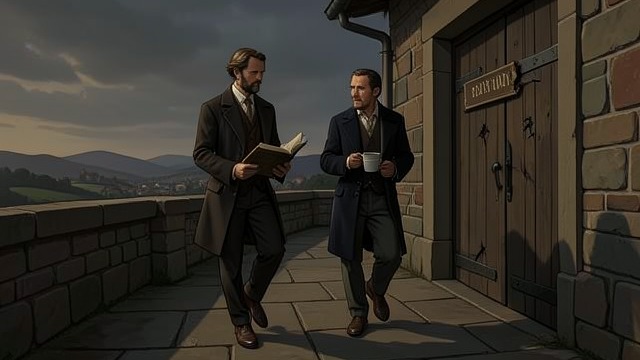
Friendship Within Boundaries
Time together
Murray and Minor met repeatedly, talking over word histories, pronunciation, and the dictionary’s progress. They sometimes walked on Broadmoor’s terrace or shared tea and books, creating a small space of companionship inside a highly controlled institution.
An illness not concealed
Murray noticed objects and precautions shaped by Minor’s delusions, yet he did not reduce their relationship to those symptoms. His visits offered encouragement, while Minor’s continuing intellectual work gave them an enduring subject in common.
A Farewell and a Legacy
Parting Without Severance
Goodbye at release
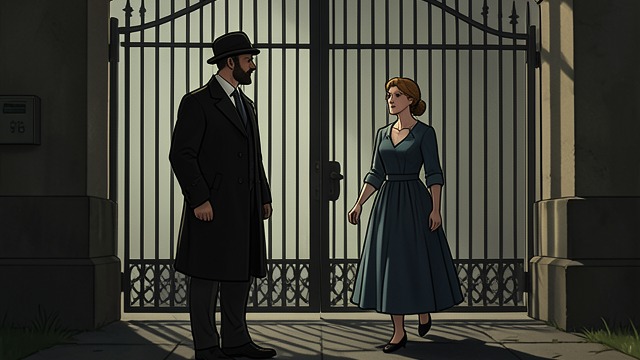
When Minor was released and sent back to the United States in 1910, James Murray and his wife came to say farewell. Their meeting marked the end of visits at Broadmoor, but not the end of their regard for one another or of Minor’s place in the dictionary’s history.
Work outlasting friendship
Murray died in 1915, while Minor was living in a Washington hospital. Minor later sent his books to Lady Murray for the Bodleian, leaving a material trace of their shared labour after the two men could no longer meet or write to one another.
Early 1880s, after Minor volunteers
Between 1887 and 1890, in the Oxford Scriptorium
January 1891, at Broadmoor
1891–1901, during their regular meetings
1910–1915, from Minor’s departure to Murray’s death
