
Madness, Causation, and Moral Uncertainty
The Surgeon of CrowthorneThis thread follows the book’s movement from competing explanations of Minor’s illness toward a cautious account of uncertainty, diagnosis, and the ethical consequences of confinement.
increasing Bearing strength in each event
 decreasing
Bearing strength in each eventdecreasingThe Irish Deserter Hypothesis
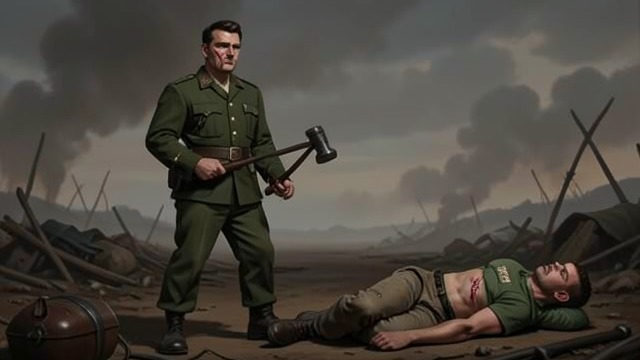
A Proposed Origin Story
The Branding Incident
During the Battle of the Wilderness, Minor was said to have been ordered to brand an Irish deserter. The episode later became a prominent explanation for his fear of Irish people and for the persecutory beliefs that shaped his life after he returned to civilian society.
According to this account, the branded man might have blamed Minor and threatened revenge, giving the surgeon a specific reason to expect attack. Years later, Minor’s suspicions about intruders and Irish persecutors made the story seem to fit his symptoms.
Circumstantial Evidence
The book treats the explanation as plausible but not proven. The surviving accounts differ, and the evidence does not establish that the branding incident directly caused Minor’s illness or that the imagined threat was connected to any real pursuit.
The distinction matters because a compelling narrative can make a complicated mental illness appear to have one decisive origin. The episode may illuminate Minor’s fears, but it cannot be treated as a complete medical explanation for what followed.
Paranoia Before the Crime
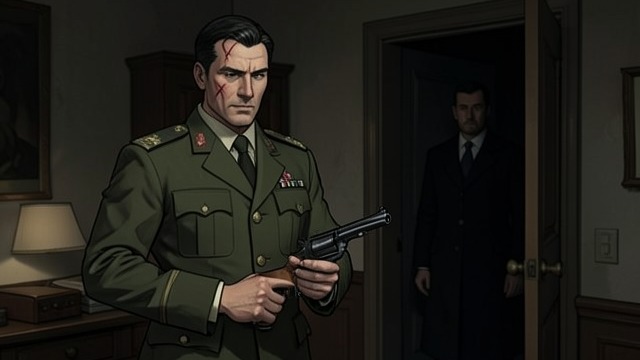
Delusions and Escalation
Signs in Military Service
During the later years of Minor’s army career, medical records described increasingly serious suspicions and delusions. He believed that fellow officers were plotting against him, and doctors eventually considered his condition sufficiently grave to recommend institutional care.
After leaving the army, Minor traveled to Britain carrying a history of illness, a weapon, and persistent fears. In London he told police that Irish intruders were entering his room, drugging and molesting him, although the people he imagined could not be confirmed by those around him.
A Fatal Delusion
In February 1872, Minor pursued a man he believed to be an intruder and shot George Merrett, who was on his way to work. Minor admitted the shooting, but his account described a mistaken target and a threat that existed in his delusional understanding rather than in the evidence around the victim.
The murder transformed an illness that had previously been treated as a private crisis into a public and legal question. It also left lasting harm to Merrett’s family, making it impossible to discuss Minor’s condition as though its consequences belonged only to him.
The Law’s Insanity Verdict
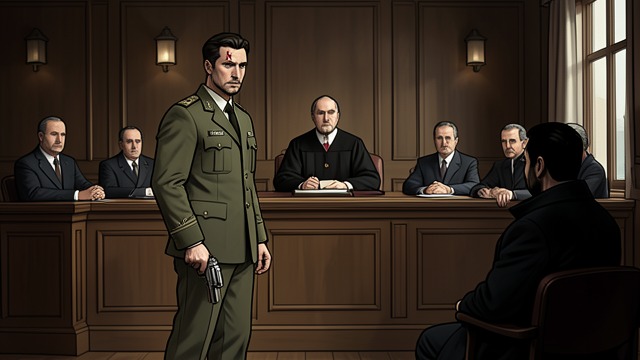
Responsibility and Confinement
The Trial
At William Chester Minor’s murder trial, witnesses described his fears of nocturnal intruders, persecution, and poisoning. The defense argued that he was insane, and the court instructed the jury to consider whether he had killed under a delusion that prevented ordinary responsibility under the legal standard of the time.
The jury found Minor not guilty by reason of insanity. The verdict did not dispute that he had killed George Merrett; it distinguished the act from the legal capacity to understand and answer for it.
Indefinite Detention
The judge ordered that Minor be held until the monarch’s pleasure was known, placing him in state custody rather than returning him to ordinary life. The legal phrase carried an appearance of formality, but the sentence meant confinement whose end could not be predicted.
The decision reveals the period’s effort to reconcile public safety with an emerging belief that mentally ill defendants required different treatment from ordinary criminals. It also left unresolved what treatment could do for a patient whose delusions remained persistent and whose confinement would last for decades.
Diagnosis Across Eras
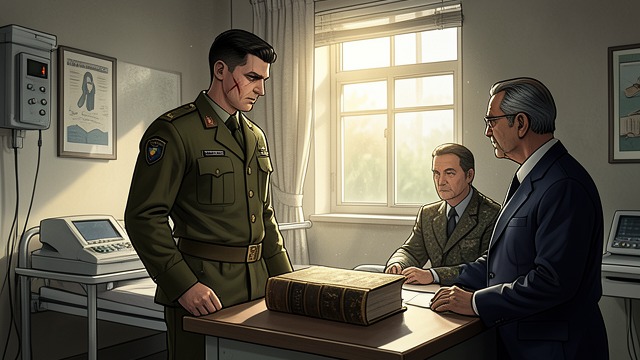
Naming an Uncertain Illness
From Monomania to Dementia Praecox
Military doctors first used period terms such as monomania and delusion to describe Minor’s condition. These labels recorded serious symptoms but reflected a medical framework that did not yet offer the diagnostic language later used to classify psychotic illness.
At St Elizabeths Hospital, a psychiatrist diagnosed Minor with dementia praecox of the paranoid form in 1918. The terminology placed his long history within a more systematic psychiatric classification, though the diagnosis still offered little prospect of a treatment that could reverse his illness.
Labels and Their Limits
The narrative explains that psychiatric categories change as medical knowledge changes. Later clinicians would use schizophrenia rather than dementia praecox, while debates continued over possible causes, including inherited vulnerability, temperament, trauma, and their interactions.
A new name could organize symptoms without settling their origin. Minor’s history therefore becomes a test of diagnostic humility: retrospective labels can help describe a pattern, but they cannot recover with certainty what set it in motion or what different care might have changed.
The Cautious Causal Account
Cause Without Certainty
Trauma and Vulnerability
In its closing discussion, the book considers whether Minor’s experiences in the Civil War helped precipitate his later illness. The violence of the battlefield and the reported branding of an Irish deserter may have intensified fears that already had deeper roots, but the narrative does not present them as a demonstrable single cause.
It also considers possible predispositions and the role of temperament, family history, and severe stress. These possibilities suggest an interaction between vulnerability and experience rather than a simple chain of events that can be proven from the surviving record.
The Ethics of Retrospect
The book resists equating every unusual or socially disapproved behavior with illness, while recognizing that Minor’s delusions were profound and had catastrophic consequences. The question of diagnosis thus reaches beyond medical terminology to the difficult boundary between eccentricity, suffering, danger, and the state’s authority to confine.
Its final irony is that dictionary work may have offered Minor a form of relief at a time when effective treatment was unavailable. That possibility does not make his illness useful or his confinement benign; it only acknowledges that a meaningful routine may have helped him endure. The remaining uncertainty is part of the story’s moral seriousness, not a gap to be filled with invented certainty.
May 1864, during the American Civil War
1868–February 1872
April 1872
1868–November 1918
The closing reflections, after Minor’s death in 1920
