Christ Church, Oxford
The Surgeon of CrowthorneChrist Church, Oxford, was the setting for a decisive institutional encounter in the making of the New English Dictionary: on 26 April 1878, James Murray met the Delegates of Oxford University Press there for the first time. The location is tied not to Murray’s later meeting with William Chester Minor, but to the moment when the university press agreed to proceed with Murray’s proposed dictionary.
Setting and Institutional Company
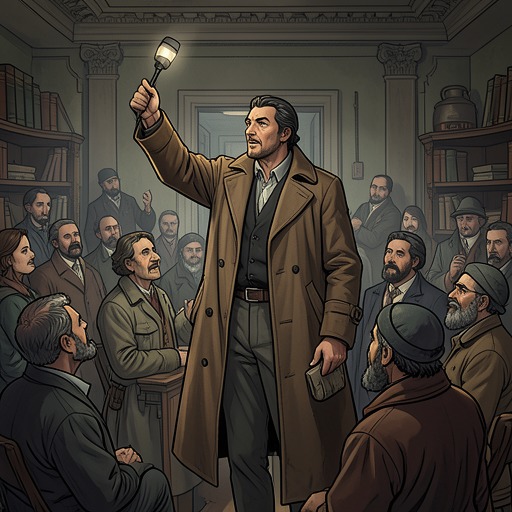
Murray was invited to Oxford and received in a room at Christ Church for a full meeting of the Press’s Delegates. The gathering brought him before a concentrated body of academic authority: its members included the Dean of Christ Church, Oxford’s professor of Comparative Philology, the Regius Professor of History, a Christ Church canon and classical scholar, and the Warden of New College. The account presents them as figures who shaped the era’s major intellectual institutions and books, rather than as a merely routine publishing committee.
The 1878 Meeting
The encounter followed years of uncertainty over both the editor and publisher for the proposed dictionary. Oxford’s Delegates had criticized Murray’s sample entries, questioning his coverage of quotations and pronunciations, and hesitating over whether the work should include etymology. Murray and Frederick Furnivall had even looked to Cambridge University Press, only to be rebuffed. Against that background, the meeting at Christ Church was a reversal: Murray expected the Delegates to intimidate him, while they had anticipated dismissing him, but the encounter pleased both sides. The Delegates decided to proceed, marking the project’s acceptance by Oxford University Press.
That decision did not settle the practical terms. Negotiations over the contract continued for another year, often bitterly and largely without Murray’s personal participation. On 1 March 1879, the agreement was formally made for Murray to edit the New English Dictionary on Historical Principles on behalf of the Philological Society. The book was then projected to run to four volumes and take ten years; the estimate proved inadequate, but the work had begun in earnest.
Historical and Narrative Significance
Christ Church’s importance in the account rests on what happened there and on the institutional threshold the meeting crossed. It was where a proposal long debated among philologists and publishers gained the Delegates’ approval, linking the scholarly ambitions of Murray and Furnivall to the resources of Oxford University Press. The account’s grand description of the assembled academic figures makes the room a stage for the establishment of a large public work, not simply a backdrop to Murray’s career.
The site also helps distinguish documented history from a later literary legend. Hayden Church’s sensationalized account placed Murray’s supposed first meeting with Minor at Broadmoor Asylum for the Criminally Insane, but the book identifies that encounter as romantic fiction. Murray’s own letter instead traces his first contact with Minor to the early years of his Dictionary work, probably 1880 or 1881, after the Christ Church meeting. The two episodes therefore belong to separate points in the story: Christ Church marks the dictionary project’s institutional beginning under Murray, while the celebrated meeting with Minor was a later invention.