Crowthorne
The Surgeon of CrowthorneCrowthorne is a village in Berkshire whose importance in the book rests on a sharp contrast: to the outside world it could appear quiet, ordinary and rural, yet it housed Broadmoor Asylum for the Criminally Insane. The village therefore becomes more than a location on an envelope or a stop on a railway journey. It is the setting in which William Chester Minor’s confinement and his extensive work for James Murray’s dictionary project occupy the same address, while the story of Murray’s visit illustrates how a place can be obscured by the legend attached to it.
Village and Setting
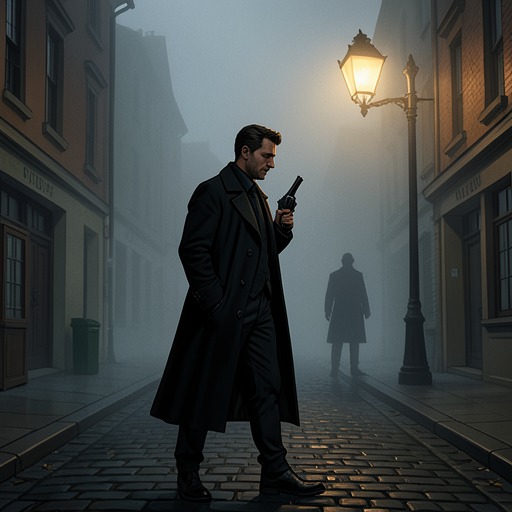
The account presents Crowthorne as a small, wooded, self-contained village beyond London, in Berkshire. Its cottages and rural lanes form the everyday landscape through which visitors approached the institution. The imposing red-brick buildings and formal entrance associated with Broadmoor stood apart from that modest village scene: the account describes a long, poplar-lined drive leading to severe-looking buildings and a substantial gate. Crowthorne’s contrast between village and institution is central to its narrative character. Broadmoor was physically situated there, but an ordinary mention of the village did not necessarily reveal what lay behind its walls.
Wellington College helped define the village’s connection to rail travel. The station serving the area was then known as Wellington College Station, because it served the school in the village. Its name could suggest an ordinary educational destination, even though it also brought visitors to the place where the asylum stood. The station, village and institution thus form linked but distinct parts of the setting: a railway arrival, a rural approach through lanes, and a destination whose character was not apparent from the address alone.
Broadmoor and the Hidden Address
In 1872, after a jury found Minor legally innocent of a murder on grounds of insanity, the Home Department arranged for his detention at the newly built asylum in Crowthorne. The decision placed him in an institution described as a showpiece of the British penal system, within a sprawling group of red-brick buildings enclosed by high walls and spiked fences. He was registered as Broadmoor Patient Number 742 and held in permanent custody as a certified criminal lunatic. Crowthorne was consequently the location of a confinement expected to last for the remainder of his life, not simply a rural home to which he had chosen to withdraw.
Yet the place-name could pass without attracting attention. When Minor wrote to the Dictionary office, he gave his address as Broadmoor, Crowthorne, Berkshire. The book stresses that, without knowledge of the institution, this sounded like the address of an ordinary house in an ordinary village. The word asylum itself could also carry a benign meaning: an older dictionary defined it as a refuge or sanctuary. In this context, Crowthorne’s ordinary postal appearance concealed the force of Minor’s actual circumstances. The address was accurate, but its everyday form did not communicate that its writer was an inmate.
A Place of Confinement and Work
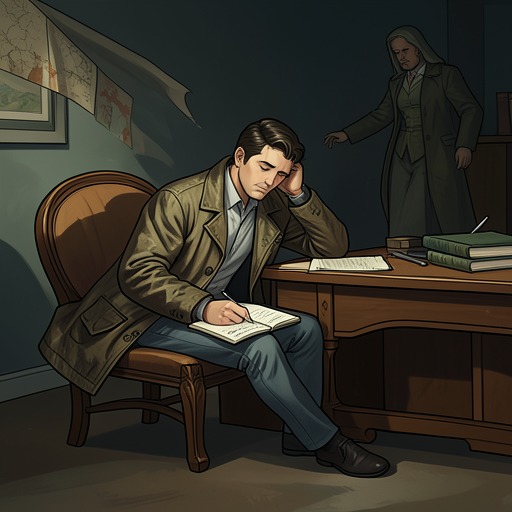
By the early 1880s, after eight years at Broadmoor, Minor encountered the public appeal for readers to help with the dictionary. One copy reached his cell in Block 2, in Broadmoor’s top floor, where books lined one of his two rooms from floor to ceiling. The village setting thus became the base for a substantial intellectual contribution made from inside the institution. Minor’s letter volunteering for the work bore the Crowthorne address, which connected the dictionary’s expanding network of readers to a location Murray did not initially understand.
Murray recalled receiving Minor’s first approach early in the dictionary project, probably in 1880 or 1881. He remembered the address as Broadmoor, Crowthorne, Berkshire, but at first did not grasp that it identified an asylum. Busy with the large volume of responses to his appeal, he treated Minor as a qualified and enthusiastic reader and encouraged him to begin gathering quotations. The resulting correspondence concerned dictionary materials, while the location from which it came remained, for Murray, only partly understood. Crowthorne therefore marks an unusual conjunction: the confined setting of Minor’s life and the point of origin for work that entered a major public scholarly undertaking.
Visits and the Correction of a Legend
Crowthorne is also where the book examines a celebrated story about Murray’s first meeting with Minor. A popular version placed the visit in 1896 and described Murray travelling from Oxford to meet his mysterious contributor. In that account, a polished carriage carried him through the village to an imposing mansion; only after a formal greeting did he learn that the supposed private residence was Broadmoor and that Minor was an inmate. The station and the village’s rural approach made the tale vivid, but vividness did not make its chronology reliable.
The account identifies the dramatic version as a fiction created by journalist Hayden Church, whose story appeared in the Strand in 1915 and was subsequently repeated. The evidence presented instead places Murray’s first meeting with Minor in January 1891, six years earlier than the popular version. Murray had sought permission from the institution’s governor, and his surviving letter shows that he looked forward to meeting the contributor to whom the Dictionary owed so much. Their first meeting over lunch began a relationship that continued through regular visits and correspondence for almost twenty years. Crowthorne is thus not merely the stage for a hidden identity revealed in a sensational scene; it is the actual setting of a longer association whose documented beginning was less theatrical than the legend.
Narrative Significance
The book uses Crowthorne to bring institutional history, literary labour and the making of public stories into close contact. The village’s unremarkable address concealed the conditions under which Minor worked, while the asylum within it gave later writers the setting for a dramatic revelation. Correcting that revelation does not erase the significance of the place. Instead, it shifts attention from a single supposedly astonishing encounter to the sustained relationship that began in 1891 and to the many years of work carried out from Broadmoor.
Crowthorne holds these facts together without making them identical. It was a rural village, a railway destination, the site of a tightly secured institution, and the address attached to valuable dictionary contributions. Its name could appear in correspondence without revealing the life behind it; later, the same place-name lent authority and atmosphere to a story that distorted the chronology. The location’s significance lies in that tension between what an address states and what it leaves undisclosed.