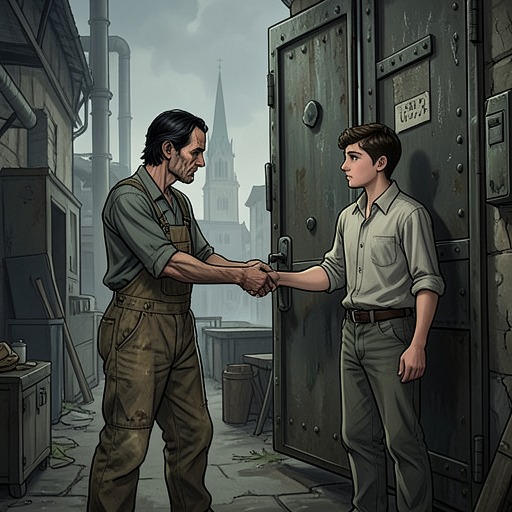
Dr Brayn
The Surgeon of CrowthorneDr Brayn was the superintendent brought to Broadmoor in 1895 to enforce a stricter institutional regime. His rule contrasted with the more sympathetic care associated with his predecessor, Dr Nicholson, and became a source of concern to James Murray as William Chester Minor’s health and circumstances changed.
Appointment and Regime
Dr Nicholson retired in 1895, still suffering from the effects of an earlier attack by a patient. The Home Office selected Dr Brayn as his replacement because it believed Broadmoor needed stricter management. Brayn’s administration was marked by close discipline: no patients escaped during his term, and in its first year the institution recorded 200,000 hours of solitary confinement for its more disruptive inmates. Patients widely feared and disliked him, while Murray considered his approach to Minor heartless.
Minor’s Treatment and Decline
Minor’s devotion to contributing quotations for the dictionary had become taxing to both his body and mind by the time Brayn took charge. The surviving examples of Minor’s complaints from 1896 are specific and domestic: he reported a hole in his sock’s heel, which he suspected came from having to put his foot into a stranger’s shoe at night, and later suspected that his wine and spirits were being tampered with. These details establish the conditions of Minor’s unease during Brayn’s superintendency, although they do not show that Brayn personally caused either incident.
By 1902, Minor had spent thirty years at Broadmoor and was the institution’s longest-staying patient. An old army friend sought Brayn’s advice about visiting, after Minor had written that circumstances had changed and the visit might be unpleasant. Brayn advised against it: he saw no sign of immediate danger, but thought Minor’s age was telling and his life precarious. Around this time, the possibility of allowing Minor to return to the United States to spend his declining years near family first arose.
Farewell and Departure
When Minor’s release was being arranged, James Murray asked whether he could visit to say goodbye and bring Lady Murray with him. Brayn permitted the visit, reporting that Minor was in much better health and would be pleased to see them. His response offers a more accommodating final glimpse of his dealings with Minor than Murray’s earlier judgment of his care. After thirty-eight years at Broadmoor, Minor was preparing to leave for the United States.