Lambeth Marsh
The Surgeon of CrowthorneLambeth Marsh was a working district across the Thames from Westminster, notorious for its poverty, nightlife, and street crime yet inhabited by ordinary families and laborers. In February 1872, its streets became the scene of George Merrett’s murder, a shooting so unusual in London that it startled residents and police alike. The case also exposed the district’s administrative position beyond the jurisdictions of both London and Westminster.
Setting and Jurisdiction
Lambeth Marsh lay on the Surrey bank of the Thames, across from Westminster. Its reputation rested on a combination of crowded housing and inexpensive entertainment: public houses, brothels, and theatres attracted visitors from across the river, while the district’s distance from the authorities of London and Westminster made it a place where amusements unavailable in the capital could be found. Until 1888, Lambeth Marsh belonged administratively to Surrey. Visitors crossed one of the new bridges, including Waterloo Bridge, to reach it.
The area was also associated with street violence and theft. Yet the presence of crime did not make firearm violence commonplace. In the London of the period, guns were costly and difficult to conceal or use, and armed crime was regarded as sufficiently rare to draw particular attention. The shooting in Lambeth therefore confounded expectations even in a district already known for disorder.
Residents and Work
Lambeth Marsh was not only a destination for nightlife. Its cheapness drew people who lived and worked there, among them George Merrett, a stoker at the Red Lion Brewery. He had held that job for eight years, helping keep the brewery’s fires burning, and lived at 24 Cornwall Cottages on Cornwall Road.
Merrett and his wife, Eliza Merrett, had both come to London from agricultural work in the countryside. He was from Wiltshire and she from Gloucestershire; they met at a farm show in the Cotswolds and left for London together. After living in north London and then the city centre, they moved near the brewery in 1867 as their family grew and manual work became harder to find. Their story places a working family within the same district often described chiefly through its vice and danger.
The 1872 Shooting
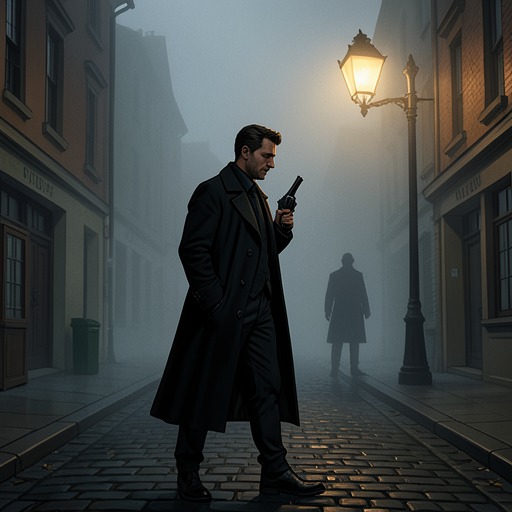
Shortly after two o’clock on 17 February 1872, three revolver shots—and perhaps a fourth—were heard in Lambeth Marsh. Henry Tarrant, a young constable attached to Southwark Constabulary’s L Division, was on the night shift near the railway arches beside London Waterloo Station. He recognized the unusual sound, blew his whistle to alert colleagues, and ran toward Belvedere Road, where he believed the shots had come from.
Merrett was walking to his early shift at the brewery when he was chased near the entrance to Tenison Street. The gunman fired; one shot missed, and a later shot struck Merrett. Constables Burton and Ward reached him and arranged for a hansom cab to take him to St Thomas’s Hospital, about 500 yards away on Belvedere Road. The route from the brewery district to the hospital made the immediate geography of the shooting and its response part of the case’s record.
The District in the Case’s History
The murder investigation and trial were shaped by Lambeth Marsh’s position in Surrey. At the trial in early April, witnesses appeared before the Lord Chief Justice at Kingston Assizes, rather than in a London court: the district remained within Surrey’s jurisdiction. The setting was therefore not merely a backdrop to the crime; its administrative boundary determined where the case was heard.
The scene also brings together two contrasting accounts of Lambeth Marsh. Its notoriety and reputation for violence form the context for the shooting, but Merrett’s steady brewery employment and family life show the neighborhood as a place of work and residence as well as danger. The rarity of gunfire in the district, and in London more broadly, made the crime exceptional even within a place already regarded as rough.