New Haven
The Surgeon of CrowthorneNew Haven was the chief American setting in William Chester Minor’s life, linking his medical education and family business to his return from institutional confinement and, ultimately, his burial. It offered periods of homecoming and apparent calm, but its lasting place in the story is also shaped by an unequal distribution of memory: Minor’s grave survives in the family plot, while the man he killed, George Merrett, has no marked grave.
Family Roots and a Return Home
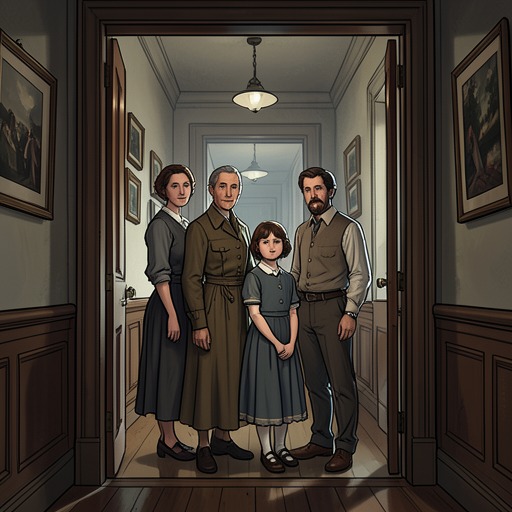
Minor was born in Ceylon in 1834, where his parents were serving as missionaries. His family’s American history, however, was rooted in Connecticut. The Minors traced their lineage to early settlers in New England and were described as prosperous and established; his father, Eastman Strong Minor, had been born in Milford. New Haven became the family’s home and the place to which William returned after his childhood overseas.
After leaving London for Boston, Minor travelled home to New Haven and began studying medicine at Yale. His parents and the reduced family were still abroad and did not return for six years, so he pursued his studies largely apart from them. He also completed nine years of medical apprenticeship. The account presents these years as a sustained period of study, before the severe difficulties that would later dominate his life.
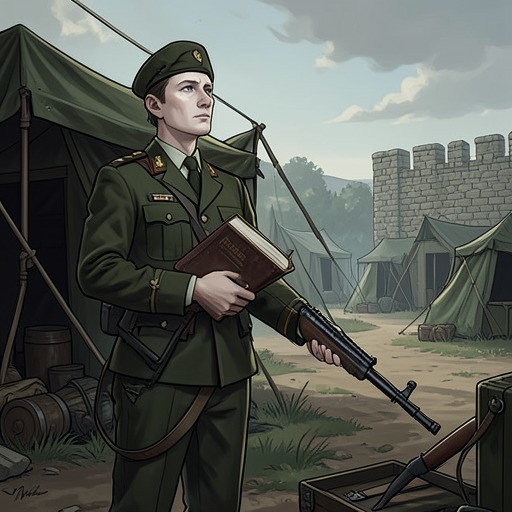
Minor graduated from Yale Medical School in February 1863, aged twenty-nine, with a degree and a specialization in comparative anatomy. His education connected New Haven to a professional career that would take him away from Connecticut. The only recorded crisis during his studies was a serious infection after he cut his hand while conducting a post-mortem; he nearly died. Soon afterward, he applied to serve as a surgeon in the Union Army during the American Civil War.
Family Business and a Brief Homecoming
New Haven reappeared as a place of family support after Minor’s first period in an asylum. In February 1871, a friend reported that he had been released and was heading to Manhattan to stay with a medical friend. A few weeks later, he was said to have gone home to New Haven for the summer, staying with his brother Alfred Minor, visiting old friends at Yale, and spending time at the family business.
The business, Minor & Co., Dealers in China, Glass and Crockery, stood at 261 Chapel Street. Alfred and their older brother George ran it. William busied himself there during the summer and autumn, among the last free and tranquil American months he would enjoy. The shop gives his return a concrete family setting: he was not simply back in his hometown, but among brothers and in the orbit of a business carried on by his family.
That calm was short-lived. In October 1871, Minor left Boston by steamer with a single ticket to London, telling friends that he expected to spend about a year in Europe resting, reading, and painting. He carried books and art materials and hoped to recover before returning to America. New Haven thus marks a temporary interval between confinement and his departure for the period of his life that would become associated with the murder in Lambeth and his long residence in Broadmoor.
Burial and the Unequal Work of Memory
After Minor’s death in 1920, his body was taken to New Haven and buried in Evergreen Cemetery, in the family plot established by his missionary father. The grave was modest: a small, unadorned reddish sandstone stone bearing only Minor’s name. Nearby, an angel stood on a plinth with the engraved motto My Faith Looks Up to Thee. The burial returned him to his family’s Connecticut history, but the simplicity of the marker offered little account of the complicated life or public work attached to his name.
The circumstances of his death sharpen that contrast. Minor died in obscurity after his failing sight had left him unable to read, although books had been his consuming passion and he had contributed scores of thousands of quotations to the Oxford English Dictionary. The New Haven Register gave his death only two lines. The cemetery’s high chain-link fence, keeping out a poor part of the city and separating the grounds from Yale’s stern elegance, makes the book’s closing account of his memorial particularly pointed: the contributor to a monumental work was buried near a slum, with little public recognition.
New Haven’s place in this ending cannot be separated from the memory of George Merrett. Minor’s grave, however plain, is identifiable; Merrett’s grave in Tooting Cemetery has no marker and is described as no more than a patch of discoloured grass. The Oxford English Dictionary can serve as a lasting memorial to Minor, but it does not preserve the victim’s name with comparable force. By setting the family plot in New Haven beside Merrett’s unmarked resting place, the account asks readers to see how remembrance can honour a contributor while leaving the person he killed nearly forgotten.