William Chester Minor—Eliza Merrett: atonement and visits
The Surgeon of CrowthorneWilliam Chester Minor—Eliza Merrett: atonement and visits describes a relationship formed in the aftermath of Minor’s killing of Eliza’s husband, George Merrett. It joined an incarcerated man’s remorse to a widow’s willingness to accept practical help and visit him. Their contact did not erase the crime or become a close friendship, but it created a small, sustained channel of support—and, through Eliza’s deliveries of books, may have helped connect Minor with the dictionary work that later occupied him.
Atonement after the murder
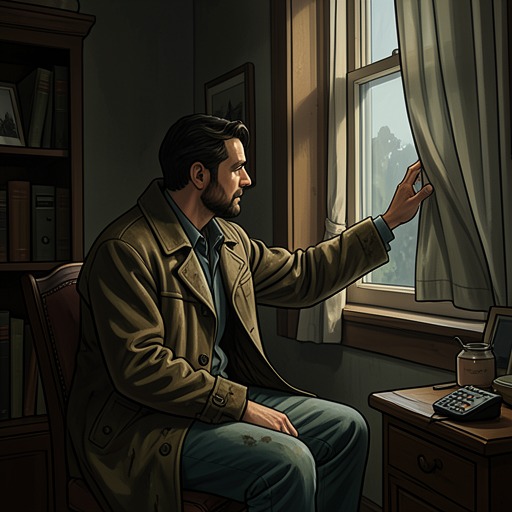
Minor’s approach to Eliza came years after the killing, when he had become genuinely remorseful and resolved to make amends. He wrote to her through the American Embassy in London, which had helped raise a fund for her in the months after the tragedy. His letter expressed sorrow and offered assistance, including financial help for her or her children. His stepmother, Judith Minor, had already contributed money; Minor now hoped to do more, if Eliza would accept it.
The offer answered an ongoing need, but it could not restore what had been lost. George Merrett’s death had left Eliza with seven children and had abruptly worsened a family’s already difficult circumstances. Her acceptance of Minor’s support made a limited form of restitution possible, not a reversal of the harm. The account keeps both facts in view: Minor’s remorse was real, and the consequences of his crime remained beyond repair.
The first visit and a cautious connection
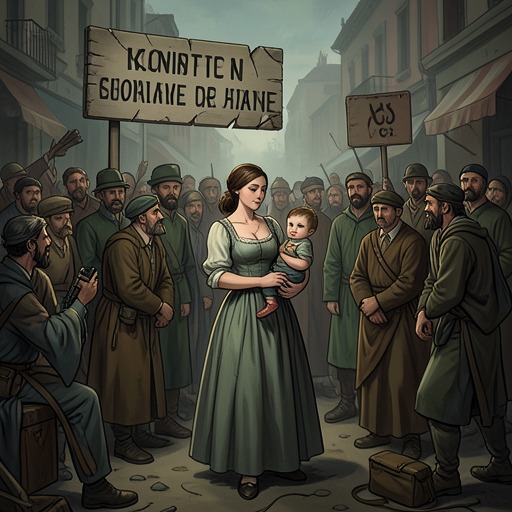
Eliza’s reply went beyond accepting financial assistance: she asked whether she could visit Minor at Broadmoor Asylum. The request was exceptional, since it would bring the widow of a murder victim into contact with the man who had killed her husband. After consultation with Dr Orange, the Home Office authorized one supervised visit. In late 1879, seven years after the murder, Eliza travelled from Lambeth to see Minor for the first time.
The initial meeting was tense, according to Dr Orange’s notes, but it went well enough for Eliza to agree to return. She soon began making monthly visits to Crowthorne. The account portrays her as speaking with interested sympathy to a man who now seemed harmless to her, while carefully stopping short of calling their connection a friendship. The visits were an unusual form of contact between a perpetrator and a victim’s family, but they remained bounded: sympathy and repeated meetings did not make the loss disappear or establish an intimacy beyond what the evidence supports.
Books as a practical exchange
The visits acquired a practical purpose through Minor’s attachment to old books. Eliza knew little about books and was barely literate, but she saw how keenly he collected and cherished them. She also heard his complaints about the expense and delays of sending orders from London to Crowthorne. She offered to collect books from antiquarian dealers and bring them on her visits.
For a time, she carried parcels from London booksellers, including Maggs, Bernard Quaritch, and Hatchards. Wrapped in brown paper and secured with twine and wax, the packages made her visits part of Minor’s intellectual life as well as a means of personal contact. Their arrangement was an exchange, though not an equal or simple one: Minor had offered money in response to the suffering he had caused, while Eliza gave time and practical assistance by bringing the books he wanted.
The book-delivery arrangement appears to have lasted only a few months. The account says that Eliza eventually took to drink and lost interest in Minor, but a later report by James Murray complicates any assumption that all contact ended at once. Murray recorded that Eliza regularly visited and that Minor gave a large part of his income to support the widow of the man whose death he had caused. The evidence therefore distinguishes the apparently brief parcel service from the wider pattern of visits and financial help.
Limits, consequences, and later conjecture
Eliza’s assistance may also have had an indirect consequence for Minor’s work. James Murray’s appeal for volunteers to help with the new dictionary had circulated from 1879, and the account suggests that a copy may have reached Minor in one of Eliza’s book parcels. That route cannot be established with certainty; it is presented as a possibility, not as a documented exchange. Still, it links the practical routine of her visits to the dictionary contribution that became a major part of Minor’s life.
The account also treats speculation about the relationship with restraint. A later discussion raises the possibility that guilt about an imagined or actual personal attachment to Eliza could have contributed to one of Minor’s subsequent acts of self-punishment. It immediately emphasizes that there is no evidence that their meetings were anything other than proper and formal, and that such a motive is only a possibility, not a probability. The distinction matters: the visits and support are recorded, while any hidden intimacy or connection to later events remains conjectural.
Eliza’s later life offers no reassuring resolution. The account says she never fully recovered from the shock of the murder, later took to drink, and died of liver failure; it also notes that she has no known grave. Her visits allowed a measure of contact and gave Minor practical assistance, but they did not repair the bereavement or secure her own recovery. Their relationship is therefore remembered neither as simple reconciliation nor as a completed act of atonement, but as an uneasy, limited exchange shaped throughout by the irreversible loss at its beginning.