
From the Individual to the Collective
The SwarmThe Yrr’s distributed cognition challenges human assumptions that thought, identity, and value belong primarily to isolated individuals.
increasing Bearing strength in each event
 decreasing
Bearing strength in each eventdecreasingThe Human Individual

Identity as a Unit
A familiar model of mind
Scientists begin with human assumptions about brains, agency, and individual consciousness.
Those assumptions help them investigate animals but may also limit their conclusions.
Cells Share Information
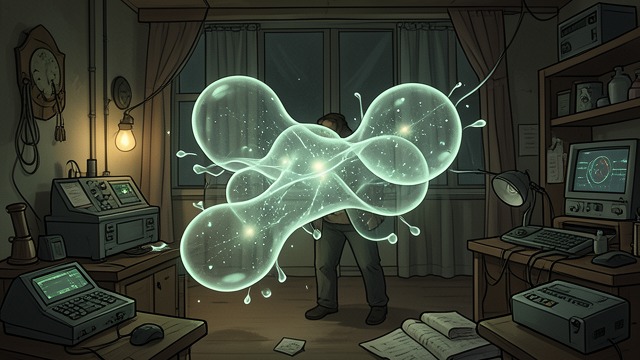
A Living Network
Aggregation changes the unit
Amoebas join through chemical signaling to form a larger and more capable collective.
The behavior makes individual cells difficult to distinguish from the greater whole.
The Collective Learns
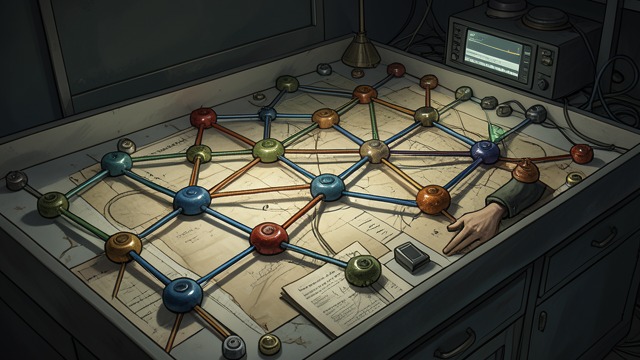
Knowledge Moves Between Cells
A distributed process
The simulated cells exchange coded information and share new experience when they aggregate.
Learning becomes a property of the network, not a single brain.
The Queen Is Not a Human Leader
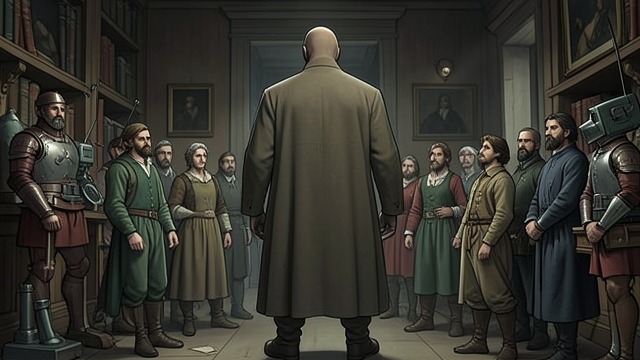
A Different Center
The Queen’s role remains uncertain
Weaver witnesses a larger Yrr presence that resembles a queen but may not govern like a human leader.
The scene warns against translating collective organization into familiar hierarchies.
Value Without the Individual
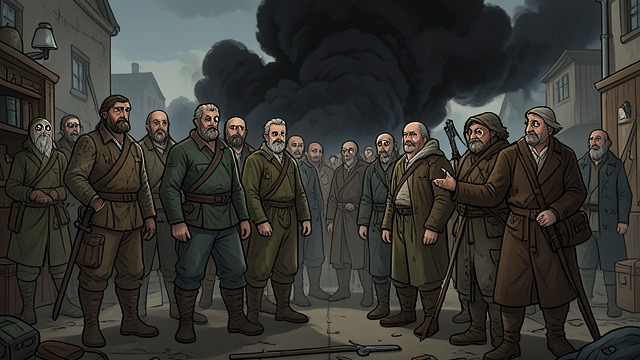
Survival Beyond Individualism
Ethics clash with biology
The Yrr may accept the death of individual cells to preserve collective function.
Human moral language struggles to describe a system organized around a different unit of life.
during the early debate at the Chateau
August, during the first lab observations
after Weaver’s computer model
during the final Yrr encounter
after the Yrr logic is explained
