
Ecological Feedback and Climate
The SwarmThe novel links hydrate extraction, microbial activity, ocean circulation, and climate into a chain in which local interventions can alter the global future.
increasing Bearing strength in each event
 decreasing
Bearing strength in each eventdecreasingHydrates Hold the Slopes
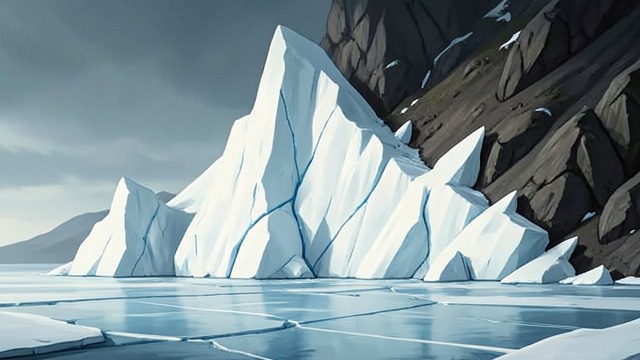
Ice as Structural Support
A hidden foundation
Methane hydrates bind sediments together and trap large quantities of methane beneath the seabed.
Their stability depends on conditions that industrial activity and climate change may disturb.
Microbes Change the Balance
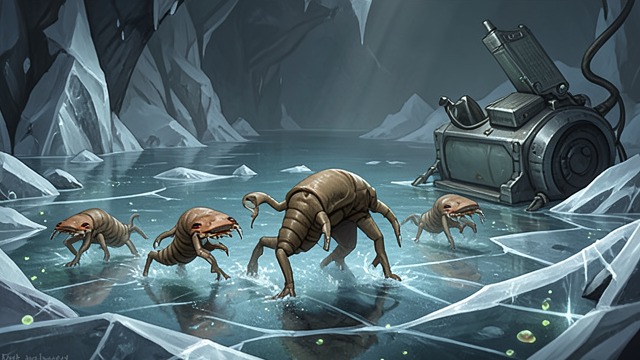
Small Organisms, Large Effects
Methane moves through a biological route
Worms carry microbial consortia into hydrate layers, where the microbes transform their structure.
The consequences emerge through feedback rather than one dramatic intervention.
A Slope Collapses
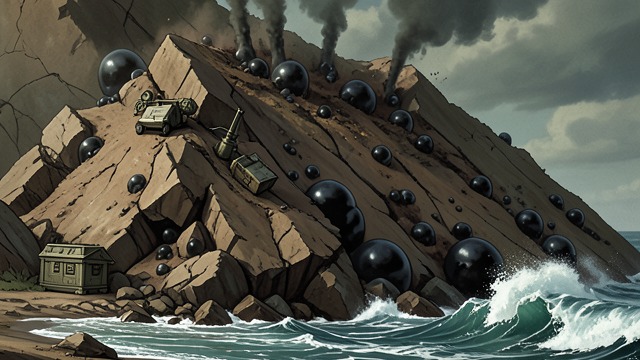
Feedback Turns Into Disaster
Gas and sediment move together
Methane escapes as hydrates fail, destabilizing slopes and triggering the Storegga-scale collapse.
The resulting tsunami shows how deep-sea geology can rapidly reshape human settlements.
The Gulf Stream Falters
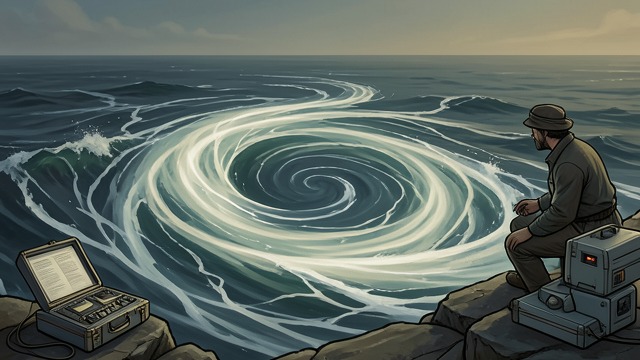
Circulation Is Disrupted
A global consequence
Weaver’s comparison of satellite data indicates that the Gulf Stream is weakening or stopping.
The shift raises the possibility of an approaching ice age amid methane-driven warming.
No Simple Climate Balance
Competing Crises Compound
Warming and cooling collide
The team realizes that methane release and ocean-circulation failure can reinforce rather than cancel each other.
The planet’s response is too interconnected for a simple human calculation.
during Bohrmann’s early explanation
after the worms penetrate the hydrate
late April, in the Norwegian Sea
May, after Weaver studies satellite data
during the Independence crisis
