Ijitsineq Akesuk
The SwarmIjitsineq Akesuk is Leon Anawak’s uncle and the relative who receives him when he returns to Cape Dorset after nineteen years away. His embrace, prepared household, and insistence that he will take Anawak home make him more than a greeter: he is the family link through which Anawak’s estrangement from his origins becomes an encounter with a living community and its relationship to the land.
Identity and Background
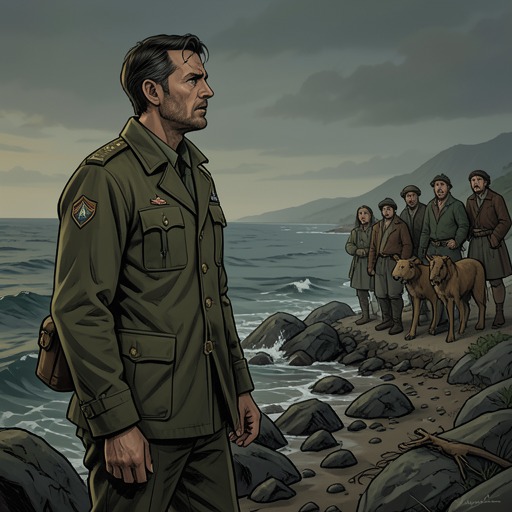
At the reunion, Anawak initially has difficulty recognizing Ijitsineq Akesuk. The years have altered the older man’s face, and a thin grey moustache now replaces the clean-shaven look Anawak remembers. Akesuk, however, recognizes him immediately. His face opens into a grin, and he hurries forward to embrace his nephew, speaking first in Inuktitut before switching to English. The scene gives their relationship a physical and linguistic form: familiarity survives the long absence, even as Anawak must take a moment to identify the person standing before him.
The separation has lasted nineteen years. No one had said farewell when Anawak left, and Akesuk had been left standing alone at the airfield as Anawak and two friends departed noisily. The narration places that silence against a broader observation about Inuit welcomes and farewells: there are many words for welcoming someone, but none for bidding farewell. This does not erase the hurt or distance of Anawak’s departure; instead, it gives the reunion a cultural frame in which welcome is readily expressed while parting remains difficult to name.
The Reunion and the Household
Akesuk greets Anawak with affectionate teasing and immediate interest in the life he has led elsewhere. He calls him a handsome young scientist, asks whether the flight went well, and marvels at the number of places he must have passed through to get there. When Anawak mentions Montreal, Akesuk beams and observes that he travels a lot. His questions turn quickly from travel to practical care: Anawak will stay with them, he says, everything is ready, and he wants to know whether the rucksack is all the luggage. His welcome is exuberant, but it is also organized around making room for Anawak in the household.
Anawak responds less expansively. He lets Akesuk finish the embrace and gives him a halfhearted thump on the back, addressing him as Uncle Iji. Akesuk tells him he is too old for the title uncle now. The exchange registers both affection and the awkwardness of returning: Anawak uses the familiar kinship term, while Akesuk playfully marks the passage of time and treats the relationship as close enough to withstand the joke.
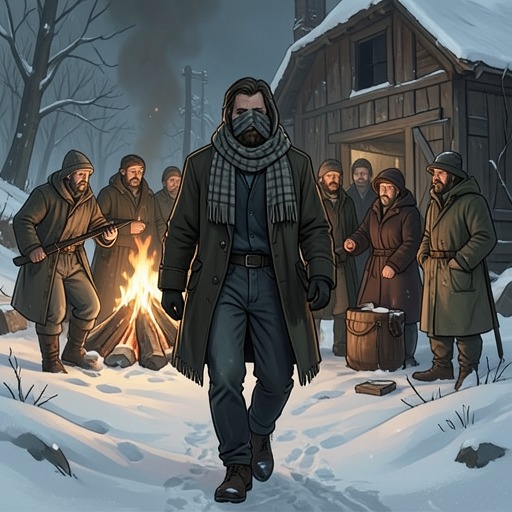
Akesuk still lives in the same small house in the settlement. Its light-blue walls and dark-blue roof are attractive and well kept, and the hills rise behind it toward Kinngait. When they arrive, Akesuk carries Anawak’s heavy rucksack in one hand and calls inside to Mary-Ann that he has arrived. A puppy makes its unsteady way to the door; Mary-Ann then comes out, hugs Anawak, and greets him in Inuktitut. These details extend Akesuk’s welcome beyond the airfield. The homecoming is not simply a private reunion between uncle and nephew but an entrance into a household that has prepared for Anawak and receives him with warmth.
Anawak’s Unease and Akesuk’s Purpose
The welcome does not make Anawak comfortable in Cape Dorset. He tells Akesuk that he might go to Mallikjuaq Island or Inuksuk Point, explaining that good memories are hard to come by there because of his father. Akesuk completes the thought without requiring Anawak to spell it out. He is astonished that Anawak has returned at all: nineteen years have passed without the family hearing from him, and Akesuk says that he is now the only one left. He had contacted Anawak because he believed his nephew ought to know what had happened, not because he expected to see him come back.
Akesuk’s candor places the reunion’s cheerfulness beside the family history that makes it painful. He does not pretend that the past has been resolved, or demand that Anawak explain his return. When Anawak says he does not know why he came and suggests that Vancouver may have wanted him gone for a while, Akesuk rejects the dismissal as nonsense. Asked why he is so keen for Anawak to come along, he answers that he is going to take him home. The phrase makes home an action as well as a place: Anawak is already in the settlement, but Akesuk understands that arrival is not yet the same as feeling at home.
Going Out on the Land
The invitation leads into an account of going out on the land as an expression of Inuit life. In summer, people leave settlements to camp in tents on beaches or at the floe-edge, fishing and hunting walrus, seal, or narwhal for their own consumption. They carry the clothing, equipment, and hunting tools needed beyond the reach of settlements, using ATVs, sledges, or boats to cross a vast territory traveled for thousands of years. The passage supplies a cultural context for Akesuk’s promise without specifying every detail of the trip he has in mind: home is connected not only to the house but also to movement through the surrounding country.
On the land, time and distance follow different measures. A destination is described in days of travel rather than kilometres or miles; pack ice and crevasses can make a measured distance a poor guide to the journey. Nature does not conform to human plans, and the land keeps its own rhythm. The account describes people living in the present and submitting to that rhythm, a way of life shaped by long nomadic experience and still better suited, for many, to movement than confinement in one place. Akesuk’s invitation therefore gives Anawak a possible way back that is neither a simple return to a house nor an easy reconciliation with the past: it is an offer to accompany his uncle into a landscape whose patterns cannot be controlled by schedule.
Narrative Role
Akesuk’s role in Anawak’s return is defined by a contrast between distance and welcome. He remembers the departure, acknowledges how long the family went without hearing from Anawak, and recognizes that the father remains a source of painful memories. Yet his response is not reproach. He prepares a place for Anawak, welcomes him into the household, and proposes going out together. Through him, the narrative makes belonging concrete in gestures—the embrace, the carried rucksack, the open door—and then broadens it into a relationship with the land. His invitation does not settle Anawak’s history; it gives the homecoming a next step.