On the land
The SwarmOn the land is both a practical description of leaving settlements for seasonal travel and hunting and an expression of an Inuit philosophy of life. It describes a relationship with a place whose conditions set the pace, whose living systems are connected, and whose rhythms cannot be made to obey human schedules. When Leon Anawak returns to this way of thinking, it challenges the industrial world’s insistence on control and helps him recognize the distance between his adopted identity and his Arctic inheritance.
A way of living by the land
For Inuit families, going out on the land meant spending the summer in tents on beaches or at the floe edge, fishing and hunting walrus, seals, or narwhals for their own use. Clothes, equipment, and hunting tools went along on all-terrain vehicles, sledges, or boats. Beyond the settlements lay a vast territory that people had travelled for thousands of years. This was not simply a retreat into wilderness: it was a mode of life organized around movement, subsistence, and attention to the conditions of a particular place.
On the land, time was measured less by a clock than by the journey. People reckoned distances in days, because a route of fifty kilometres could mean little if pack ice or crevasses blocked the way. Plans had to give way to weather and terrain; a hunt might begin after someone stepped out of the tent for air, or fail to happen even when everyone was ready. The apparent lack of organization, viewed from outside, was a response to a world in which nature did not respect human timetables. By living in the present and following the land’s own rhythm, travellers learned how to move through it.
That rhythm carried a cultural and imaginative life as well as a practical one. Anawak remembers evenings around a fire when stories made the whole world seem alive. As a child, he accepted the Snow Queen and the Bear God as real, and imagined travelling across the ice, hunting and living in harmony with himself and the Arctic world. Sleep, work, food, and hunting would follow need and weather, not quotas. The stories and practices that shaped this vision offered a different account of what it meant to live well: not to master the environment, but to participate in its rhythms.
Memory, history, and cultural interruption
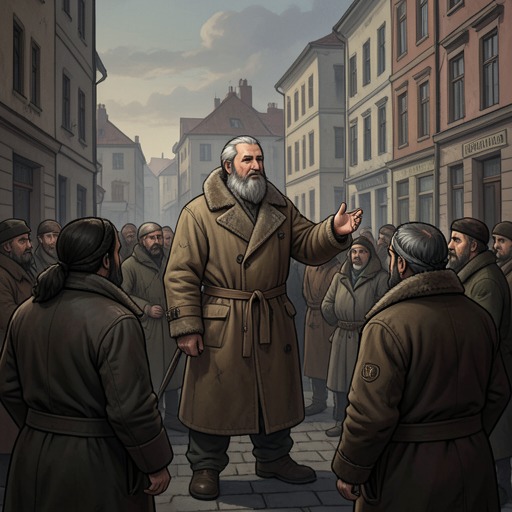
Anawak’s return to this idea comes amid a history that has made cultural continuity difficult. He is urged to consult elders because Indigenous knowledge has been passed down through generations, but the Indian Act of 1885 disrupted that chain by encouraging people to leave their homelands and send children to residential schools for integration into white society. Government reparations could not restore what had been lost, and fewer people knew the old lore. When Anawak asks Frank what he knows, Frank describes the teaching that everything is one: a change to a river affects people, animals, and the sea. He can offer to listen and make calls, but warns that the stories contain many possible meanings and no ready-made answer to Anawak’s question.
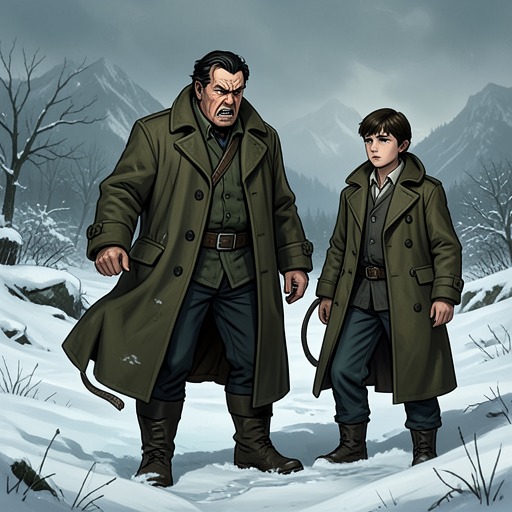
The history Anawak hears from his uncle makes the rupture more specific. In the Cold War, the government called the forced movement of Inuit from their traditional territory to Resolute and Grise Fjord a relocation. The new hunting grounds were worse, not better. Earlier, white trappers’ guns had helped decimate seal and caribou populations; later, disease and poverty drove people from the land into settlements. Inuit were moved by aircraft to places far from caribou trails and summer breeding grounds, without the tents, kayaks, canoes, or sleds they needed. Anawak’s uncle says that he, Anawak’s parents, and many others were relocated, and that the struggle for compensation and rights lasted decades.
The creation of Nunavut in 1999 brought Inuit government and a measure of protection against being forced to move again, but it did not restore the former nomadic life. The community was adapting to new political and economic structures, while also reviving traditions: young people learned to build igloos and make fire with flints, and dog-sleds returned. Anawak’s uncle sees this revival as valuable but not as a reversal of history. He describes a people coming to terms with profound trauma and insists that the hopes of the living must not be sacrificed to the dead.
Anawak’s inheritance and the limits of control
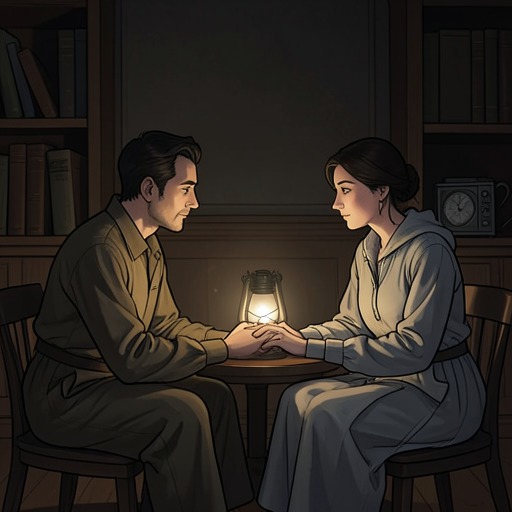
Anawak’s memories of the land sharpen his understanding of his own estrangement. He had left Cape Dorset with contempt for a home he associated with resignation and his father’s failure to protect the family. Raised by adoptive parents in Vancouver, he became a west-coast Canadian, separated from both the life of the settlements and the nomadic world he had imagined as a child. Akesuk’s invitation to go home draws those memories back into view—not as a simple return to an unchanged past, but as a chance to reconsider what Anawak had rejected and why.
That reconsideration also changes how Anawak reads the crisis facing the team at Chateau Whistler. Jack Vanderbilt clings to the belief that recent events result from human planning and activity. Anawak sees that this confidence in control is a limitation: anyone seeking to understand Inuit life must relinquish the Western compulsion to impose order. The contrast matters because the beings in the sea are still less familiar than another human culture. Anawak accepts Johanson’s view that humanity is close to losing the conflict, while Vanderbilt cannot see beyond his own perspective. The land’s lesson does not provide a strategy for controlling an unfamiliar intelligence; it warns against treating one’s own frame of reference as the only possible one.
Ecological interdependence
The teaching that everything is one gives the expression an ecological reach. A river is not isolated from its banks, forests, salmon, people, or sea: a change in one part affects the others. This understanding is embodied in the Tla-o-qui-aht initiative Salmon Coming Home, which seeks to repair damage to the ecosystem of Clayoquot Sound after clear-cut logging. Logging exposed forest floors to drying and erosion; soil washed into waterways, while stones and abandoned timber obstructed rivers and deprived salmon of spawning grounds. The restoration work trained volunteers to clear rivers, reopen old watercourses, build protective barriers from organic debris, and plant alder along banks. It was slow, sustained work aimed at restoring some balance among forest, people, and animals, rather than promising a quick return to the past.
The novel sets this local restoration against wider marine damage. Fish stocks decline as algal blooms flourish; toxic industrial waste crosses national coastlines in currents, and expanding fisheries continue to exploit endangered species. Bottom trawling sweeps away ecosystems and deprives marine predators of prey. These crises give concrete force to the idea that environmental consequences travel through connected systems and are not contained at the point where damage begins. On the land therefore serves not as a pastoral ideal or a claim that the past can simply be recovered, but as a counterpoint to the assumption that nature is a resource separate from human life. Its central emphasis is relation: the land has its own rhythms, and what happens to one part of the living world affects the rest.