
Man’s Hidden Cost
The SympathizerMan’s trajectory leads from underground revolutionary organizer to disfigured political prisoner and secret protector of the narrator and Bon.
increasing Bearing strength in each event
 decreasing
Bearing strength in each eventdecreasingThe Revolutionary Mentor

The Revolutionary Mentor
A Teacher of Secrecy
Man leads the narrator into revolutionary study and explains how clandestine cells protect themselves. He makes the hidden work attractive by presenting it as disciplined service to the people.
A Friendship Within Politics
Man is also the narrator’s blood brother, confidant, and intellectual rival. Their personal bond gives political assignments a power that formal orders alone could not possess.
The relationship creates the novel’s central tension between friendship and organization: Man can ask the narrator to act before either fully understands the consequences.
The Agent’s Arrest

The Agent’s Arrest
A Failed Rescue
The narrator participates in the arrest of the Communist Agent and removes the list from her mouth. He cannot reveal his own position without risking the underground network.
A Promise from Man
Man tells the narrator he will be the one to unlock her cell after liberation. The promise gives their secret work a human cost that neither can immediately repair.
The Agent’s imprisonment becomes a continuing measure of the narrator’s complicity and Man’s limits within the same revolutionary structure.
An Order to Stay Away

An Order to Stay Away
A Mission Abroad
Man tells the narrator to leave with the General and monitor the exiles in the United States. He argues that the narrator can be more useful there than in the collapsing south.
A Farewell Without Return
The narrator asks when he can come home, but Man cannot give a timetable. He remains behind to witness the revolution while his friend departs under cover.
The separation tests their blood-brother bond by turning intimacy into coded messages and distance into an operational necessity.
The Face of War
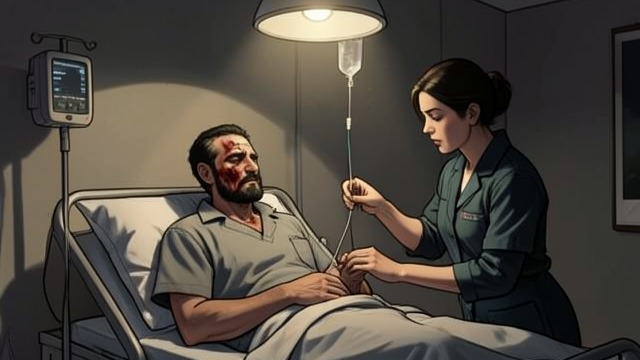
The Face of War
A Friendly Bombing
Man describes being burned by napalm dropped by his own side as the war ends. His wife finds him in a hospital and helps secure the treatment that saves his life.
Exile Within Victory
His injuries leave him profoundly disfigured, and he avoids his family because he fears their reaction. The man who helped the narrator imagine revolutionary purpose cannot accept the consequences of his own body.
His survival becomes a private prison, making his later role as Commissar both political duty and a way to remain near his friends.
The Commissar’s Protection
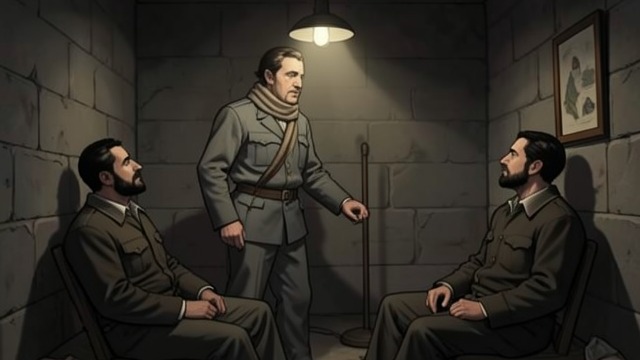
The Commissar’s Protection
A Hidden Identity
Man becomes the Commissar at the camp where the narrator and Bon are imprisoned. He keeps his identity secret while directing the narrator’s reeducation and protecting him from more lethal punishment.
Friendship Through Harm
He uses sleep deprivation and fear because he believes this is the only way to make the narrator understand his omissions. He later uses money to arrange their release.
Man’s fate remains painfully divided: he saves his friends by participating in the system that confines them, while his disfigurement and position keep him from returning to family life.
During the narrator’s lycée years
Three years before the narrator flees Saigon
April 1975, before the narrator’s evacuation
On the last day of the war
During the narrator’s second year in Vietnam
