
The Watchman’s Interrogation
The SympathizerThe narrator’s treatment of the Watchman exposes how intelligence expertise and ideological rivalry can turn a supposedly controlled interrogation into irreversible harm.
increasing Bearing strength in each event
 decreasing
Bearing strength in each eventdecreasingA Prisoner in White
A Prisoner in White
A Scientific Experiment
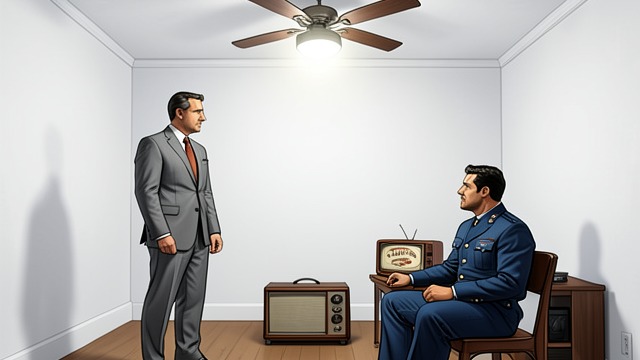
The Watchman is held in a white interrogation room with constant light, controlled temperature, and country music. Claude presents the methods as modern psychological science rather than crude violence.
The Narrator’s Assignment
The narrator is ordered to interrogate the Watchman and knows that the room’s purpose is to break resistance. He watches the prisoner’s routines before beginning face-to-face questioning.
The controlled environment disguises coercion with professional language, foreshadowing the narrator’s later experience of similar techniques as a captive.
An Insult Turns Personal
An Insult Turns Personal
A Prisoner’s Defiance
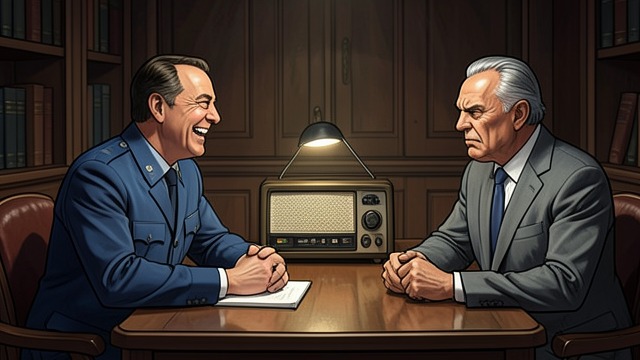
The Watchman jokes about the country music and challenges the narrator’s belief in American ideas of innocence and justice. He calls the narrator defective because of his mixed parentage.
Retaliation by Invention
Instead of maintaining his covert role, the narrator writes a fabricated confession claiming the Watchman betrayed the revolution because of a homosexual relationship. The lie threatens the prisoner’s family ties and political identity.
The narrator’s intelligence becomes an instrument of personal cruelty, proving that a supposedly strategic interrogator can act from wounded pride.
The Prisoner’s Death
The Prisoner’s Death
An Unexpected Suicide
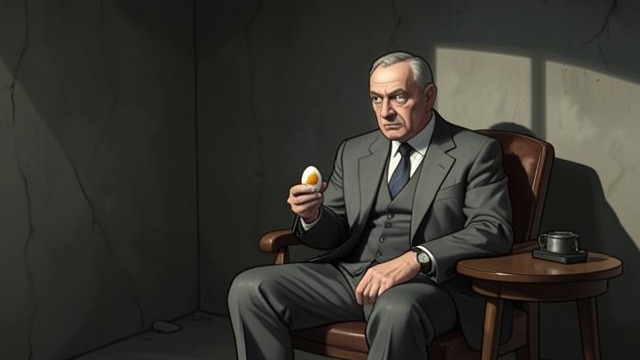
The Watchman swallows a hard-boiled egg whole and chokes to death in his cell. The method is deliberate and exploits the routines that had been intended to keep him under control.
The Interrogator’s Shock
Claude tells the narrator that the death is not his fault, but the narrator remembers the role he played in breaking the prisoner. The Watchman’s final act exposes the limits of the intelligence system’s ability to predict human resistance.
The death remains a private failure inside an operation the narrator had been praised for conducting successfully.
A Lesson Reversed
A Lesson Reversed
Former Knowledge Returns
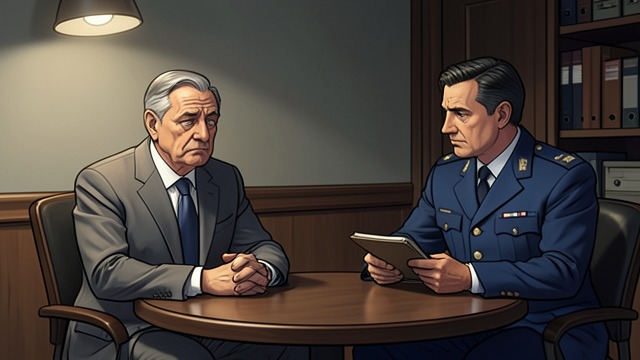
As a prisoner, the narrator recognizes interrogation techniques from his own training and from the manual he studied. His expertise helps him identify what is happening but cannot protect him from exhaustion.
The Victim’s Perspective
The former interrogator experiences isolation, disrupted routine, and sleep deprivation as a subject rather than an observer. The distinction between knowing a method and suffering it proves decisive.
The reversal makes the Watchman’s earlier confinement part of the narrator’s own education, though it does not equalize their experiences or erase the harm he caused.
The Confession’s Missing Page
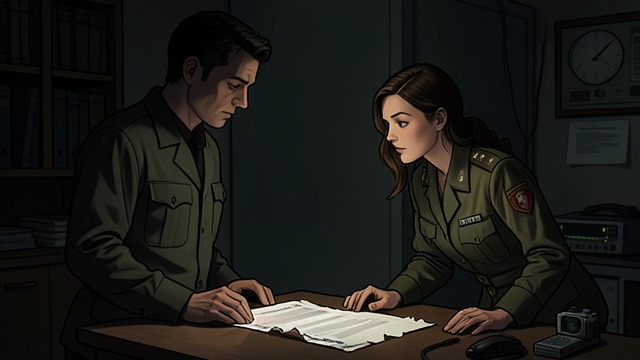
The Confession’s Missing Page
A Repeated Omission
The narrator’s account mentions the Communist Agent repeatedly but leaves out the consequences of her interrogation. The Commissar insists that this is the missing truth the narrator has avoided writing.
Responsibility for Watching
The narrator admits that he stood by while others abused her. His earlier belief that he had done nothing is exposed as a form of evasion.
The Watchman’s death and the Agent’s suffering reveal different failures: one act of retaliatory cruelty, and one failure to intervene when intervention might have mattered.
During the narrator’s Special Branch service
The first meeting in the white room
A week after the false confession
After the narrator’s capture in Laos
During the final examination
