
Sympathy in Conflict
The SympathizerThis flow tracks the narrator’s recurring ability to identify with people on opposing sides and the moral strain produced when empathy conflicts with political duty.
increasing Bearing strength in each event
 decreasing
Bearing strength in each eventdecreasingSympathy for the Displaced
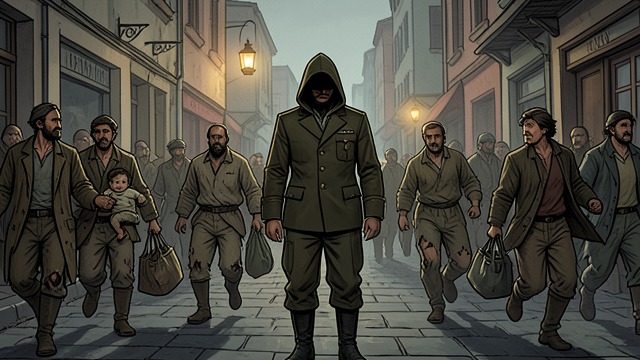
Sympathy for the Displaced
A Private Response
As reports describe soldiers and civilians fleeing fallen cities, the narrator feels sympathy for people his political position labels as enemies. He imagines his poor mother among them.
Ideology Under Pressure
He knows that such feeling may be politically inconvenient, yet cannot prevent it. The human costs of the regime’s collapse resist the clean categories of friend and foe.
This early sympathy is not a rejection of his commitments; it is the first sign that those commitments cannot contain all he sees.
Respect for an Enemy

Respect for an Enemy
A Bribe and a Judgment
The narrator pays an honest young lieutenant to let the evacuation convoy pass. He recognizes the officer’s shame and the family pressures behind the bribe.
Admiration Across Sides
The narrator admires the lieutenant despite serving the other political cause. He concludes that it is better to admire the best among one’s foes than the worst among one’s friends.
The encounter complicates the narrator’s sense of righteousness: moral worth does not align neatly with political affiliation.
Comfort for the Call Girls

Comfort for the Call Girls
A Shared Conversation
The narrator talks with three call girls who fear imprisonment and the loss of their livelihood under the new government. He listens without reducing them to symbols of corruption.
Sympathy and Economic Reality
Their stories connect war, occupation, displacement, and women’s survival. Their jokes about exchange and work reveal a political understanding grounded in their own precarious lives.
The narrator’s attention to them extends sympathy beyond soldiers and political agents to people whom both sides often treat as disposable.
Complicity in the Movie
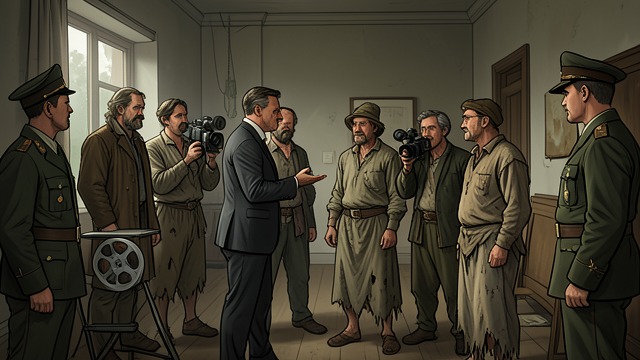
Complicity in the Movie
Advocacy Within Production
The narrator tries to improve how Vietnamese characters speak and appear in The Hamlet. He also negotiates better pay and work arrangements for refugee extras.
A Moral Reversal
He gradually realizes that his assistance may make the film’s distorted story more convincing. The extras’ labor gives authenticity to a narrative whose central meanings remain under American control.
Sympathy helps him advocate for individuals but cannot by itself overcome the institutional power that decides how they are represented.
A Failure to Intervene

A Failure to Intervene
The Agent’s Suffering
The narrator remembers the Communist Agent’s assault in the interrogation room and his own inability to stop it. He had earlier explained his silence as necessary to protect his cover.
Sympathy Becomes Accountability
The final examination forces him to distinguish understanding another person’s pain from acting on that understanding. His failure is not that he lacked information, but that he remained a witness when he might have tried to intervene.
The episode deepens sympathy from a feeling into an ethical demand that can expose the limits of political self-justification.
During the March and April 1975 collapse
At the airport checkpoint in April 1975
During the airport wait before evacuation
During filming in the Philippines
During the final interrogation revelation
