
From War to Reeducation
The SympathizerThe political conflict changes form rather than ending, moving from the battlefield through exile organizing and capture into coercive state education.
increasing Bearing strength in each event
 decreasing
Bearing strength in each eventdecreasingThe War’s Military End
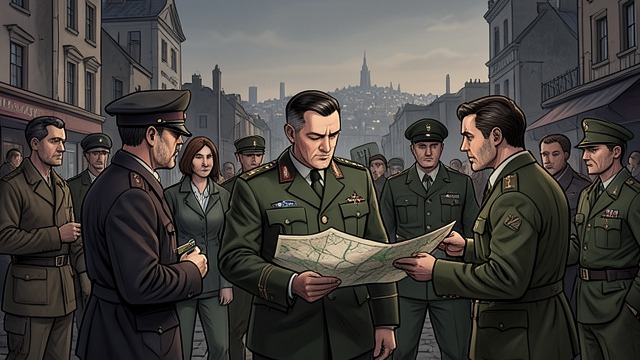
The War’s Military End
A Collapse in Real Time
The southern army retreats and Saigon faces encirclement. The General and his staff debate how to hold the city while preparing to abandon it.
A Political Beginning
The Fall of Saigon ends the Republic’s military authority but does not end the conflict in the minds of the exiles or the revolutionary state. Both sides continue to describe the future as a struggle.
The war’s end is therefore a change in the location and language of conflict, not a shared arrival at peace.
Resistance in Exile
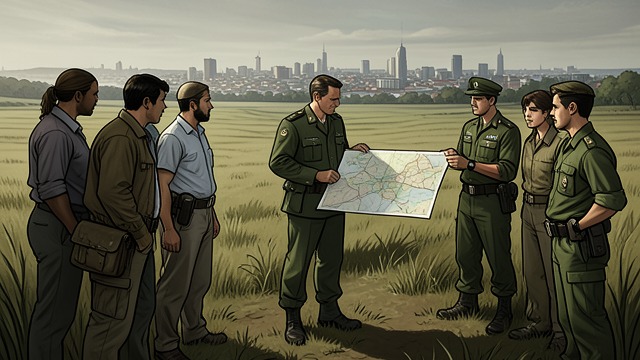
Resistance in Exile
A New Battlefield
The General organizes veterans, raises funds, and plans a return through Thailand. The movement frames charitable work as aid while building military capacity.
Two Competing Undergrounds
The narrator reports the movement to Man while continuing to assist the General. Exile becomes a new arena for the old war, shaped by intelligence, money, and political messaging.
The conflict now involves communities that are physically distant from Vietnam but remain governed by its unresolved divisions.
An Invasion Plan
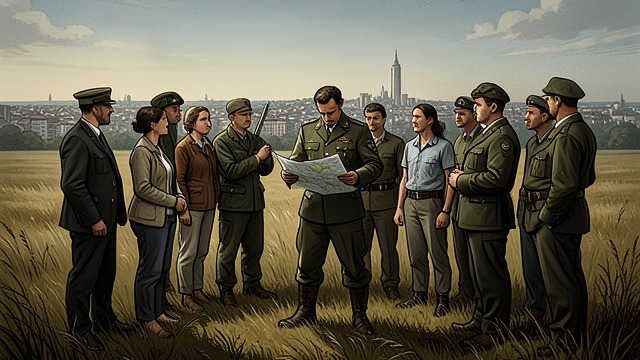
An Invasion Plan
Volunteers Prepare
The General’s men train in California and select a reconnaissance team to move through Thailand and Laos toward Vietnam. Several volunteers expect not to return.
A Friend’s Warning
Man tells the narrator not to come back, but the narrator decides to accompany Bon. The mission ties their personal loyalty to an increasingly implausible military project.
The plan’s danger grows from the contrast between its grand language of national liberation and the small, exposed group tasked with carrying it out.
Capture and Classification
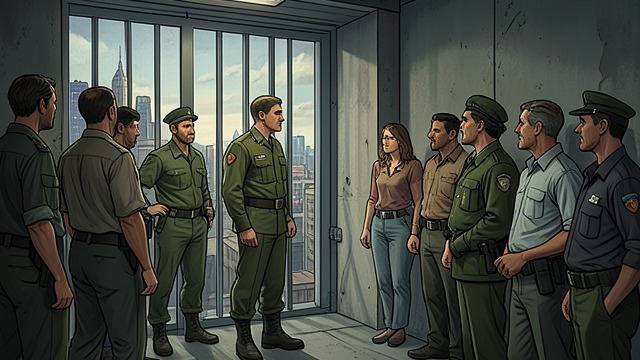
Capture and Classification
Prisoners of the Victors
The narrator and surviving members of the expedition are captured and placed in a reeducation camp. Their former military and intelligence roles are now used to classify them as political threats.
Education as Coercion
The Commandant describes the camp as a place of correction and labor, while the narrator experiences isolation and controlled access to the outside world. The state’s language of care disguises confinement.
The conflict shifts from armed combat to authority over memory, confession, and the acceptable story of the revolution.
The Revolution’s Reversal

The Revolution’s Reversal
Power Changes Hands
The narrator recognizes that the victorious revolution has begun to reproduce the imperial habits it once opposed. Political imprisonment and coerced confession contradict its language of independence and freedom.
Departure as Resistance
Unable to live safely within the new order, the narrator and Bon prepare to flee by sea. Their continued claim to be revolutionary survives alongside their rejection of the state’s monopoly on truth.
The conflict resolves not in reconciliation but in an unresolved departure, with the narrator carrying an account that resists official ownership.
April 1975
During the General’s first years in the United States
After the exile army’s training maneuvers
After the Mekong ambush
Near the narrator’s release
