
Refugee Life in America
The SympathizerThis subplot traces the ways refugees build community and pursue material survival while facing dispersal, racism, and the pressure to assimilate.
increasing Bearing strength in each event
 decreasing
Bearing strength in each eventdecreasingSponsorship and Dispersal
Sponsorship and Dispersal
Placement Across the Country
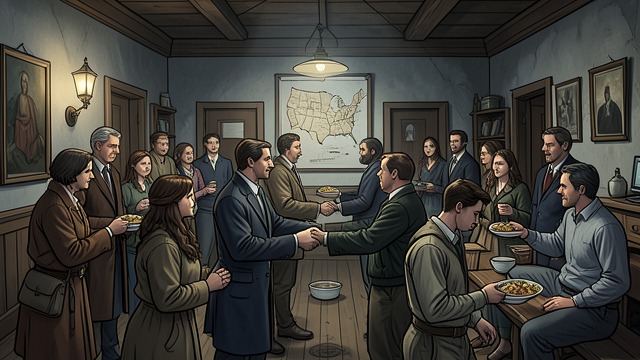
Refugees leave camps only after sponsors agree to support them. Families are sent to widely separated states, while the community exchanges addresses and phone numbers to maintain contact.
A Network Reassembled
Small groups gather in churches, basements, and backyards. They share food, news, and rumors about relatives and friends who have been scattered.
Bureaucratic resettlement provides a path out of the camp while deliberately preventing the refugees from remaining together as a large community.
Work Below Former Rank

Work Below Former Rank
Skills Without a Market
Former officers become janitors, mechanics, cooks, and delivery workers. Bon works as a church janitor and later a liquor-store clerk despite his military training.
Status Reversed
The General becomes a shopkeeper, while Madame takes on domestic work she had previously delegated. Former authority offers little protection against the practical demands of American life.
The jobs provide income and routine, but also make exile feel like a downward movement from a life whose public identity has vanished.
The Food of Home
The Food of Home
Rebuilding Meals
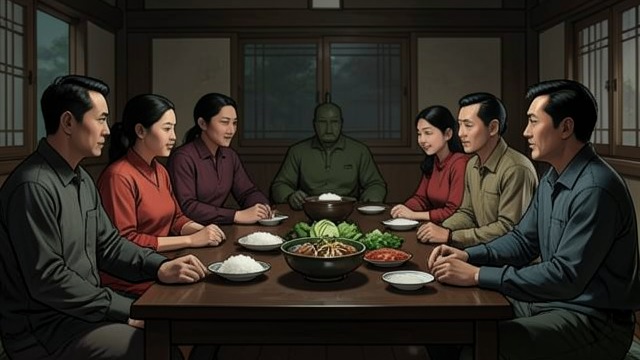
Refugees seek Vietnamese ingredients and recreate familiar dishes with the limited supplies available. Chinese markets provide some food but cannot reproduce the exact tastes they remember.
Memory at the Table
Fish sauce and regional ingredients become symbols of a lost culture, while shared meals help exiles recognize one another. Food holds continuity even when their locations and occupations have changed.
The community’s culinary practice is a small form of cultural persistence, but it also makes the absence of home more sharply perceptible.
Racialized Belonging

Racialized Belonging
A Refugee on Display
The narrator’s college newspaper presents him as an exemplary Vietnamese refugee and former student. He smiles for the article while withholding the truth about his intelligence work.
Foreignness Persists
Despite his command of English and American culture, he is treated as a racial outsider and is asked to explain an entire region to colleagues. His fluency grants access but does not erase the assumptions attached to his appearance.
The narrator’s experience shows how assimilation can depend on performing familiarity without receiving full recognition in return.
The Boat People’s Witness
The Boat People’s Witness
A Camp Encounter
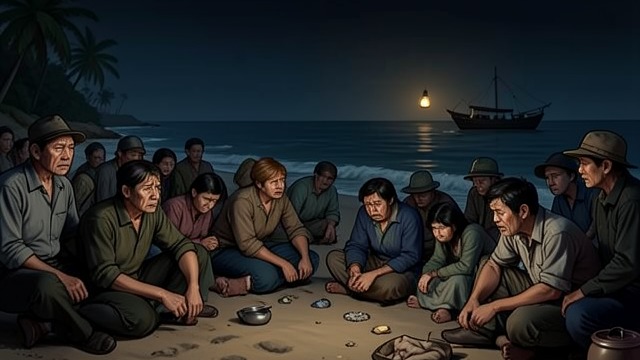
At Bataan, the narrator recruits Vietnamese refugees who have fled by sea. Their hunger and exhaustion make clear that escape has not ended their exposure to danger.
A Bitter Comparison
A refugee lawyer says that foreigners once victimized the Vietnamese and now their own people do. The narrator has no easy answer to her distinction.
The encounter challenges both the General’s triumphalist stories and the narrator’s belief that political victory alone can produce safety.
Summer 1975, as Camp Pendleton empties
During the first years after resettlement
During the first years in California
After the narrator returns to campus
During the narrator’s stay in the Philippines
