
The Cinematic War Inside The Hamlet
The SympathizerThis subplot follows the fictional film’s transformation of Vietnamese people into supporting figures in an American story of rescue, vengeance, and destruction.
increasing Bearing strength in each event
 decreasing
Bearing strength in each eventdecreasingThe Green Beret Arrival
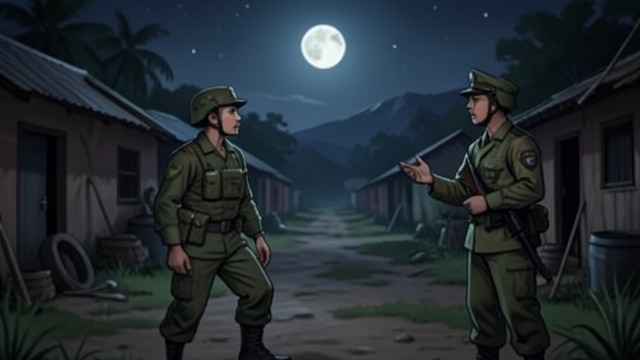
The Green Beret Arrival
An American Hero Enters
The Hamlet introduces Jay Bellamy as a young soldier arriving in Vietnam, where Captain Will Shamus teaches him that the enemy owns the night. The script frames the setting through American military experience.
A Landscape Made Legible
The village and its residents are presented as a threatened world awaiting protection. King Cong appears as an exaggerated enemy whose power exists to test the hero.
The film’s opening turns a complex country into the stage for an American character’s initiation.
Binh’s Assigned Loyalty
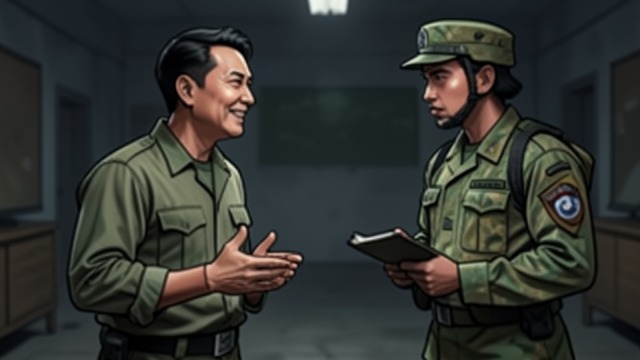
Binh’s Assigned Loyalty
A Translator for the Heroes
Binh, nicknamed Benny by the American soldiers, loves his rescuers and serves as their interpreter. His role makes Vietnamese speech useful chiefly when it helps the Green Berets.
A Death for the Plot
The script assigns Binh a grisly death that adds emotional force to the American soldiers’ struggle. His life and political motives remain secondary to the reaction his death produces.
The character’s added dialogue improves visibility but does not grant him control over his narrative outcome.
Mai’s Captivity
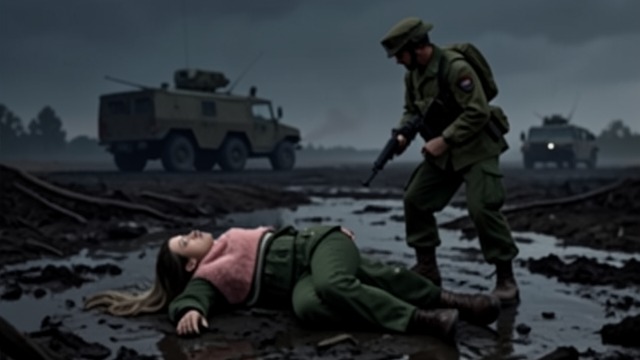
Mai’s Captivity
Romance and Threat
Mai falls in love with Jay Bellamy, then is kidnapped and raped by King Cong’s forces. The script uses her suffering to intensify the American soldiers’ cause.
Vengeance as Structure
The assault provides justification for the Green Berets’ destruction of the enemy. Mai’s pain becomes a motive for other characters rather than a story she controls.
The scene makes the film’s moral logic visible: Vietnamese suffering is made legible when it fuels American action.
Binh Under Interrogation
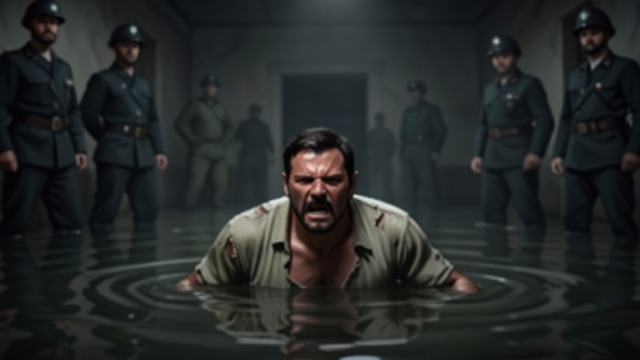
Binh Under Interrogation
A Spectacle of Suffering
Binh is tortured by Viet Cong characters in an extended scene of waterboarding and physical abuse. James Yoon’s performance is repeated until the director is satisfied.
Real Bodies, Fictional Meaning
Vietnamese refugee extras perform the torturers, drawing on their own histories of violence and political conflict. Their work makes the film’s fictional scene physically demanding and emotionally complicated.
The sequence turns both victim and performers into material for a spectacle whose audience is invited to judge one side through suffering.
The Lair’s Destruction
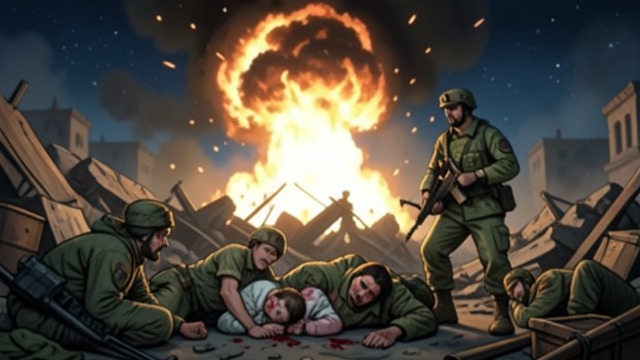
The Lair’s Destruction
The Enemy Is Erased
The film’s climax destroys King Cong’s lair with an immense air strike and stages the deaths of the remaining characters. The surviving American hero and the rescued child receive the future.
Peace as a Punchline
Will Shamus calls the battlefield silence “the sound of peace.” The line celebrates an ending produced by overwhelming destruction rather than reconciliation.
The finale condenses the film’s political imagination: victory is visual spectacle, Vietnamese futures are displaced, and American power supplies the final word.
The film’s opening sequence
During the film’s village sequences
Before the film’s climactic battle
During the film’s torture sequence
The film’s final battle
