
The Meaning of Nothing
The SympathizerThe narrator’s final understanding of “nothing” exposes the gap between revolutionary ideals and the power exercised in their name.
increasing Bearing strength in each event
 decreasing
Bearing strength in each eventdecreasingA Revolutionary Slogan
A Revolutionary Slogan
Words of Independence
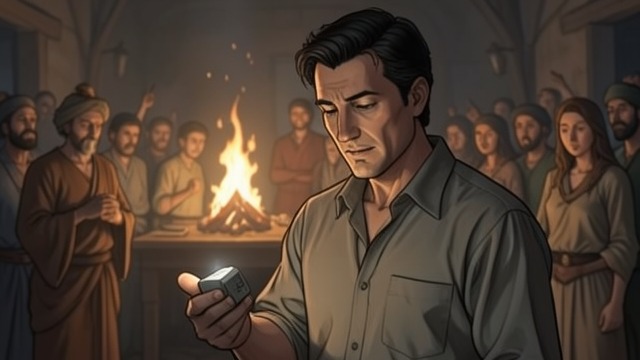
The narrator learns the declaration that nothing is more precious than independence and freedom. Its force lies in the promise that a people can determine its own future.
A Principle Made Absolute
The slogan becomes a test of loyalty, repeated by people who have endured colonial rule and war. Its simplicity gives it emotional power but leaves room for competing meanings.
The phrase becomes the novel’s central measure of whether a political movement remains faithful to what it once demanded.
The Commissar’s Question
The Commissar’s Question
A Riddle Repeated
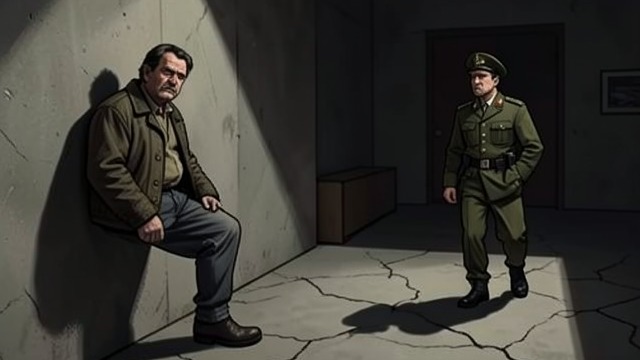
The Commissar repeatedly asks what is more precious than independence and freedom. The narrator searches for an answer that will satisfy both his friend and the camp’s political logic.
Certainty Breaks Down
The narrator’s exhaustion strips away familiar slogans, but no ordinary value seems to answer the question. His inability to respond exposes how thoroughly language has become a tool of authority.
The riddle forces him to confront the difference between repeating a principle and understanding what happens when its meaning is reversed.
Nothing as an Answer

Nothing as an Answer
The Word Emerges
The narrator finally answers that nothing is more precious than independence and freedom. The repetition makes the slogan sound both reverent and absurd.
The Joke Opens
He understands that “nothing” is not merely absence; it reveals how the revolutionary state has emptied its own promise by taking freedom away from the people. The same phrase can honor an ideal or expose its betrayal.
The answer is not a new policy but a new capacity to hear the contradiction inside language.
The Revolutionary Reversal
The Revolutionary Reversal
Power Learns Old Habits
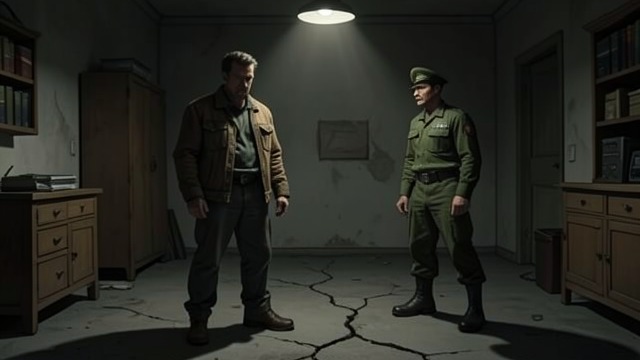
The narrator recognizes that the new state can use coercion and imperial methods much like the former foreign powers. Independence has not prevented the victors from dominating their defeated compatriots.
A Joke About Victory
The revolution that promised freedom now asks citizens to submit to confinement and enforced political language. The narrator sees that the slogan can be turned inside out without changing its words.
The reversal makes the narrator’s double vision politically necessary: without it, the contradiction could be mistaken for a seamless triumph.
Carrying the Paradox

Carrying the Paradox
A Continuing Revolutionary Identity
The narrator and Bon leave the camp still calling themselves revolutionary, even as they reject the state’s claim to speak for everyone. Their politics survive without the certainty that once organized them.
Freedom and Nothingness
The narrator recognizes that nothing is more precious than independence and freedom, while also recognizing how easily those words conceal their opposite. He carries the unresolved phrase with him toward the sea.
The novel ends not with a final ideological answer but with a commitment to live and continue questioning.
During the narrator’s early political education
During the last phase of reeducation
At the climax of the final interrogation
After the narrator is released from the examination
The night before the narrator’s planned escape
