
The Weight of Revolutionary Guilt
The SympathizerThe narrator’s moral development turns on the difference between being innocent, being useful to a cause, and taking responsibility for what he does or permits.
increasing Bearing strength in each event
 decreasing
Bearing strength in each eventdecreasingThe Innocence of a Cause

The Innocence of a Cause
Revolutionary Confidence
Man teaches the narrator that corrupt enemies can be defeated by disciplined revolutionaries. The young men believe their commitment gives them moral clarity.
A Doubt Already Present
The narrator’s ability to sympathize with people on opposing sides prevents him from fully accepting this division. He can see why a just cause may still use unjust methods.
The early tension between idealism and doubt anticipates the narrator’s later inability to separate political purpose from personal responsibility.
The Price of the List
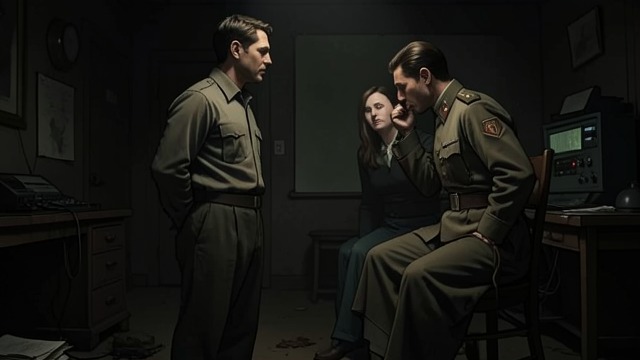
The Price of the List
Loyalty as Inaction
The narrator protects his undercover role by allowing the Communist Agent to be arrested and interrogated. His silence may protect the operation, but it leaves her exposed to state violence.
A Deferred Debt
Man promises to free her after liberation, while the narrator keeps her file as a reminder of his failure. The future promise cannot change the present injury.
The episode introduces a form of guilt that comes not from direct violence but from accepting the conditions that make violence possible.
The Major’s Death

The Major’s Death
A Killing Ordered
The narrator and Bon kill the Crapulent Major after the General treats suspicion as sufficient proof. The narrator has helped create the accusation and cannot claim to be a detached participant.
Guilt Without a Legal Name
The General calls the act an assassination rather than murder, but the narrator continues to see the Major’s face and family. Political vocabulary cannot settle the moral question.
The killing teaches him that a cause can provide explanations for violence without making the harmed person disappear.
The Father’s Death

The Father’s Death
A Written Wish Recalled
The narrator remembers writing that he wished his father were dead. Man asks whether that wish was intended for a friend who could act on it, complicating the boundary between private thought and political instruction.
Responsibility Beyond Intention
The narrator insists he did not mean to cause the assassination, but must consider how his words might have been received. His guilt is not resolved simply by denying a deliberate plan.
The memory expands responsibility from actions to the relationships and systems through which desires can become orders.
Confessing Inaction
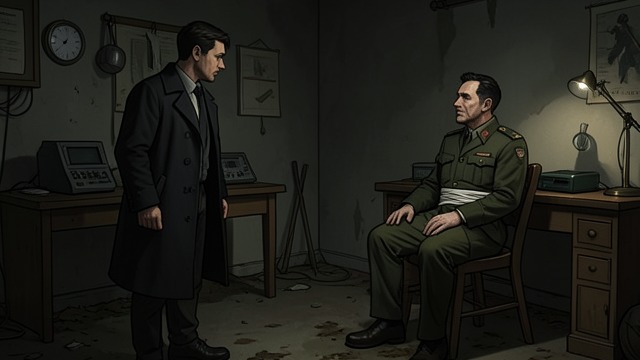
Confessing Inaction
The Crime of Watching
The narrator finally admits that he watched the Communist Agent’s assault and did nothing. His confession is not that he committed every act himself, but that he allowed another person’s suffering to proceed.
A Larger Ethical Measure
The narrator comes to understand that political loyalty cannot substitute for action when a person is in danger. The realization does not erase his past, but it changes how he interprets it.
The novel makes guilt an unfinished practice of seeing and responding, rather than a fixed label that can be escaped by claiming innocence.
During the narrator’s political apprenticeship
During the arrest of the Communist Agent
Around the United States Bicentennial
During the narrator’s reeducation examination
At the climax of the final interrogation
