
Music as Memory and Resistance
The SympathizerSongs connect the narrator’s memories of Saigon, the exiles’ sense of community, and the revolutionary state’s efforts to control cultural expression.
increasing Bearing strength in each event
 decreasing
Bearing strength in each eventdecreasingSongs on the Eve of Flight

Songs on the Eve of Flight
A Beer-Garden Chorus
The narrator, Bon, and Man sing with soldiers in a Saigon beer garden as the city faces collapse. Love songs hold the group’s attention when the future is too frightening to face directly.
A Brief Shared Past
The friends sing “Yesterday” and remember a life that might have existed without war. The song gives their friendship a moment outside the political choices waiting for them.
Music becomes an emotional shelter, though it cannot change the direction of the coming evacuation.
Songs in Exile

Songs in Exile
A Portable Homeland
Exiles gather to hear familiar songs and remember Saigon. Performances give them shared language when families and communities have been dispersed.
Sadness as a Practice
The narrator notices how often the songs dwell on loss and longing. The community may be learning to love the sadness it has been forced to carry.
Music does not restore the city, but it makes emotional recognition possible among people who would otherwise experience exile alone.
Lana’s Stage
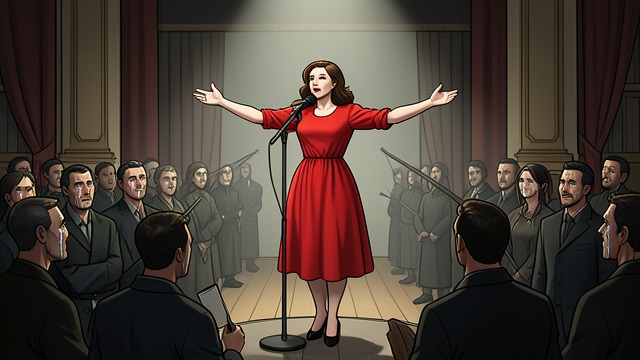
Lana’s Stage
A Changed Performer
Lana appears as a confident singer performing rock and pop songs rather than the modest schoolgirl the narrator remembers. Her stage presence challenges her parents’ expectations.
A Song of Violence
Her multilingual performance of “Bang Bang” joins love and violence in a song familiar to the exile audience. The narrator hears the music as a record of experiences that cannot be forgotten.
Lana’s performance gives a new generation a way to inherit memory without repeating the older generation’s silence.
The Film’s Musical Force

The Film’s Musical Force
Sound Directs the Audience
The Hamlet uses a dramatic score, helicopter sounds, and explosions to accelerate the climactic battle. The audience responds physically to the rhythm and spectacle.
Emotion as Instruction
The film’s music helps direct the audience toward fear, hatred, and relief, shaping the political meaning of the images. Vietnamese characters are heard most intensely when they scream.
The soundtrack shows that cultural power works not only through dialogue but through the emotions a production makes an audience feel.
Yellow Music Banned
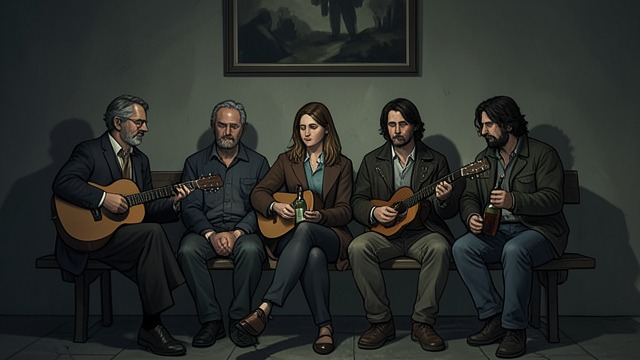
Yellow Music Banned
A New Cultural Rule
The narrator and Bon hear that the new government permits revolutionary songs but has banned yellow music. Familiar popular music disappears from cafés and radios.
Sound as Political Belonging
The ban treats romantic and popular songs as signs of a rival culture, even though the people themselves still desire them. The loss of music tells the narrator that victory has also meant a narrowing of private life.
Music’s absence makes cultural control audible, turning silence into evidence of the state’s reach.
The night before the evacuation
During the first years in California
At Fantasia in Los Angeles
During the Bangkok screening of The Hamlet
After the narrator returns to Saigon
