
The Reeducation and Escape
The SympathizerThe narrator’s last major arc moves from isolated confession through a forced reckoning with his omissions to a precarious release from Vietnam.
increasing Bearing strength in each event
 decreasing
Bearing strength in each eventdecreasingThe Isolated Confession
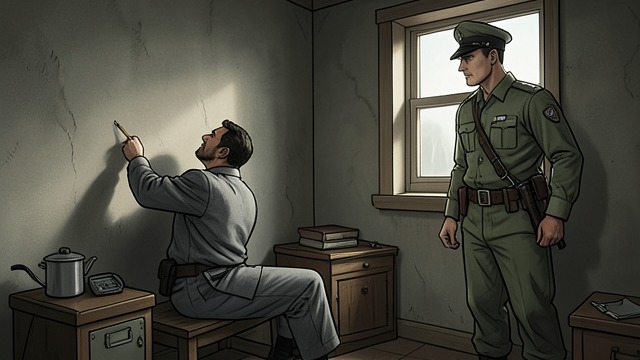
The Isolated Confession
Writing Under Watch
The narrator spends a year in an isolation cell writing his confession while The Commandant criticizes its style and political conclusions. He is treated as a special case rather than an ordinary prisoner.
A Different Standard
The Commandant wants a legible confession of ideological error, but the narrator keeps describing contradictions instead of repeating the expected slogans.
The written account becomes a struggle over who can define the narrator’s past and whether an official narrative can contain a divided life.
The Examination Room
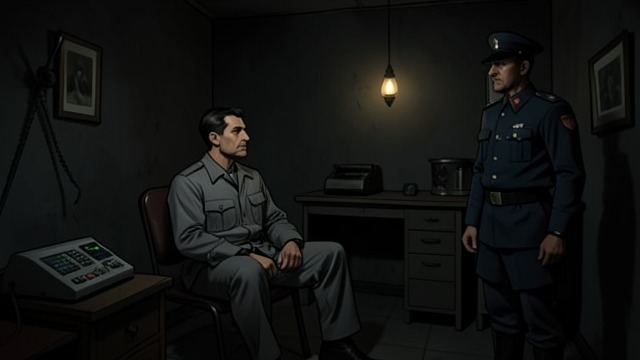
The Examination Room
Sleep Deprivation
Man, now the Commissar, subjects the narrator to prolonged wakefulness, sensory deprivation, bright light, and staged interrogation. He says the brutal method is intended to protect his friend from the harsher treatment The Commandant would impose.
Knowledge Without Relief
The narrator recognizes elements of KUBARK interrogation methods but cannot think his way out of the experience. Familiarity offers no immunity to exhaustion and fear.
The examination turns political education into bodily pressure and makes the narrator experience the machinery he had once studied and used.
The Forgotten Agent
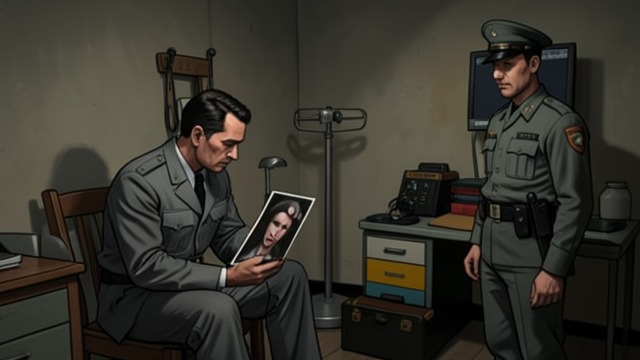
The Forgotten Agent
An Omission Comes Forward
The Commissar forces the narrator to revisit his account of the Communist Agent’s arrest and abuse. The narrator insists that he did nothing to her, thinking this absolves him.
Inaction Named
The questioning reveals that the omission itself is the confession: he watched and failed to intervene. The Agent survived, but her injuries and his silence remain part of the same event.
This recognition reframes guilt as responsibility for what a person permits, not only for what he directly does.
The Answer of Nothing
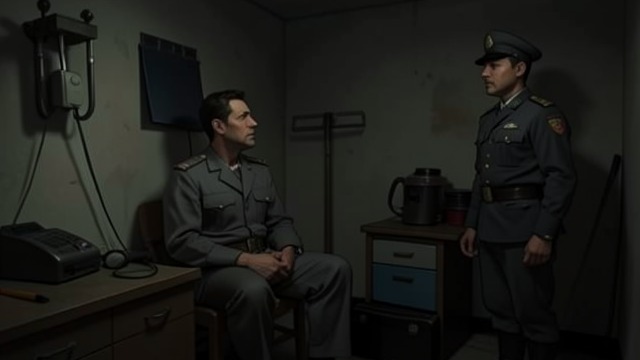
The Answer of Nothing
The Riddle Repeated
The Commissar repeatedly asks what is more precious than independence and freedom. The narrator finally answers “nothing,” recognizing the slogan’s hollow and paradoxical meanings.
A Joke Turned Inside Out
The answer exposes how a revolution can invoke liberty while depriving people of it. The narrator understands that the same political words can inspire liberation and conceal a new concentration of power.
His breakthrough is not a simple rejection of the revolution, but a capacity to perceive the contradiction that official certainty cannot admit.
Release Through Corruption
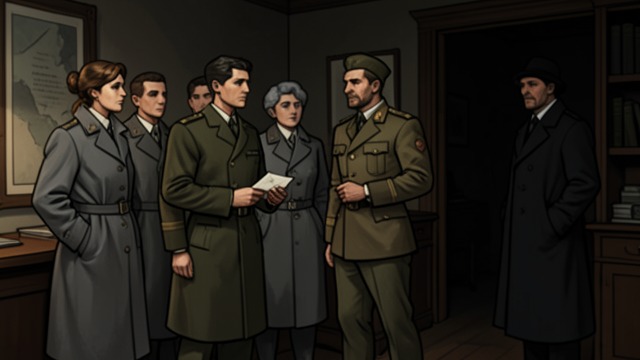
Release Through Corruption
A Purchased Escape
The Commissar reveals that bribes paid by prisoners’ families helped finance the narrator’s and Bon’s release. He has used the system’s money to secure an exit that official doctrine cannot provide.
No Clean Victory
The friends leave the camp with their manuscript and the Commissar’s help, while the other survivors remain behind. Their release depends on money and personal sacrifice rather than a purified revolutionary process.
The escape offers survival, not resolution: the narrator leaves carrying affection for Man and knowledge of the system’s violence.
The first year after capture
After the year of isolation
During the final phase of reeducation
At the climax of the examination
Near the ending, before the boat departure
