
The General’s Reversal
The SympathizerThe General moves from defeated commander to exile organizer, rebuilding authority through a secret movement while increasingly treating dissent as a threat.
increasing Bearing strength in each event
 decreasing
Bearing strength in each eventdecreasingA General Faces Defeat
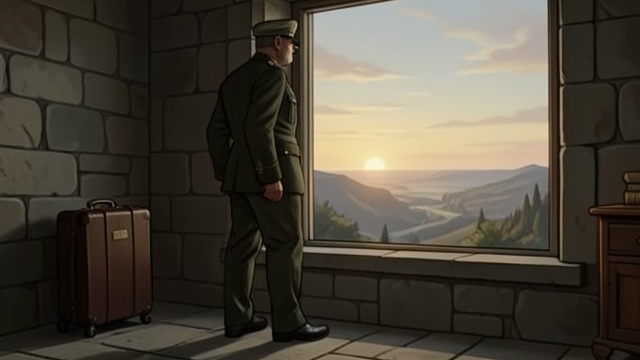
A General Faces Defeat
Disbelief Gives Way
The General receives news of military collapse and recognizes that the United States will not supply the aid needed to continue the war. His confidence in foreign protection begins to fail.
Planning an Exit
Madame presses him to ask Claude for an aircraft. The General delays, but ultimately prepares to evacuate his extended family and selected officers.
His first transformation is from confident commander into a leader forced to decide who may survive the collapse.
The Camp’s Public Humiliation

The Camp’s Public Humiliation
A Failed Morale Visit
The General enters the refugee camp in uniform to encourage civilians. They recognize not a protector but a commander whose people have been left behind.
Authority Unmade
Women strike him and tear at his uniform. He escapes only with the narrator’s help and privately forbids discussion of the incident.
The scene reveals how defeat has made his rank ineffective and how the people he hoped to lead have their own judgment of his conduct.
A Shopkeeper’s New Role
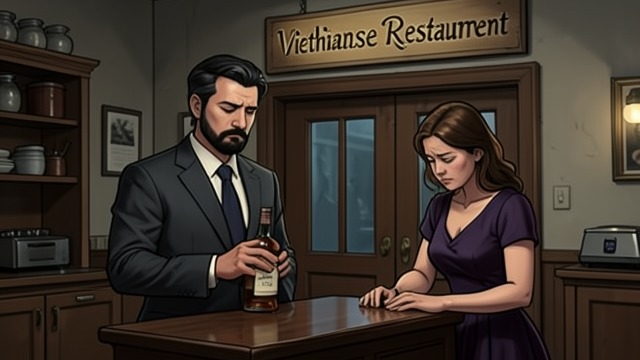
A Shopkeeper’s New Role
Former Status Lost
The General becomes unemployed in the United States while Madame carries the domestic responsibilities once handled by servants. Their marriage and household must adapt to exile.
A Business Begins
He opens a liquor store and later supports a Vietnamese restaurant. He experiences the work as degrading, though the businesses also offer a base for organizing.
The General’s civilian life is neither simple failure nor full reinvention: commerce becomes the means by which he rebuilds political power.
The Counteroffensive Plan
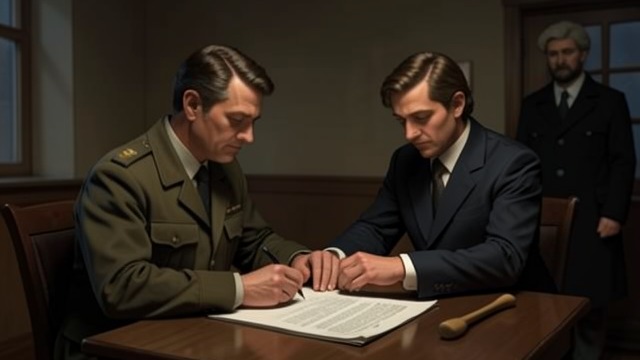
The Counteroffensive Plan
A Movement Takes Shape
The General creates the veterans’ fraternity as a charitable front and begins assembling an exile army. Madame organizes uniforms and women’s support, while American allies help with contacts and money.
The Narrator’s Service
The narrator helps with planning and logistics while secretly reporting the movement to Man. The General’s renewed confidence depends on the same clandestine systems he once fought against.
His resistance converts bereavement and lost status into a renewed military project, but the project risks reproducing the violence that defeated him.
A New Divide with Sonny

A New Divide with Sonny
Reporting Challenges the Cause
Sonny’s newspaper questions the General’s fundraising and warns that the resistance may offer false hope. The General sees the reporting as dangerous propaganda that could weaken the exile community.
Suspicion Turns Inward
The General increasingly treats dissent as evidence of infiltration and presses the narrator to act against Sonny. His leadership shifts from organizing a cause to policing its boundaries.
The movement’s fight for a lost country thus generates a conflict over who may speak for the exiles and whether disagreement is loyalty or treason.
April 1975, as the northern front collapses
The first days at Guam
The first year in Los Angeles
During the first years of exile
After publication of “Move On, War Over”
