
The Film’s Vanishing Credits
The SympathizerThe narrator’s work on The Hamlet progresses from an effort to improve representation into a recognition that participation may help the machinery of erasure.
increasing Bearing strength in each event
 decreasing
Bearing strength in each eventdecreasingA Consultant’s Opportunity

A Consultant’s Opportunity
A Job in the Philippines
Violet asks the narrator to consult on The Hamlet, promising that his knowledge can improve the depiction of Vietnamese people. He accepts the work and sees a chance to influence a powerful cultural product.
An Uncertain Motive
The narrator also needs money and distance from his guilt over the Crapulent Major’s death. His decision is therefore both professional opportunity and private escape.
The job places him inside a film industry whose resources and authority he hopes to redirect without controlling either.
The First Confrontation

The First Confrontation
A Script Without Voices
The narrator objects that the Vietnamese characters in the screenplay mostly scream or appear without intelligible speech. He argues that their pain and language cannot be reduced to generic sounds.
A Limited Opening
The director resists the criticism but later adds a few speaking roles. The narrator believes he has made progress, though the new roles still organize Vietnamese characters around the American soldiers’ story.
The exchange establishes the limits of consultation: the narrator may alter details, but the director retains control of the work’s central perspective.
Extras in Assigned Roles

Extras in Assigned Roles
Work for a Dollar a Day
The narrator recruits boat people at Bataan and organizes them as extras. They play civilians, soldiers, and Viet Cong, although many resent being assigned the enemy’s role.
Familiarity as Labor
Their actual histories make some scenes disturbingly plausible, but the film uses their experience as raw material. The narrator secures additional pay for extras playing Viet Cong and tries to lessen the indignity of the work.
His practical advocacy helps individuals while leaving the unequal structure of the production intact.
The Explosion and Erasure

The Explosion and Erasure
A Grave Destroyed
The director orders the film-set cemetery, including the narrator’s memorial for his mother, to be rigged for destruction. An explosion badly injures the narrator and leaves him with a gap in memory.
A Credit That Never Comes
When he later watches the completed film, the narrator discovers that his name does not appear in the credits. The work he contributed has helped the production while leaving him absent from its public record.
The paired events make physical and representational erasure inseparable: the film destroys the memorial and excludes the person who helped create its Vietnamese authenticity.
The Audience’s Verdict
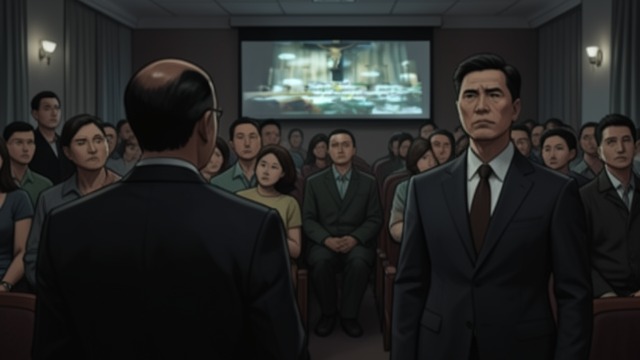
The Audience’s Verdict
Spectacle and Silence
The narrator watches The Hamlet with Bon. The audience responds to its action, while Vietnamese characters remain largely confined to roles shaped by American fantasy.
A Failed Intervention
Bon tells the narrator that adding Vietnamese performers did not give them control; it merely allowed the film to claim inclusion. The narrator recognizes that his work may have made the representation more convincing without making it more just.
The experience marks a painful change in his self-understanding: he is no longer certain that working from inside the production has meaningfully opposed its power.
After the first year in Los Angeles
At the Auteur’s Hollywood Hills home
During the Philippines shoot
Near the end of filming in the Philippines
After the film opens in Bangkok
