American imperialism and military intervention
The SympathizerAmerican imperialism and military intervention are presented as forces that reorganize Vietnamese politics, labor, and representation, then disclaim responsibility for the consequences. The United States arms and sustains an allied regime, intervenes in the country’s economy and war, and finally abandons people who had built their lives around American power. Yet the novel does not make Vietnamese actors passive: the narrator works inside the allied system, exposes its evasions, and recognizes how its instruments and abuses can be inherited by those who overthrow it.
Dependency and abandonment
The General’s crisis in April begins with the collapse of the military and political order the United States had helped sustain. The retreat from the Highlands, the loss of cities, and the flight of civilians make the scale of defeat undeniable. The allied government has relied on American weapons, aircraft, and tanks, but now learns that Washington will not provide the additional money needed for ammunition, fuel, and spare parts. The General’s bitter reflection on the cost of what was originally given for free captures the trap: assistance has created dependence, while withdrawal turns that dependence into vulnerability.
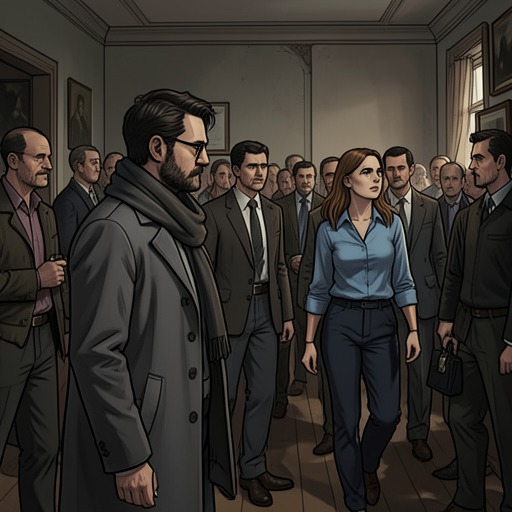
The impending evacuation makes the imbalance personal. Claude explains that an official announcement could provoke riots, even as planes depart and American women, babies, and orphans are removed. The General challenges the contradiction between the visible departure and the public denial of one. Claude can offer the General only a single plane. The restriction is not merely logistical: it forces the allied leadership to confront the limits of a partnership in which American authorities retain control over the means of escape.
Claude’s later account of the final evacuation makes those limits concrete. Secret helicopter sites are already known throughout Saigon; the airport, docks, and routes to the embassy are blocked. Crowds arrive with employment papers, marriage certificates, letters, and passports, but such evidence does not guarantee passage. American personnel sometimes identify former colleagues and get them through, while others are left behind. The episode exposes a hierarchy of rescue in which Vietnamese ties to American institutions may be extensive and still fail to secure protection when evacuation becomes urgent.
Occupation and its material consequences
The narrator links military intervention to changes that reach far beyond the battlefield. He describes poor rural women pushed into prostitution in a wartime economy serving American servicemen, while villages are destroyed or forcibly evacuated. The passage treats the sex trade not as an incidental collection of individual misfortunes but as part of an occupation’s material structure: war displaces people, American money creates new demand, and vulnerable women bear the costs. Its sharp irony is aimed at the language of defending freedom, which makes intervention sound benevolent while obscuring the conditions it produces.
The novel also shows the narrator’s own entanglement in the allied system. As the General’s aide-de-camp, he helps manage the consequences of a military order that has left both civilians and soldiers exposed. During the evacuation, he negotiates with a South Vietnamese lieutenant at a checkpoint, offering money so the party can pass. The lieutenant accepts a bribe large enough to equal a month’s pay for his platoon and honors the agreement rather than turning them back. The narrator admires him, even as the encounter makes visible a military structure in which hunger, family obligations, and the approaching collapse narrow the choices of those serving it.
Control of the story
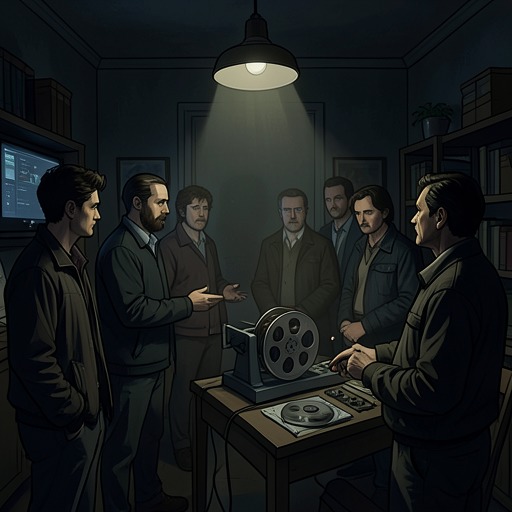
American power also operates through the production of images. In the war film being made with the Auteur, the narrator arranges extras and classifies their parts as civilians, allied soldiers, or Viet Cong. Each label carries a built-in possibility of being treated as enemy and killed; even the categories that promise friendship remain unstable. Refugees and former fighters resist playing the Viet Cong, though they eventually accept higher wages. The casting problem reveals how a film’s apparently simple roles reproduce the categories through which the war has been understood and fought.
The narrator objects when the Auteur insists on staging Mai’s rape as a dramatic shock. The director defends the scene as something the audience needs to feel, while dismissing the narrator as a sellout. Their dispute joins representation to political authority: an American filmmaker claims the right to decide how Vietnamese suffering should appear, while the Vietnamese intermediary challenges the use of sexual violence as an instrument of spectacle. The conflict does not make the narrator an outsider to the production; he remains involved in its labor and logistics even as he contests its choices.
The film’s simulated torture further complicates the boundary between depicting violence and reproducing its forms. Actors playing Viet Cong interrogate Binh with water poured over a cloth covering his face, while the production’s safety arrangements protect the performer rather than the fictional captive. The narrator’s account emphasizes the work and bodily effort of staging abuse, making the scene’s violence an organized performance for an audience. Elsewhere, Claude’s interrogation instruction uses images of mutilated bodies and an American soldier urinating on a Viet Cong corpse to claim a shared human capacity for cruelty. The lesson unsettles any account that assigns violence to one side alone, though it does not erase the institutions that authorize or display it.
Inherited power and revolutionary contradiction
The novel’s account of American intervention ultimately resists a clean division between foreign imperialism and Vietnamese rule. In the narrator’s final reflection, the revolution’s language of independence and freedom has become compatible with withholding those same goods from defeated compatriots. He compares that reversal with the French and American transformations from revolutionary causes into imperial powers: each has invoked liberation while occupying and constraining Vietnam. The comparison identifies a recurring political pattern, not an equivalence that cancels the particular responsibility of the United States for its intervention and withdrawal.
This pattern is also present in the narrator’s divided position. He has served an American-backed government, recognizes the suffering produced by its collapse, and remains capable of criticizing American promises and Vietnamese abuses alike. His perspective makes imperialism visible both as external domination and as a set of practices that can be learned, repurposed, and defended by those who once opposed it. American power leaves behind more than a defeated ally: it leaves material dependence, damaged lives, contested images of the war, and a political vocabulary whose claims to freedom remain vulnerable to appropriation.