Arresting the Communist agent and seizing the list
The SympathizerArresting the Communist agent and seizing the list is both an intelligence breach and a personal failure for The unnamed narrator: during the arrest, he takes a list of Special Branch names from The Communist Agent’s mouth, even though he is secretly on her side. The memory later returns under interrogation, revealing that the act that protected his cover also helped leave her in a cell for years, where she suffered sexual violence.
The arrest and the list
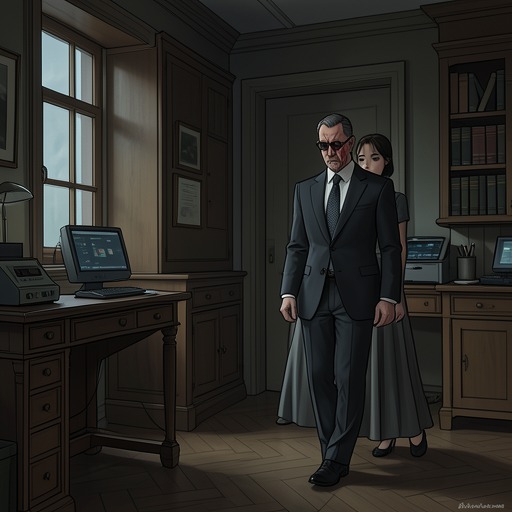
Three years before the evacuation, The unnamed narrator’s warning to The Communist Agent did not reach her in time. When the police forced their way in, she tried to swallow the list. The unnamed narrator had no choice, as he understood the danger to his cover, but to reach into her mouth and pull it out, soaked with saliva. The paper’s makeshift, papier-mâché condition did not make its contents less dangerous: the names included every man on The General’s staff, from the lowest officer to The General himself.
The list showed that the Special Branch, a body accustomed to watching others, was itself being watched. The narrator knew he could not safely tell the captured woman that he was on her side. In the interrogation cells, he believed, people talked, and she might reveal his secret even without intending to. She was younger than he was, but he recognized that she understood the danger facing her. For a moment their eyes met in mutual recognition; she hated him as an agent of the regime, then resumed the role demanded by her situation, protesting that she was innocent.
Imprisonment and the delayed cost
The arrest did not end with the seizure of the paper. Three years later, The Communist Agent was still in a cell, and The unnamed narrator kept her folder on his desk as a reminder of his failure to save her. The file held a photograph from the time of her capture and another taken months before: at twenty-two when arrested, she now appeared with faded eyes and thinning hair. He thought of prison cells as time machines, making their inmates age faster than people outside them.
That folder also shaped his work selecting evacuees. As he weighed which officers would be saved and which left behind, the agent’s two photographs made the consequences of confinement visible. Her continued imprisonment was not simply a private regret: it stood beside the practical decisions of evacuation as evidence of the lives those decisions could condemn. Man had also accepted responsibility for failing to save her and had promised that he would unlock her cell when liberation came.
The memory recovered in the interrogation room
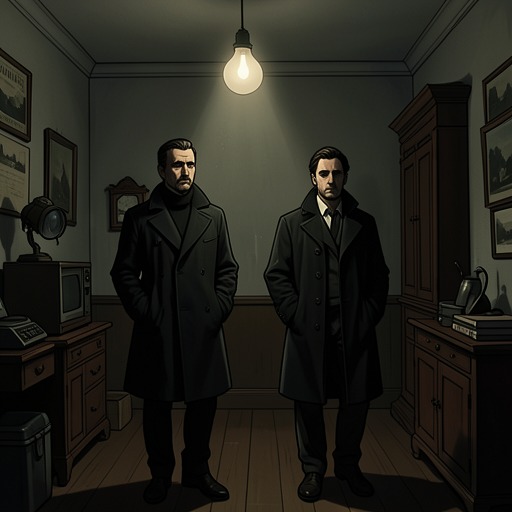
The arrest returns much later as a recovered memory, not as a straightforward chronological scene. During the interrogation of The unnamed narrator, questions lead him back to the room the police called a movie theater, where interrogations took place when foreigners were absent. He remembers The Communist Agent tied naked to a table beneath fluorescent lights, with the movie screen behind her and Claude watching from beside the projector. The crapulent major was nominally in charge, while three policemen carried out the assault.
The unnamed narrator says he watched, protested that the violence was wrong, and appealed first to the major and then to the policemen for time alone with her. The major claimed that The General wanted answers immediately; Claude said he was only an adviser. Neither intervened. The policemen raped The Communist Agent in turn while The unnamed narrator remained a witness. Afterward, she lay silent and unresponsive. The men left a bottle inside her body and treated the act as a joke; Claude disclaimed having taught them that method. The narrator’s memory fixes the bottle, the room, and the men’s excuses alongside the original list, joining the evidence-gathering operation to the violence used to obtain information.
Consequences and narrative significance
The seized list also clarifies why later talk of spies inside the ranks could become so charged. In a later conversation, The General presses The unnamed narrator to name a suspected infiltrator; fearing that a refusal to identify anyone will expose him, the narrator diverts suspicion toward The crapulent major. The arrest itself had already demonstrated that the staff’s names were known to an enemy agent, but the later suspicions rest on conjecture and prejudice rather than proof. The event thus links a real breach of security with the atmosphere of paranoia that follows it.
The arrest’s deepest consequence is the narrator’s divided participation: he protects his identity by taking the list, yet his action helps place a fellow agent in the custody of the regime he secretly opposes. The later memory does not turn him into the perpetrator of the assault, but it refuses the comfort of treating him as uninvolved. He watched, objected, and failed to stop it. Recalled during interrogation, the scene makes the cost of secrecy tangible: the list preserves names, while the woman who carried it remains trapped in the consequences of its discovery.