Bon and Linh’s marriage
The SympathizerBon and Linh’s marriage is described through Bon’s account of how love unsettled, then reshaped, his sense of purpose. For Bon, marrying Linh first seemed to place his devotion to his wife in conflict with his duty to avenge his father; the birth of their son, Duc, eventually allowed him to understand family love not as betrayal but as a bond passed from one generation to the next.
Love and the Sense of Betrayal
Before meeting Linh, Bon says, his purpose was revenge for his father. Falling in love reordered his priorities: Linh became more important to him than either his father or vengeance. The change did not immediately bring peace. After their marriage, Bon cried at his father’s grave because he felt he had betrayed his father in the place that mattered most—in his heart. His account presents marriage as an intimate choice with a moral cost as he then understood it, not as a simple escape from grief or obligation.
Duc and the Repair of a Family Bond
Bon’s account of fatherhood marks a turn in that conflict. At first, he recalls, Duc seemed strange and ugly, and Bon wondered why he could not love his own son. Gradually, his attention shifted to the child’s perfectly formed fingers, toes, hands, and feet, which he recognized as miniature versions of his own. The sight brought him a wonder unlike what he had felt when falling in love.
In that recognition, Bon imagined the continuity between his father, himself, and Duc: his father had created him, and he had created Duc. He understood his father’s love through the act of loving his own child, and concluded that he had not betrayed his father after all. Holding Duc, he cried again, this time because he felt he had finally become a man. The marriage that had seemed to divide him from his father thus became part of a family sequence through which Bon could recover that connection.
Marriage and the Loss of Purpose
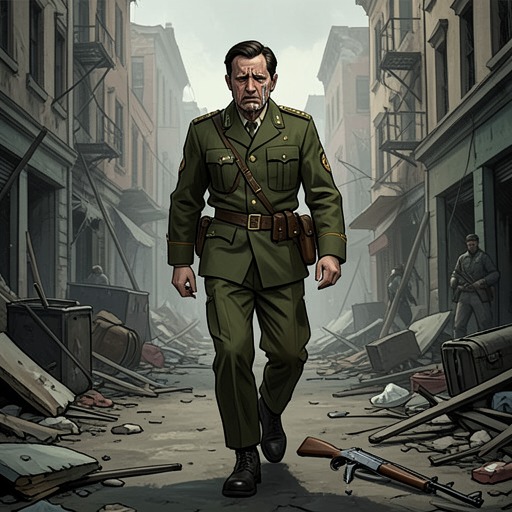
Bon recounts this history while contemplating a .38 Special. In the present of the conversation, he says that his former identities—as son, husband, father, and soldier—are all gone, and with them the purpose that had once made his life meaningful. His words describe the marriage not as proof that his attachment to Linh has ceased, but as one of the relationships whose loss he now experiences as a loss of self. He reduces his remaining choices to killing himself or killing someone else, turning the account of love and fatherhood into an explanation of how completely he believes his purpose has vanished.
The unnamed narrator is astonished by Bon’s unusually extended speech, in which sorrow, rage, and despair give voice to a history Bon has rarely articulated. The marriage’s significance therefore comes to the reader through Bon’s retrospective account: it first appears to conflict with filial loyalty, then helps him understand that love for a child can renew rather than erase the bond with a father.