C-130 Evacuation at Saigon Airport
The SympathizerThe C-130 Evacuation at Saigon Airport is the unnamed narrator’s account of an escape from Saigon that becomes a battlefield ordeal: the first transport is struck on the runway, and the desperate flight to a second aircraft costs Linh and Duc their lives. Its crowded cargo holds make the refugees’ precarious passage palpable, while the deaths aboard the tarmac bind survival to grief and to the narrator’s effort to keep Bon alive.
The First C-130 and the Attack
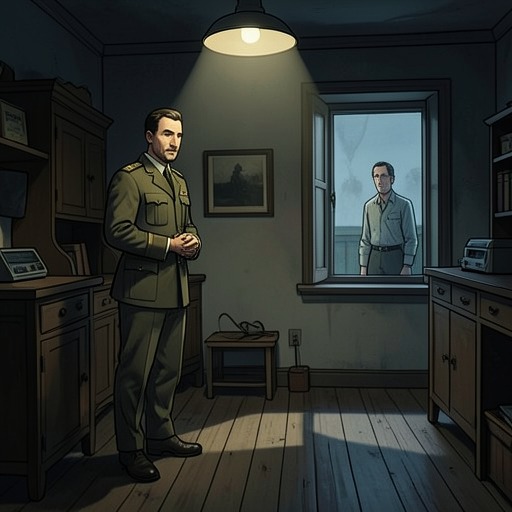
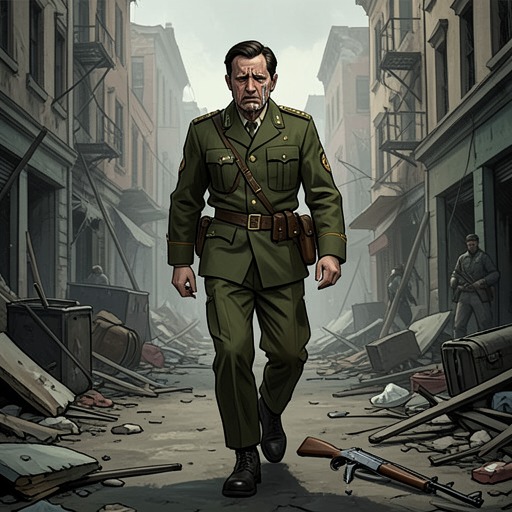
The first aircraft carried its passengers in a cargo hold without seats. Adults crouched on the floor or balanced on bags; children sat on their knees, and the luckier passengers clung to cargo straps along the bulkheads. Bon, Linh, and Duc were somewhere in the crush, as were The General’s family and Madame. The unnamed narrator and The General leaned by the ramp, pressed into the same cramped space as the passengers. With the hold above forty degrees Celsius, the air grew thick with the smell of sweat, unwashed clothes, and anxiety. Through the open doorway, the runway offered a view of concrete revetments and aircraft destroyed in an earlier attack. The plane’s departure seemed to promise an end to the city’s immediate danger, but the passengers had not yet left the airfield. As the aircraft taxied, an explosion hurled the crewman at the open door onto the passengers. The blast knocked The General into the narrator and sent the narrator against the bulkhead and down onto the bodies below. When his sight returned, fire showed through the doorway. The aircraft spun across the runway as passengers screamed, and another explosion intensified the panic. The narrator’s fear is sharpened by his memory of burned bodies near Hue: death by fire is not an abstract possibility but a fate he has already witnessed and hopes to avoid. The plane finally stopped at an angle that opened the doorway onto darkness rather than the fire. The loadmaster lowered the ramp, but the refugees surged toward it so forcefully that the narrator was carried along with them. To keep from being trampled, he covered his head with his rucksack and rolled down onto the runway. A rocket exploded behind the aircraft, briefly lighting the airfield; the plane’s starboard engines were burning, their smoke and sparks marking the failed escape. The fleeing passengers reached a concrete divider for cover, where bullets soon began passing overhead or striking the concrete. The first aircraft had carried them out of the hold and into the open, but the runway remained under fire.
The Second Attempt and Its Cost
The dawn offered little shelter. From behind the concrete divider, the refugees watched the first C-130 smolder on the damaged runway as the rising sun exposed abandoned suitcases and the battered airfield. A second Hercules landed, and hope briefly turned the refugees’ waiting into a rush toward its lowered ramp. Then soldiers and airfield personnel emerged from the hangars and revetments, joining the flight rather than defending the airport. The evacuees were competing not only with one another but with the base’s remaining military and civilian staff for a place aboard.
Rockets and gunfire resumed while the crowd ran. The closing attack made the second aircraft seem like the last possible way out: a Tiger fighter and a Huey helicopter lifted off with military personnel, while a Shadow gunship was destroyed by a heat-seeking missile. As The General and the unnamed narrator pressed toward the ramp, the narrator stopped to let Linh and Duc pass. They did not reach him. He turned back and saw Bon kneeling over Linh, whose white blouse was marked by a spreading red stain; Duc lay between his parents with a fatal wound through his chest. The escape had become a choice between boarding and returning to the family in the line of fire.
The unnamed narrator ran back, slid across the tarmac, and tried to pull Bon away from Linh and Duc. Bon was fixed in grief and would not move, so the narrator struck him in the jaw to break his hold. He lifted Linh’s body and ran toward the departing plane while The General and the loadmaster waited on the ramp. Bon followed, carrying Duc, and the loadmaster took the child as gently as he could. When Bon slowed, still sobbing, the narrator hauled him forward and pushed him onto the ramp; he then leapt aboard as the aircraft accelerated, and The General dragged him into the hold. The ramp closed behind them. As the plane climbed in a steep corkscrew, the crewman fired from the open side door, while Bon pounded his head against the ramp and howled. The aircraft had escaped the runway, but not without carrying the family’s dead.
After landing on Guam, the unnamed narrator lowered Duc onto a stretcher, unable at first to lay the child on the grubby tarmac. Medics covered Duc and then removed Linh from Bon’s arms. The narrator wept alongside Bon, whose grief overwhelmed him; at Camp Asan, Bon lay catatonic and later could not remember the televised evacuation or the refugees’ cries from the barracks and tents. Their private bereavement sits within a larger image of collective loss: the refugees’ wailing is compared to a funeral for a nation that had died too young. The evacuation’s measure of success is therefore irreducibly divided: The General, the narrator, and Bon reach safety, but survival preserves the scene of Linh and Duc’s deaths rather than undoing it.
Unequal Passage and the Cargo Hold
Before the runway attack turns escape into a scramble, the boarding scene has already exposed the hierarchy inside the evacuation. A sub-undersecretary helped secure places for the General’s party, but once aboard, the passengers were packed into a cargo hold without seats, while others left the country in reserved seating. Adults crouched or perched on their bags, children sat on their knees, and the General and the unnamed narrator leaned against the ramp with their knees pressed toward the passengers in front of them. The hold makes the refugees’ passage physically possible by reducing them to a tightly compressed human load; the contrast with reserved seating renders that unequal treatment visible without interrupting the rush toward departure.
As the engines start, the passengers rock together like a congregation swaying to inaudible prayers. At the open doorway, a crewman stands in a wide-legged pose suggestive of a rock guitarist, but the instrument slung across him is an M16. The juxtaposition turns the departure into an image of flight already governed by force: prayer, crowding, and armed protection share the same narrow threshold. The evacuation is not a clean passage from danger to safety but a precarious movement in which access is stratified and the refugees’ collective vulnerability is present before the first explosion.
An Escape Without a Clear Front
The attack makes the airport’s danger difficult to assign to a single enemy. The narrator initially fears artillery launched by communist forces from the suburbs captured outside Saigon. Behind the concrete divider, Bon suspects that the gunfire comes from their own side, from soldiers angry at being left behind; the narrator insists that the People's Army of Vietnam has taken the perimeter, even as he privately considers Bon’s explanation plausible. Bullets pass overhead and ricochet from the barrier while the burning aircraft draws fire, leaving the refugees exposed without knowing which armed men are shooting at them. The uncertainty is not resolved before the next aircraft arrives.
That confusion sharpens the evacuation’s central reversal: the airport’s armed personnel and rear guard emerge from hiding and join the refugees in seeking a way out. A Tiger fighter, a Huey carrying soldiers, and a Shadow gunship all take off, but the gunship is destroyed as the crowd presses toward the Hercules. In this sequence, military power offers no stable protection; aircraft become escape routes, targets, or wreckage within moments. The civilians’ flight is inseparable from the retreat of the forces that had occupied the airfield, and boarding the final transport means surviving a collapsing perimeter rather than passing beyond danger.