Film director (Auteur)
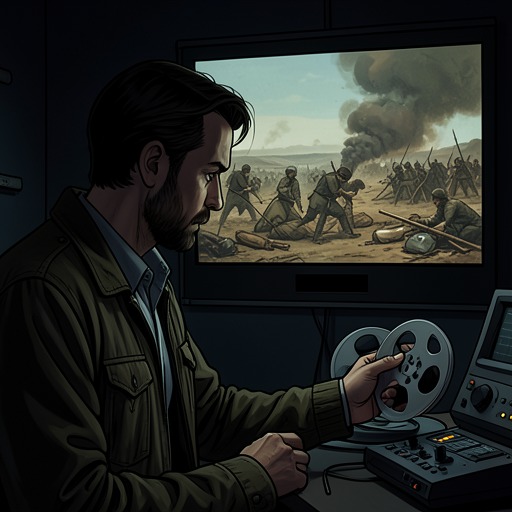
The SympathizerFilm director (Auteur) is a powerful Hollywood writer-director whose celebrated skill and confidence coexist with a narrow, controlling vision of Vietnam and its people. Through his clashes with The unnamed narrator, he embodies a central contradiction of The Hamlet: a film can painstakingly reproduce local costumes and speech while denying Vietnamese characters meaningful voices, because the director retains ownership of the story and its representation.
Identity and Career
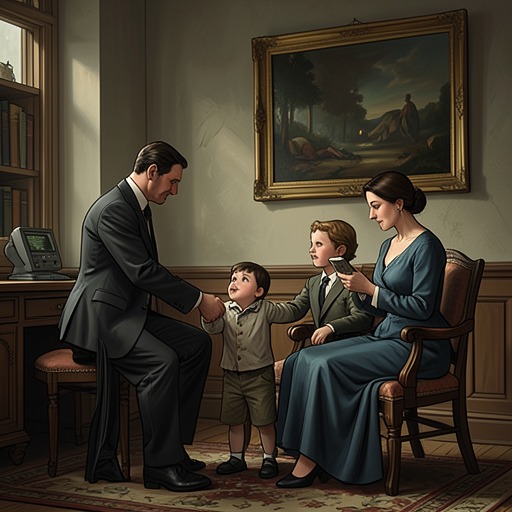
By the time he meets The unnamed narrator, Film director (Auteur) is described as the hottest writer-director in Hollywood, fresh from the success of two films. His first, Hard Knock, concerns Greek American youth in Detroit and is loosely autobiographical. The director was born with an olive-tinged Greek surname, which he bleached in a characteristically Hollywood act of self-fashioning. The account presents him as a filmmaker able to transform ethnic experience into acclaimed cinema while also distancing himself from the markers of his own background.
His more recent film, Venice Beach, shifts from off-white ethnicity to cocaine-white ethnicity. It follows a dipsomaniac reporter and his depressive wife as they write competing versions of the Great American Novel, their money and lives dwindling as the manuscript grows. Its final image is a dilapidated cottage entwined in bougainvillea and lit by the setting sun beyond the Pacific. The unnamed narrator recognizes the film’s artistry, despite his resentment: Film director (Auteur) has genuine talent. That admission makes their later conflict more than a simple opposition between a competent artist and an incompetent one. The problem is not that the director cannot make powerful films, but what his power permits him to leave out.
The Hamlet and the Demand for Authenticity
The unnamed narrator first encounters Film director (Auteur) through a screenplay for The Hamlet, sent in a manila envelope with his name misspelled. At their meeting in the director’s home, he has already been unsettled by Violet’s abrupt manner and by his suspicion that she sees him chiefly through racial stereotypes. He enters the conversation with those accumulated wounds, but keeps his irritation concealed. He is both meeting a celebrated filmmaker he once admired and confronting a screenplay about Vietnam in which Vietnamese characters have no intelligible words.
Film director (Auteur) presents himself as open to practical advice and attentive to authenticity. He offers The unnamed narrator a drink, points out the Hollywood sign from his office, and describes it as a reminder to write every morning. The sign is partly broken, but, in the director’s view, its meaning remains legible. He says that he has researched Vietnam by reading Joseph Buttinger and Frances FitzGerald, and cites a Green Beret who fought alongside the Montagnards as a script consultant. The veteran’s accounts and photographs gave him ideas for filming, he explains, while he claims to have had few corrections to make. His confidence rests on research and borrowed authority rather than on Vietnamese participation in shaping the story.
The unnamed narrator challenges the screenplay’s silences. He argues that a film set in Vietnam should let Vietnamese characters speak rather than merely instructing the camera to cut to villagers speaking their language. He also questions the absence of a love interest for the Green Beret, noting the implication that the soldiers’ only attachments are to one another. Film director (Auteur) responds by emphasizing The unnamed narrator’s lack of filmmaking experience and dismissing his suggestions as cheap ideas. When The unnamed narrator later reports the meeting to The General and Madame, he explains that the director wanted approval, not criticism. The exchange establishes the imbalance between the filmmaker who controls the production and the consultant invited to comment on it.
Control on the Set
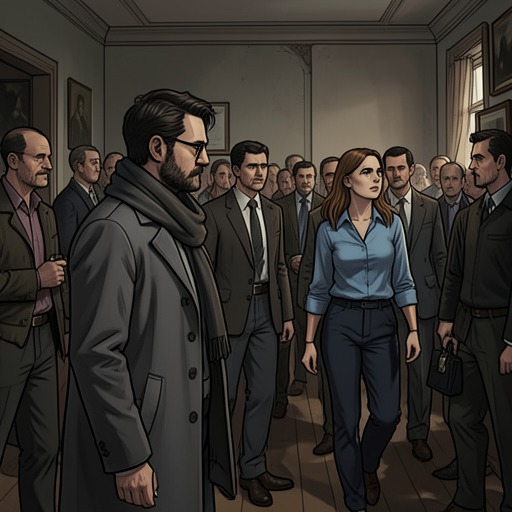
The conflict deepens during production, where The unnamed narrator is responsible for practical work with the extras: directing them to wardrobe and scenes, meeting dietary needs, arranging their dollar-a-day weekly pay, and filling roles. Many play civilians who may be treated as innocent or Viet Cong and killed either way; others play soldiers of the South Vietnamese Army. The most difficult roles to fill are those of the National Liberation Front guerrillas. Refugees who had fought for freedom resist playing the opposing freedom fighters, and some are especially troubled by being asked to torture Binh and rape Mai.
When The unnamed narrator presses for better pay, Violet agrees to double the wages for extras playing Viet Cong. But his objections to Mai’s rape scene produce a more direct rupture with Film director (Auteur). The day before filming, he asks whether the rape is necessary. The director defends it as a way to shock an audience and insists that war involves rape; he then attacks The unnamed narrator as a sellout for helping a white filmmaker. The insult turns a disagreement about staging violence into a dispute over complicity: whether participation in the production can challenge its choices or instead helps them appear more credible.
The Cemetery Explosion and the Limits of Influence
The unnamed narrator does manage to alter parts of the script and secure a few speaking parts. Yet he comes to see the limits of those changes. As technical consultant, he ensures that the Vietnamese extras in the background use real language and wear authentic clothing, even as their characters are about to die. Accuracy at the level of dialect and costume does not give them control over the emotions or ideas the film presents. He understands his work as making the stitching correct on a garment designed, produced, and consumed by wealthy white people: Film director (Auteur) and his industry still control the means of representation.
That imbalance becomes material on the day of the film’s planned final spectacle. Film director (Auteur) has secretly instructed the special-effects crew to rig the cemetery for destruction, adding a scene absent from the original screenplay. The revised action would show guerrillas taking cover among the tombs before Will Shamus calls down a white-phosphorus strike on the hamlet’s sacred ancestral ground. Harry tells The unnamed narrator that the effects crew prepared the cemetery the night before, and Film director (Auteur) responds by praising it as the greatest thing they built. The director’s decision turns a site initially spared in the script into a target for a new spectacle of destruction.
The unnamed narrator ultimately understands the film as both a reenactment of violence already inflicted on the Vietnamese and a rehearsal that could prepare American audiences to accept future violence. In his reading, Hollywood’s simulated destruction belongs to the same larger system as the military power it depicts. Film director (Auteur) is therefore significant not simply as an individual antagonist but as the production’s controlling author: his talent can make the spectacle compelling, while his authority determines which people speak, whose suffering becomes dramatic material, and whether the story’s final emphasis falls on Vietnamese lives or on their destruction.