Mekong River
The SympathizerThe Mekong River shifts from a far-off line in the landscape to the exposed passage the reconnaissance party must cross. During the mission through Laos, it marks the approach to danger: the men reach its moonlit banks, improvise a raft, and come under attack as the crossing is underway. The river’s narrative force lies in that reversal, from a distant feature surveyed in daylight to a boundary where the mission breaks into violence.
Landscape and Approach
From a hilltop sentry post, the Narrator looks through binoculars toward the Mekong, which appears as a brown belt dividing the green landscape. The view includes smoke rising from farmhouses and brick factories, farmers and water buffalo in the rice paddies, roads carrying slow-moving vehicles, and the crumbling sandstone remains of an ancient temple. The river is part of a lived-in countryside, not an empty frontier: the party has already passed bomb craters that local farmers have stocked with fish.
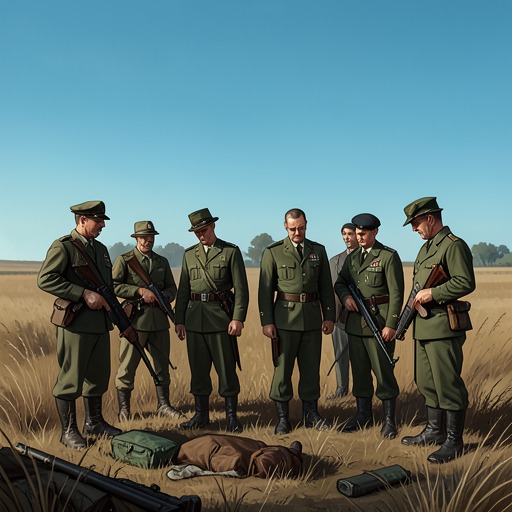
By late evening, after another short march, the group reaches the riverbank under moonlight. Leeches cling to the men as they prepare to cross, an image the Narrator associates with memories that attach themselves without being noticed. A radio report goes back to the base, while the marines lash bamboo trunks together with lianas to make a raft. A rope stretched between trees on opposite banks is meant to guide the raft back and make repeated trips possible.
The Crossing
The crossing is organized in successive groups. The first team sets off before midnight with the darker marine, a Hmong scout, and two members of the party. After the raft returns, another group departs, including the Lao farmer and the philosophical medic. The remaining men wait under leaf capes on the exposed bank, facing the forest with their weapons ready. The plan depends on the raft and its guide rope completing several trips; the river leaves the party divided, with some already across and others still waiting.
When the raft scrapes back to shore again, the Narrator, Bon, Sonny, and the crapulent major are ready to follow. The Grizzled Captain hands the Narrator a paddle. A whip cracks beside the Narrator’s ear, and the Captain’s head is struck open. Gunfire and grenades erupt on both sides of the river. A rocket-propelled grenade hits the raft, breaking it apart and throwing the darker marine into shallow water, badly wounded but not yet dead.
Ambush and Consequences
Bon pulls the Narrator down as the party takes cover on the sloping bank. The slope keeps them below the forest’s line of sight, while the skinny RTO fires into the trees. At Bon’s urging, the Narrator raises his weapon and shoots toward the muzzle flashes. In the sudden change from crossing to combat, the river is no longer merely an obstacle to be traversed: it has become the exposed setting of an ambush, with the men caught between their waiting companions, the raft, and the armed forest.
The attack’s immediate cost is clear in the death of the Grizzled Captain and the destruction of the raft. The crossing plan is shattered at the moment the Narrator is about to board, while the wounded marine lies in the shallows and the survivors return fire from the bank. The scene makes the river a point of irreversible danger in the mission, where movement across the landscape gives way to a struggle to stay alive.
Narrative Significance
The Mekong’s changing scale structures the episode. From the hill, it is a distant feature within a broad view of farms, roads, and ruins; at night, the party reaches its banks and must negotiate it with a fragile raft; during the ambush, the river crossing compresses the action into a narrow, exposed space. The shift in vantage turns reconnaissance into immediate peril without making the landscape disappear: water, forest, slope, and riverbank determine who can move and who can take cover.
The passage is also shaped by the Narrator’s retrospective memory. He recalls the river’s white noise, the ache in his knees, the weight of his weapon, and the Captain handing him the paddle just before the attack. Those precise recollections place the crossing at the point where routine military arrangements collapse into death and gunfire. The Mekong is therefore both a geographic feature of the Laos mission and the setting of a violent break in its planned course.