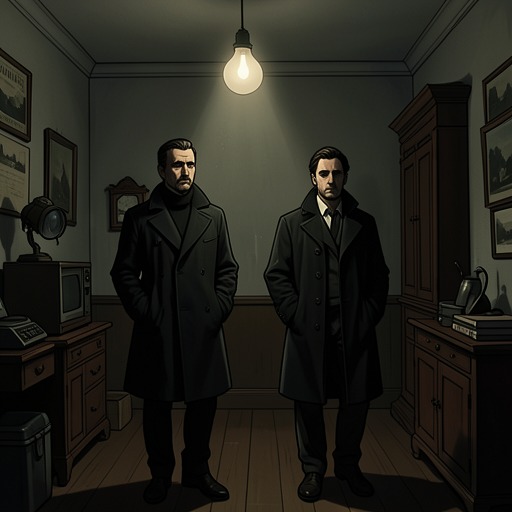
Revolutionaries can never be innocent
The Sympathizer“Revolutionaries can never be innocent” is Man’s stark formulation of the moral cost of revolutionary action. Spoken in response to the narrator’s fear that his work has led to innocent deaths, it makes knowledge and responsibility inseparable—and offers no easy absolution for either of them.
The Expression and Its Context
The narrator recalls this exchange while confessing to The Commandant that The crapulent major’s death troubles him. He contrasts his isolation in the camp with his earlier weekly visits to the basilica in Saigon, where he and Man discussed his misgivings. In the camp, he is alone with his deeds and beliefs, but remembers what Man had said before and needs to hear the answer again.
Man’s Answer
The remembered exchange arose after the narrator passed Man a cartridge of film recording a Ranger battalion’s plans for a heliborne assault. The narrator asked whether innocent men would die as a result. Man acknowledged that men would die, then rejected the narrator’s distinction between innocent victims and culpable revolutionaries: “But they aren’t innocent. Neither are we, my friend. We’re revolutionaries, and revolutionaries can never be innocent. We know too much and have done too much.” The final clauses ground the expression in both knowledge and action: revolutionary involvement carries responsibility for what the participants understand and what they have done.
Meaning and Moral Tension
The expression gives the narrator a political answer to guilt, not relief from it. Man’s words place the narrator and his victims on the same morally compromised ground, while the narrator’s renewed confession shows that the formulation has not settled his distress. Recalled in solitude after The crapulent major’s death, it becomes both a shared principle between former comrades and a measure of the narrator’s continuing inability to escape responsibility.