Saigon Airport
The SympathizerSaigon airport is the last contested threshold between the city and exile in the evacuation sequence: an American-built military enclave crowded with people seeking escape, where passage depends first on a bribe and then on surviving bombardment. The narrator’s departure aboard a C-130 Hercules is not a clean rescue. The aircraft is struck on the runway, and the attempt to board a second plane costs Bon his wife, Linh, and their son, Duc.
A military city inside Saigon
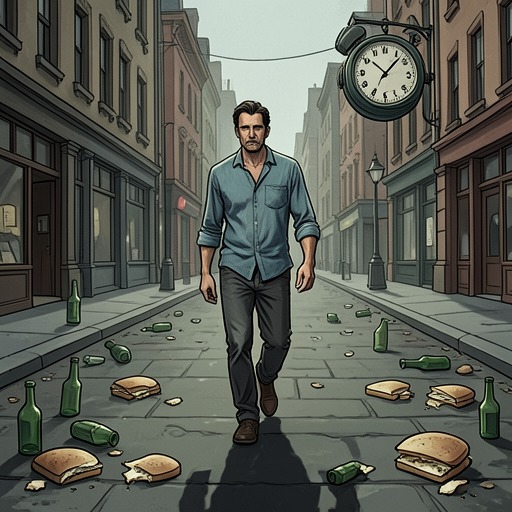
The airport is presented not just as a runway but as a self-contained, semiautonomous city, reached after the General’s convoy turns away from the presidential palace and heads toward the airport. The roads through the complex run past Quonset huts, barracks, offices, and warehouses. It had once been among the world’s busiest airports, serving lethal and nonlethal missions, including flights by Air America, the airline of the Central Intelligence Agency. South Vietnamese generals kept their families there, while American generals planned operations in offices furnished with imported steel furniture. The infrastructure of evacuation thus occupies a place long organized around military power and foreign intervention.
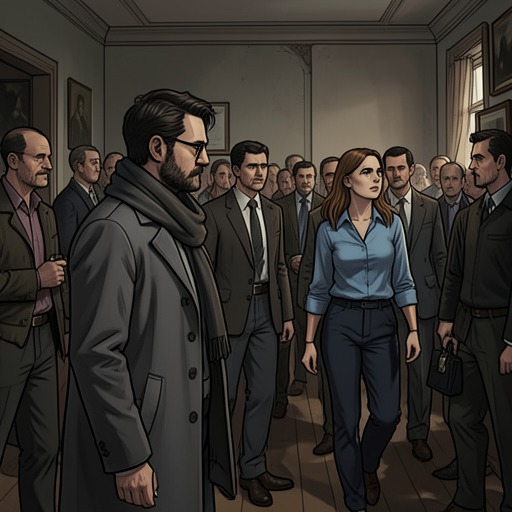
The destination is the Defense Attaché Office compound, nicknamed Dodge City by the Americans. Its guarded perimeter makes the airport a refuge, but not an open one: American Marines protect the evacuation center, and the people arriving are directed into an already crowded parking area. The young Marines watching the evacuees have been in the country only a few weeks and have never seen combat. Their clean, impassive appearance contrasts with the weary passengers and with the older memory of Marines departing the same airfield in 1973, defeated and ragged.
Passage bought at the gate
Before the convoy reaches the compound, the narrator’s plan depends on a young South Vietnamese officer at the airport gate. The narrator has learned about the lieutenant from the crapulent major and visited him at home, in a canal-side shack shared with his wife, children, parents, and in-laws. The lieutenant understands the bargain as an act of betrayal: accepting money means letting the General and the others escape. The narrator does not disguise what he is asking, and appeals instead to the officer’s honesty and the pressure of supporting a large family on a meager salary.
The negotiation begins at three thousand dollars, which the narrator describes as a month’s pay for the lieutenant’s platoon. The lieutenant’s wife demands ten thousand; they settle on five thousand, half paid in advance and half due at the airport. As the bus passes, the lieutenant takes the envelope. He could have shot the narrator or turned the convoy back, but he lets the group through. The narrator sees the decision as the officer’s last means of preserving dignity within a humiliating bargain, and admits admiration for an enemy he considers honorable. The airport’s first threshold is therefore crossed not through official authorization but through a choice made by a poor officer under family pressure.
Waiting and unequal evacuation
Inside the compound, the evacuees endure a long wait. The narrator joins Bon, Linh, and Duc at the tennis courts, where Bon and Linh doze and the child is the only one able to sleep. At the swimming pool, once an American-only space with limited passes for selected foreigners and representatives of the International Commission of Control and Supervision, evacuees have turned the water into a urinal. The narrator waits through the night; their number is finally called close to four in the morning, and he parts from the women he has been with, who expect to see him again in Guam.
The group of ninety-two is directed toward buses already taking on a larger crowd of around two hundred. When the General asks about the extra passengers, a Marine explains that the Americans are placing two evacuees aboard for every one of their own people. The General objects that an American general would not be treated that way. The narrator concedes the point, while also recognizing the bitter familiarity of overcrowding: South Vietnamese have routinely crammed people into vehicles beyond safe limits, a resignation others may mistake for acceptance.
Their bus takes them a short distance to a parked C-130 Hercules. The narrator likens the cargo aircraft to a garbage truck with wings: passengers enter by the rear ramp into a hold without seats. The General waits until his family, staff, dependents, and strangers have boarded before he follows. Inside, passengers squat on the floor, sit on bags, or cling to cargo straps; Bon, Linh, and Duc are somewhere among them. The plane’s heat rises above forty degrees Celsius, and its crowded, unwashed passengers share the space in enforced physical intimacy. Departure looks less like a protected passage than a mass of people compressed into a military transport.
Bombardment and the final aircraft
As the first C-130 taxis, its passengers glimpse destroyed aircraft and the damaged airfield. An explosion strikes; the crewman at the open doorway is thrown into the passengers, the plane spins, and fire becomes visible outside. The loadmaster lowers the ramp as refugees surge toward the opening. The narrator escapes the crush by covering his head with his rucksack and rolling down onto the runway. Rockets and artillery illuminate the field, and the C-130’s starboard engines burn. Bon finds the narrator and pulls him toward a concrete divider, bringing Linh and the crying Duc with him. From cover, they hear gunfire. Bon suspects that South Vietnamese troops are firing because they want a place on the plane; the narrator thinks the attackers may be People's Army of Vietnam forces that have reached the perimeter, though he also considers that South Vietnamese soldiers may be responsible.
At sunrise, the first aircraft is a smoldering wreck, and the runway is pitted by explosions. A second C-130 lands and turns toward the evacuees. Marines, soldiers, military police, air-force personnel, and other airport staff emerge from hiding, joining the rush to escape. As rockets fall and aircraft evacuate the remaining armed forces, the crowd runs for the lowered ramp. The General pushes people ahead, and the narrator follows behind him, but Linh and Duc disappear from the group.
The narrator sees Bon kneeling with Linh on the tarmac, a red stain spreading across her white blouse. Duc has also been shot; his chest is torn through, and he lies between his parents. The narrator runs back rather than board the plane. When Bon cannot release his wife, the narrator punches him in the jaw to break his grip, then carries Linh toward the departing aircraft. Bon follows with Duc in his arms. At the ramp, the narrator passes Linh to the General, and the loadmaster takes the child. The narrator pushes the grief-stricken Bon aboard and leaps onto the ramp as the aircraft taxis away under continuing rocket fire. The airport has enabled the escape, but its final image is not safety secured: it is a family torn apart on the runway while the last available aircraft departs.