Sonny's assassination
The SympathizerSonny’s assassination turns the unnamed narrator’s secret political identity into an irreversible act of violence. After Sonny speaks about changing himself as part of changing the world, the narrator attempts to confess that he is a communist and has worked for the revolution for years. Sonny interprets the admission as a jealous trap, and the narrator shoots him. The killing is not a cleanly completed operation: Sonny survives the first volley, and the narrator has to confront that survival at close range before escaping. He leaves Sonny’s apartment in disguise, but not without nausea, hesitation, and the knowledge that the act has changed what he must live with.
The confession and the rupture
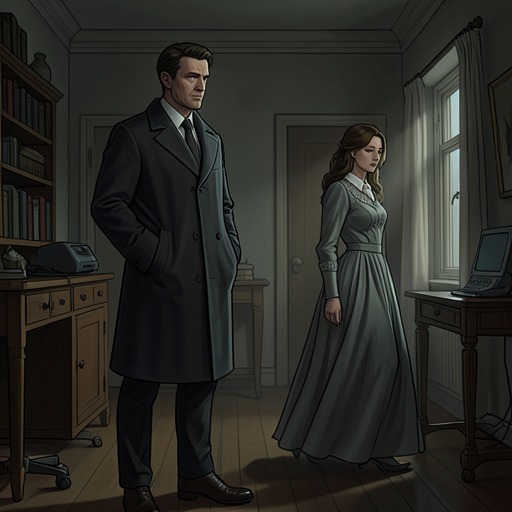
The assassination follows an intimate conversation in Sonny’s home. Sonny has been discussing fatherhood, including the possibility of adoption, and the limits of a life devoted to changing the world without changing oneself. He describes his relationship with Sofia Mori as having made him see himself as she sees him. The narrator listens while Bon’s condemning voice persists in his thoughts. Sonny’s reflection weakens the narrator’s resolve so much that he cannot initially reach for the gun in his bag.
Instead, the narrator says he has something to confess. Sonny assumes the confession concerns Sofia Mori, but the narrator redirects the conversation to politics. He asks Sonny to consider what it would mean if the narrator himself were a communist, then stops speaking hypothetically: he identifies himself as a communist and as an agent who has served both the opposition and the revolution for years. The admission brings a secret political allegiance into a conversation Sonny believes is about friendship, romance, and personal motives.
Sonny does not accept the revelation as an offer of solidarity. He turns red with anger and suspects the narrator is trying to trick him into declaring his own communist ties, so that he can be exposed or killed. When the narrator says he is trying to help, Sonny accuses him of jealousy: in Sonny’s view, the narrator does not love Sofia Mori but wants to recover her by pretending to share Sonny’s politics. The narrator’s confession therefore fails at the moment it is most consequential. Rather than recognizing an ally, Sonny sees a rejected lover manipulating him. His threat to tell Sofia Mori sharpens the personal conflict just as the narrator’s political purpose is exposed.
The shooting
The narrator fires, but the first bullet punctures the radio rather than killing Sonny. Sonny sees the gun and is astonished. A subsequent shot wounds his raised hand; when he jumps up and runs, another bullet strikes between his shoulder blade and spine. It staggers him but does not stop him. The narrator follows, using the position Bon has taught him: a foot behind his target, in the target’s blind spot. He shoots behind Sonny’s ear and into his skull, and Sonny falls face-first, breaking his nose.
The narrator stands over Sonny and sees blood spreading across the carpet and the back of his cardigan. He cannot see Sonny’s eyes from where he is standing, but sees the wounded, upturned hand and the awkward angle of Sonny’s arm. The bodily evidence of the shooting makes the act immediate in a way that the earlier political confession did not. The narrator thinks of Sofia Mori waiting for a call that will never come, then feels nausea and chills. Memories of his mother’s words and Bon’s assurance that the killing had to be done press against the sight of Sonny’s body; they steady him only enough to continue.
Before leaving, the narrator changes his appearance according to a disguise Bon had devised. He replaces his clothes, reverses his windbreaker to show its plain white side, and puts on a blond wig, a baseball cap, and tinted glasses. The outfit is meant to look ordinary rather than theatrical: its purpose is not to conceal him behind an obvious costume, but to make him seem like an unremarkable white man to someone who does not already know his face.
Confirming Sonny’s death and escaping
The narrator wipes his glass with a handkerchief and wraps the cloth around the doorknob. He thinks he hears Sonny moan. Bon’s imagined instruction reminds him that he must make sure the job is done. The narrator kneels beside Sonny, whose exposed eye appears blank, and tests it with a finger. The eye blinks. That movement overturns the narrator’s assumption that Sonny is dead: he recoils, then fires another bullet into Sonny’s temple. Only then does Bon’s voice confirm the death.
A little more than three minutes have passed since the first shot. The narrator breathes deliberately, opens the apartment door, and walks out with the composure Bon recommended. In the lobby he passes a white man who does not look at him. The encounter briefly makes the disguise seem effective: the narrator is taken for an ordinary stranger, not recognized as someone fleeing a killing. Once outside, he reaches his car and vomits beside the wheel well, unable to keep the meal down.
The cost and the departure
The following morning Bon treats the narrator’s distress as an expected consequence of doing what had to be done, and says that they will have to live with it. He presents a return to the battlefield as the cure, and the planned departure also reduces the chance of legal entanglement. The timing matters because Sofia Mori might first be confused by Sonny’s absence and then turn her attention toward the narrator, her former lover. No one has yet noticed Sonny is missing when the narrator leaves.
The General had trusted the narrator to carry out the killing on the promised date and had supplied a ticket in advance. After inspecting it, the narrator writes to Man in code. He accepts responsibility for disobeying Man’s orders and says he is returning with Bon to save his life, but admits that he has no plan for how to do so. The killing thus precipitates a departure that is not simply flight from possible detection: it takes the narrator back toward the danger from which he hopes to rescue Bon.
Two days after Sonny’s death, the narrator and Bon leave America with the grizzled captain and the affectless lieutenant. At the airport gate, the General and Madame see them off. The narrator’s thoughts during the flight dwell on what he may be leaving behind in America, including material comforts and freedoms he had valued. His departure gives the assassination a further consequence: the narrator has killed his friend, lost the possibility of speaking with him again, and set out on a mission whose success he cannot yet imagine.
Narrative and thematic significance
The sequence makes the narrator’s political revelation and the killing inseparable from questions of trust. He tells Sonny the truth about his allegiance, but the history of deception between them makes that truth sound like another form of manipulation. Sonny’s suspicion is not resolved by the narrator’s declaration of alliance; instead, the disagreement about motive becomes the immediate prelude to violence. The assassination is therefore both a political act and the destruction of a friendship through a personal misunderstanding that the narrator cannot undo.
The scene also refuses to let killing remain an abstract duty. Bon’s practical advice shapes the narrator’s position and disguise, yet the narrator’s pause before reaching for the gun, his physical reaction to Sonny’s body, his test of the eye, and his vomiting all register the distance between preparation and execution. The extra shot confirms that even the apparent completion of violence can be uncertain. Leaving the apartment does not make the act disappear: the narrator departs with the consequences attached to him, and his later return to Vietnam is framed as another obligation he must undertake after the death he has caused.