The Watchman
The SympathizerThe Watchman is a cell leader, bomb maker, and former professional watchmaker whose capture exposes the violence beneath the narrator’s education as an interrogator. Their encounter begins as an attempt to extract information, but becomes a struggle over who may define guilt and tell another person’s story. The narrator eventually writes a confession designed to break The Watchman by attacking his ties to family and revolution; The Watchman’s suicide makes that imposed story both powerless and unforgettable.
Identity and Background
The Watchman led cell C-7 of Z-99, a clandestine unit based in a secret zone of Binh Duong Province. The unit was collectively responsible for hundreds of grenade attacks, mine attacks, bombings, mortar attacks, and assassinations that killed thousands and terrorized Saigon. Its signature tactic was a two-stage bombing: a second device targeted people who came to assist the victims of the first. The Watchman’s specialty was adapting wristwatches into bomb timers. He removed the hour and second hands, ran a battery wire through a hole in the crystal, and set the minute hand to trigger the explosion when it touched the wire. The explosives came from landmines stolen from United States supplies, black-market purchases, or small quantities of smuggled TNT hidden in ordinary goods, including pineapples, baguettes, and women’s bras.
His clandestine work contrasts with his former legitimate profession. Watchmaking had paid his bills before he became a revolutionary, and his training in philosophy at the University of Saigon gave him a vocabulary for questioning the assumptions of his captors. He was also the eldest son of a respectable Catholic family, which had disowned him over his revolutionary activities. The narrator considers this estrangement central to understanding both his commitment and the vulnerability the interrogation will exploit: The Watchman has already sacrificed a defining source of belonging.
Capture and Interrogation
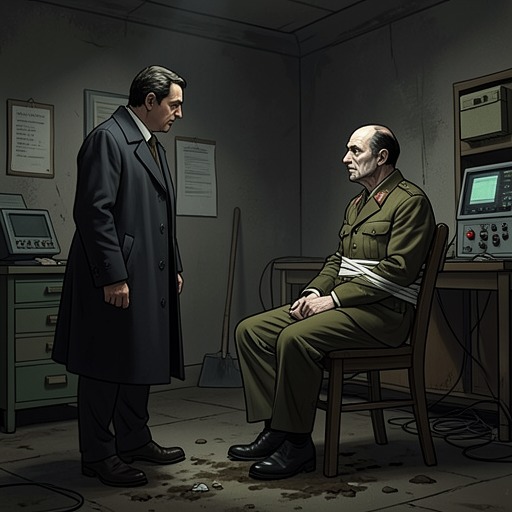
Before the narrator entered his cell, The Watchman had spent a week under constant light and music. Guards passed in meals through a slot three times a day: rice, boiled greens, boiled meat, and water. The narrator watched him on a video feed as he ate, paced, washed, exercised, and tried to block out the sound. When the Watchman shouted at the camera in English, Claude remarked that at least he was talking. The surveillance made the prisoner visible to his captors while leaving him alone with a routine they controlled.
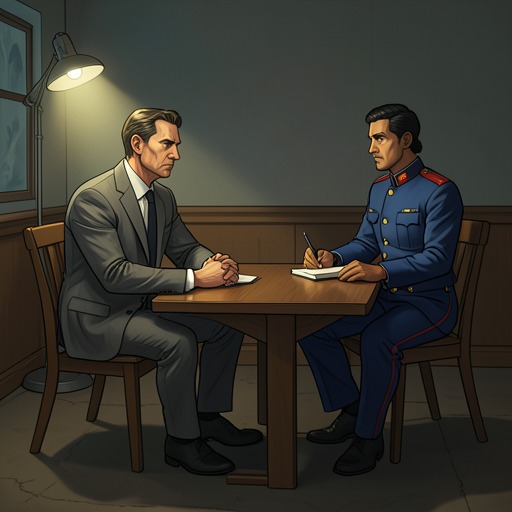
The narrator was assigned to be chief interrogator and to break The Watchman as the final examination in Claude’s interrogation course. When they first met, The Watchman greeted him with teasing English and made light of the music, presenting himself as amused rather than cowed. The narrator recognized the performance as a cover for their opposed roles, with Claude watching from the video monitor. He laid out charges of subversion, conspiracy, and murder, while invoking the American principle that a defendant is innocent until proven guilty. The Watchman laughed at that formulation and argued that the war and its history showed the reverse: people were treated as guilty first, especially when they were Vietnamese. In his account, American claims to presume innocence sat uneasily beside a history of suspicion and violence. The narrator was impressed but concealed it.
The Watchman then called the narrator a defective hybrid, a judgment the narrator understood as the product of what The Watchman and others regarded as scientific fact, rather than simply a calculated insult. Even so, the remark enraged him. Instead of extending the interrogation in ways that might secretly protect the prisoner, he wanted to prove his own intellectual mastery. His recollection makes the exchange a turning point: the professional task of interrogation gives way to a personal contest in which the narrator wants one man to be master and the other slave.
The Manufactured Confession
After his anger cooled, the narrator identified what he believed to be The Watchman’s greatest vulnerability: the family he had left behind. He wrote a confession for him that recast his revolutionary commitment as the consequence of a concealed homosexual relationship. The fabricated account claimed that he had fled his family for a man, that this relationship explained his devotion to philosophy and his desire to destroy society, and that he had betrayed the revolution to save his lover, who had been captured.
The Watchman read the document twice and objected that it made him confess to something untrue and degrading. The narrator threatened to publish the confession with the supposed lover’s confession and intimate photographs, arguing that the resulting disgrace would close the road back to his family. His threat was tailored to make both possible forms of return—acceptance by his relatives and recognition by his revolutionary comrades—seem impossible. He also claimed that drugs and hypnosis could produce the evidence needed to support the story. The Watchman fell silent, staring at the confession. The narrator’s method does not discover a hidden truth; it manufactures one, using the prisoner’s attachments to make a lie feel more dangerous than continued resistance.
The narrator later admits that he enjoyed carrying out the task Claude had set, despite his role as a mole and his capacity to delay or frustrate the interrogation. He watched a recording of himself confronting The Watchman and recognized the scene as a performance that Claude had produced and he had directed. Claude praised the result. That approval sharpened the narrator’s sense of complicity: he had become a good student by using the methods of his teachers, even as he saw himself reflected in the American side of the encounter. He also recognized that The Watchman had learned what the Americans taught and rejected it. The narrator’s triumph was short-lived; the prisoner’s final act would reverse the lesson.
Suicide and Narrative Significance
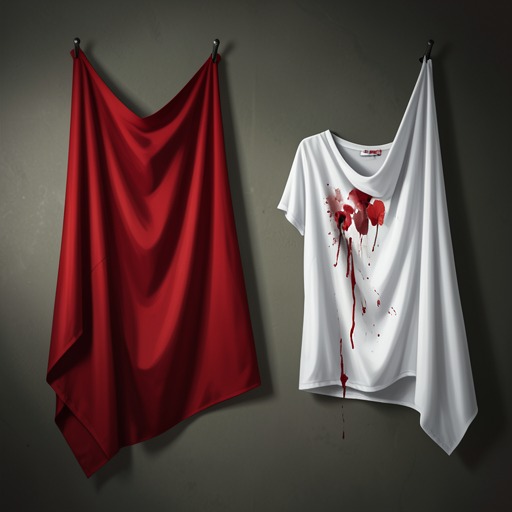
A week after the narrator showed him the confession, a guard called from the surveillance room. The Watchman lay curled on his white bed in white clothes, facing the wall. When the men turned him over, they found him dead, his face purple and eyes bulging. He had behaved well enough to receive the breakfast he had requested. He ate two hard-boiled eggs, then swallowed a third whole, shell and all, and choked to death. Claude ordered the music turned off. The Watchman’s death ends the interrogation without a confession from him and without any account of what he might have said next.
For the narrator, this is more than the death of a prisoner: it exposes the limits of the authority he had exercised. He interprets The Watchman’s final move as a way to sabotage a system whose means of production he did not own and to destroy the representation that had claimed ownership of him. That reading gives the suicide a political and narrative force, but it does not undo the narrator’s role in the coercion. He had written the false confession, taken satisfaction in the interrogation, and helped turn The Watchman into a character in Claude’s surveillance drama. His conclusion is that The Watchman could not represent himself because the narrator had represented him.
The death returns in the narrator’s later recollection of the interrogation. He sees the other white room from his own white room, as if watching himself and Claude beside the body, and Claude tells him it was not his fault. The narrator cannot settle into that reassurance; his mind repeats his denial that he is a bastard. The Watchman thus remains present not through further action but as an unresolved test of the narrator’s claims about guilt, identity, and control. His professionally precise bomb-making and his final use of an ordinary egg form a stark contrast: the first turns timekeeping into a weapon against others, while the second makes his own death an act his interrogators cannot convert into the confession they wanted.