The crapulent major
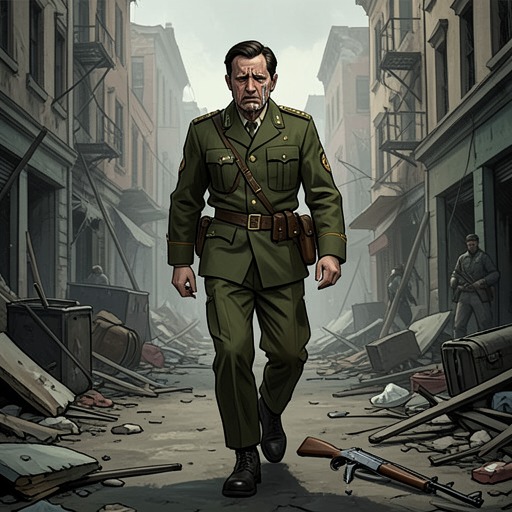
The SympathizerThe crapulent major is a former South Vietnamese officer whose postwar dispossession turns him into a convenient suspect and whose murder becomes a lasting source of guilt for the narrator. First reduced to a name in an accusation, he emerges in exile as a husband, father, and struggling laborer; after his death, his ghost repeatedly interrupts the narrator’s attempts to treat the killing as a settled political act.
Identity and Exile
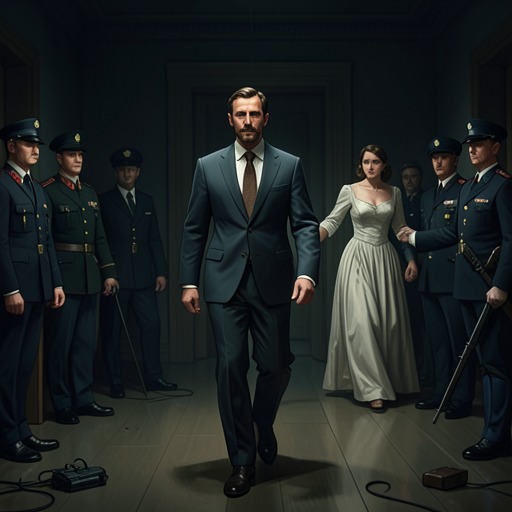
The General’s case against the major rests on three points: he is Chinese, his family is doing well in Saigon, and he is fat. The General’s list converts ethnicity, perceived prosperity, and body size into evidence of espionage, although none establishes that the major is a spy. When the General presses the narrator to name a suspect, the narrator chooses the major because he expects the name to have the desired effect. The accusation therefore begins not with proof but with the narrator’s effort to satisfy a suspicious superior without identifying an actual spy.
In California, the major’s life bears little resemblance to the prosperity attributed to his family in Saigon. He works as a gas-station attendant in Monterey Park and is paid in cash so that he can remain eligible for welfare benefits. His wife sews in a sweatshop, her eyesight strained by the cheap stitching, while the family struggles to support its children. At breakfast in a crowded Monterey Park noodle shop, the major complains that his wife blames him for their poverty and asks why they left home; he also tells the narrator that she became pregnant in camp and is carrying twins. These circumstances reveal the human cost concealed by the General’s shorthand: the supposed sign of suspicious success belongs to a man whose exile has left him economically precarious and anxious about his family.
Masculinity, Memory, and the Narrator’s Regard
The major’s complaints about exile are also complaints about the collapse of the household roles by which he understands himself. He describes a new life in which his wife must work, his children speak the foreign language faster than their fathers, and the women he remembers as graceful wives have become, in his eyes, independent critics. He says that men in America no longer need their manhood because women possess their own. The narrator agrees aloud, but privately suspects nostalgia has altered the major’s memory: in Vietnam, the major and the other men had not spoken so fondly of their wives. The distance between remembered domestic life and the family’s present strain exposes how exile reshapes not only status and income but the stories these men tell about authority at home.
The narrator’s response to the major is not simply contempt or political suspicion. At breakfast in a Monterey Park noodle shop, the major eats with open-mouthed enthusiasm, talking as flecks of rice and spit land on the narrator’s cheek, eyelash, and bowl. The scene’s grease, chipped teacups, hot porridge, and fried crullers place the two men in an ordinary immigrant neighborhood rather than a military setting. Watching the major relish his food, the narrator feels both love and pity for what he calls the man’s innocence. That tenderness makes the narrator’s earlier choice of him as a convenient suspect more consequential: the person he helped mark for elimination is no longer an abstract political liability, but a familiar companion whose appetites, marital grievances, and fragile hopes have become visible.
The Assassination and Its Immediate Cost
The General turns the accusation into an order: the narrator and Bon are to solve the problem of the major together, and the narrator is expected to redeem the mistake of having named him. The narrator privately doubts that the major is a spy, but knows that withdrawing the accusation would expose his own role in creating it. At home, Bon cleans and oils a .38 Special, loads it with six copper bullets, and places it on a stained red cushion. The narrator asks whether they could be killing the wrong man; Bon distinguishes assassination from murder and invokes the war as a condition in which innocent people die. His answer does not settle the narrator’s misgivings. It instead shows how a political label and the habits of military violence can make a decision seem executable without making it morally secure.
The major arrives at the carport carrying his lunch box, puzzled to find the narrator waiting with a plastic bag. The narrator offers the bag as a casual gift; when the major turns and sees Bon, Bon shoots him. The major’s head strikes the pavement, and the bullet wound in his forehead becomes a grotesque third eye. Bon takes the major’s wallet and urges the narrator toward the car, while the narrator retrieves the blood-speckled bag and registers the time as 8:13. The sequence reduces the planned operation to a few ordinary gestures—a lunch box, a neighborly pretext, a gift bag—before the gunshot makes their real purpose irreversible.
The narrator later admits that the death troubles him because the major was relatively innocent. He recalls seeking Man’s counsel in Saigon after passing him film of a Ranger battalion’s assault plans, an action that would also cost innocent men their lives. Man’s remembered answer refuses the clean division between guilty enemies and innocent revolutionaries: neither side is innocent after what its members know and have done. Yet the recollection does not erase the difference between political argument and the man the narrator helped kill. The major’s death leaves the narrator alone with his own deeds and beliefs, without the familiar visits to the basilica that once gave his doubts a human witness.
The Ghost and the Continuing Debt
The narrator’s attempt to answer the major’s death with a reparative gesture begins after he returns to California. He keeps half his check in his previously empty bank account and carries the other half in an envelope when he visits the General and Madame; later, he drives to Monterey Park to see the major’s widow. He intends to give her the money, though he recognizes that it could have served revolutionary purposes. In his reckoning, helping the family of an enemy may itself be a radical act, but the widow is not asking him for forgiveness: it is the narrator who wants forgiveness for what he did to her husband.
He arrives expecting the major’s ghost. Though he does not believe in God, he believes in ghosts and fears that the dead man’s hand may be on the doorknob. The woman who opens the door is the widow, whom bereavement has made heavier rather than thinner. When she cries that she misses her husband, the narrator pats her shoulder, seeing again the major’s body on its back with the third eye in its forehead. On a side table, a photograph shows the major as a young cadet in full uniform, before the chins that later marked his corpulence; the narrator imagines the dead man’s meager provisions in the afterlife as an orange frosted with mold and a dusty can of Spam. The visit places the living widow’s grief beside the narrator’s recurring image of the killing, without allowing his intended gift to undo either.
The major returns in the narrator’s visions not as a silent apparition but as an accusing spectator. During a drive, he seems to sit in the neighboring bucket seat, his fat body spilling over its edges and his three eyes fixed on the narrator. The narrator knows he did not fire the shot, but also knows he devised the plot that led to the major’s death. The ghost links that responsibility to the continuing life of the scheme: a plot, he suggests, acquires its own momentum, and its author remains implicated in what it produces. The narrator longs to make the major disappear from his life, much as he once wished for his father to disappear, but the dead man’s repeated presence makes that wish another form of evasion.
The haunting also intrudes on scenes beyond the narrator’s private reflections. While the narrator and others bury a legless lieutenant, the major speaks from the grave, turning the burial into a grim speculation about the shapes ghosts might take. Later, during the narrator’s confinement and interrogation, the major appears alongside Sonny, circling the prisoner and connecting the killing to the narrator’s present predicament. When the narrator finally sobs that he wishes he were dead, Sonny and the major applaud. Across these appearances, the major’s third eye becomes an image of unrelenting witness: the man the narrator once reduced to a suspect keeps watching the consequences of the narrator’s choice, and his death remains part of the living story rather than a completed operation.